













Effects of ligands on (de-)enhancement of plasmonic excitations of silver, gold and bimetallic nanoclusters: TD-DFT+TB calculations
Literature Information
Publication Date
2021-08-11
DOI
10.1039/D1CP03220H
Impact Factor
3.676
Authors
Johann Pototschnig, Zahra Jamshidi, Lucas Visscher
View Original
Abstract
Metal nanoclusters can be synthesized in various sizes and shapes and are typically protected with ligands to stabilize them. These ligands can also be used to tune the plasmonic properties of the clusters as the absorption spectrum of a protected cluster can be significantly altered compared to the bare cluster. In this paper, we computationally investigate the influence of thiolate ligands on the plasmonic intensity for silver, gold and alloy clusters. Using time-dependent density functional theory with tight-binding approximations, TD-DFT+TB, we show that this level of theory can reproduce the broad experimental spectra of Au144(SR)60 and Ag53Au91(SR)60 (R = CH3) compounds with satisfactory agreement. As TD-DFT+TB does not depend on atom-type parameters we were able to apply this approach on large ligand-protected clusters with various compositions. With these calculations we predict that the effect of ligands on the absorption can be a quenching as well as an enhancement. We furthermore show that it is possible to unambiguously identify the plasmonic peaks by the scaled Coulomb kernel technique and explain the influence of ligands on the intensity (de-)enhancement by analyzing the plasmonic excitations in terms of the dominant orbital contributions.
Related Literature
Preparation of transparent oxyapatite ceramics by combined use of freeze-drying and spark-plasma sintering
A. Chesnaud, C. Bogicevic, F. Karolak, C. Estournès, G. Dezanneau
2007-01-30
Communication
DOI: 10.1039/B615524C
A new chiral diiron catalyst for enantioselective epoxidation
Caroline Marchi-Delapierre, Adeline Jorge-Robin, Aurore Thibon, Stéphane Ménage
2006-12-19
Communication
DOI: 10.1039/B616172C
A reassignment of the EPR spectra previously attributed to Cu@C60
Bevan Elliott, Keqin Yang, Apparao M. Rao, Hadi D. Arman, William T. Pennington, Luis Echegoyen
2007-02-22
Communication
DOI: 10.1039/B700320J
A short-chain dehydrogenase/reductase from Vibrio vulnificus with both blue fluorescence and oxidoreductase activity
Karen Marie Polizzi, Desmond Antoine Moore, Andreas Sebastian Bommarius
2007-02-12
Communication
DOI: 10.1039/B616763B
The isolation and photochemistry of individual atropisomers of photochromic diarylethenes
Martin Walko, Ben L. Feringa
2007-04-03
Communication
DOI: 10.1039/B702264F
DNA hybridization “turns on” electrocatalysis at gold electrodes
Lihua Wang, Dun Pan, Shiping Song, Chunhai Fan
2007-01-10
Communication
DOI: 10.1039/B615742D
A novel Heck reaction catalyzed by Co hollow nanospheres in ligand-free condition
Ping Zhou, Yingguang Li, Peipei Sun, Jiahong Zhou, Jianchun Bao
2007-01-29
Communication
DOI: 10.1039/B617556B
Acridinone-based anion receptors and sensors
Sergio E. García-Garrido, Claudia Caltagirone, Mark E. Light, Philip A. Gale
2007-01-26
Communication
DOI: 10.1039/B618072H
A photoswitchable molecular wire with the dithienylethene (DTE) linker, (dppe)(η5-C5Me5)Fe–CC–DTE–CC–Fe(η5-C5Me5)(dppe)
Yuya Tanaka, Akiko Inagaki, Munetaka Akita
2006-12-19
Communication
DOI: 10.1039/B614748H
You might also like
Compound Q&A
What precautions should be taken when handling 2-Chloro-1,2-bis(4-methylphenyl)ethanone (CAS: 71193-32-3)?
When handling 2-Chloro-1,2-bis(4-methylphenyl)ethanone (CAS: 71193-32-3), it is ...
71193-32-32-Chloro-1,2-bis(4-m...
Compound Q&A
What industries use 4-Ethoxy-3-(5-methyl-4-oxo-7-propyl-1,4-dihydroimidazo[5,1-f][1,2,4]triazin-2-yl)benzenesulfonyl chloride (CAS: 224789-26-8)?
4-Ethoxy-3-(5-methyl-4-oxo-7-propyl-1,4-dihydroimidazo[5,1-f][1,2,4]triazin-2-yl...
224789-26-84-Ethoxy-3-(5-methyl...
Compound Q&A
How should Methyl 3-Oxo-4-Androsten-17-Carboxylate (CAS: 2681-55-2) be stored?
Methyl 3-Oxo-4-Androsten-17-Carboxylate (CAS: 2681-55-2) should be stored in a c...
2681-55-2Methyl 3-Oxo-4-Andro...
Compound Q&A
What are the main uses of (R)-3-Amino-4-(3-hexylphenylamino)-4-oxobutylphosphonic acid (CAS: 909725-61-7)?
(R)-3-Amino-4-(3-hexylphenylamino)-4-oxobutylphosphonic acid is primarily used i...
909725-61-7(R)-3-Amino-4-(3-hex...
Compound Q&A
What regulatory guidelines apply to 2-Methyl-2-propanyl 3-amino-3-carbamoyl-1-azetidinecarboxylate (CAS: 1254120-14-3)?
2-Methyl-2-propanyl 3-amino-3-carbamoyl-1-azetidinecarboxylate (CAS: 1254120-14-...
1254120-14-32-Methyl-2-propanyl ...
Compound Q&A
Are there alternatives to (E)-4-(tert-Butoxy)-4-oxobut-2-enoic acid (CAS: 135355-96-3) in synthesis?
There are alternative reagents that can be used in synthesis instead of (E)-4-(t...
135355-96-3(E)-4-(tert-Butoxy)-...
Compound Q&A
What are the physical and chemical properties of [2-(3-Chlorophenyl)-1,3-thiazol-4-yl]methanol (CAS: 121202-20-8)?
[2-(3-Chlorophenyl)-1,3-thiazol-4-yl]methanol (CAS: 121202-20-8) is a crystallin...
121202-20-8[2-(3-Chlorophenyl)-...
Compound Q&A
What is the market or research trend for Methyl (2S)-[(4S)-2,2-dimethyl-1,3-dioxolan-4-yl]{[(4-methylphenyl)sulfonyl]oxy}acetate (CAS: 166249-17-8)?
The market and research trends for Methyl (2S)-[(4S)-2,2-dimethyl-1,3-dioxolan-4...
166249-17-8Methyl (2S)-[(4S)-2,...
Compound Q&A
What is the market or research trend for 1-Bromo-2-isocyanatoethane (CAS: 42865-19-0)?
The market for 1-Bromo-2-isocyanatoethane (CAS: 42865-19-0) is driven by its use...
42865-19-01-Bromo-2-isocyanato...
Compound Q&A
What are the main uses of 4-Nitro-D-phenylalanine hydrochloride (CAS: 147065-06-3)?
4-Nitro-D-phenylalanine hydrochloride (CAS: 147065-06-3) is primarily used in re...
147065-06-34-Nitro-D-phenylalan...
Source Journal
Physical Chemistry Chemical Physics

CiteScore:
5.5
Self-citation Rate:
10.3%
Articles per Year:
3036
Physical Chemistry Chemical Physics (PCCP) is an international journal co-owned by 19 physical chemistry and physics societies from around the world. This journal publishes original, cutting-edge research in physical chemistry, chemical physics and biophysical chemistry. To be suitable for publication in PCCP, articles must include significant innovation and/or insight into physical chemistry; this is the most important criterion that reviewers and Editors will judge against when evaluating submissions. The journal has a broad scope and welcomes contributions spanning experiment, theory, computation and data science. Topical coverage includes spectroscopy, dynamics, kinetics, statistical mechanics, thermodynamics, electrochemistry, catalysis, surface science, quantum mechanics, quantum computing and machine learning. Interdisciplinary research areas such as polymers and soft matter, materials, nanoscience, energy, surfaces/interfaces, and biophysical chemistry are welcomed if they demonstrate significant innovation and/or insight into physical chemistry. Joined experimental/theoretical studies are particularly appreciated when complementary and based on up-to-date approaches.
Recommended Compounds

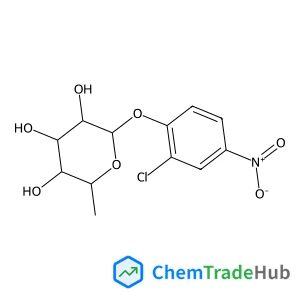
2-Chloro-4-nitrophenyl 6-deoxy-alpha-L-galactopyranoside
CAS Number:
157843-41-9
Molecular Formula:
C12H14ClNO7


Recommended Suppliers




Disclaimer
This page provides academic journal information for reference and research purposes only. We are not affiliated with any journal publishers and do not handle publication submissions. For publication-related inquiries, please contact the respective journal publishers directly.
If you notice any inaccuracies in the information displayed, please contact us at support@chemtradehub.com. We will promptly review and address your concerns.