![N-[(1R,2R)-2-Amino-1,2-diphenylethyl]-1,1,1-trifluoromethanesulfonamide structure](https://static.chemtradehub.com/structs/852/852212-89-6-5ef9.webp "N-[(1R,2R)-2-Amino-1,2-diphenylethyl]-1,1,1-trifluoromethanesulfonamide structure")
N-[(1R,2R)-2-Amino-1,2-diphenylethyl]-1,1,1-trifluoromethanesulfonamide
CAS Number:
852212-89-6
Molecular Formula:
C15H15F3N2O2S
Takuya Hirakawa, Erik Walinda, Daichi Morimoto, Kenji Sugase
Drugs are designed and validated based on physicochemical data on their interactions with target proteins. For low water-solubility drugs, however, quantitative analysis is practically impossible without accurate estimation of precipitation. Here we combined quantitative NMR with NMR titration experiments to rigorously quantify the interaction of the low water-solubility drug pimecrolimus with its target protein FKBP12. Notably, the dissociation constants estimated with and without consideration of precipitation differed by more than tenfold. Moreover, the method enabled us to quantitate the FKBP12–pimecrolimus interaction even under a crowded condition established using the protein crowder BSA. Notably, the FKBP12–pimecrolimus interaction was slightly hampered under the crowded environment, which is explained by transient association of BSA with the drug molecules. Collectively, the described method will contribute to both quantifying the binding properties of low water-solubility drugs and to elucidating the drug behavior in complex crowded solutions including living cells.
Manuel Quesada-Pérez, José Alberto Maroto-Centeno, María del Mar Ramos-Tejada
DOI: 10.1039/D1CP02113C
S. Y. Wu, R. L. Qian, C. L. Ma, Y. Shan, Y. J. Wu, X. Y. Wu, J. L. Zhang, X. B. Zhu, H. T. Ji, C. Y. Qu, F. Hou, L. Z. Liu
DOI: 10.1039/D1CP03155D
Katalin Viktória Bere, Emilie Nez, Edina Balog, László Janovák, Dániel Sebők, Ákos Kukovecz, Clément Roux, Veronique Pimienta, Gábor Schuszter
DOI: 10.1039/D1CP01334C
Krishna Chaitanya Gunturu, Carola Schulzke
DOI: 10.1039/D1CP01387D
Javad Hekayati, Sona Raeissi
DOI: 10.1039/D1CP02033A
Sheikh I. Hossain, Suvash C. Saha
DOI: 10.1039/D1CP03250J
Fengqi Zhou, Feng Qin, Weitang Yao, Zhimin Liu, Xianwen Wu, Pinghui Wu
DOI: 10.1039/D1CP03036A
Ramesh Kumar, Jitendra Kumar, Priya Srivastava, Gaurav Manik
DOI: 10.1039/D1CP03621A
Zhenzhuo Lan
DOI: 10.1039/D1CP02278D
Govind Reddy
DOI: 10.1039/D1CP01185E
4-Benzyl-2,2-dimethylmorpholine is generally considered safe when handled under ...
(5,6-Dimethoxy-3-pyridinyl)boronic acid is a chemical compound with the molecula...
1,1,3,3-Tetramethyl-1,3-bis(2-methyl-2-propanyl)disiloxane is synthesized throug...
(2R,4S)-1-Boc-4-methylpyrrolidine-2-carboxylic acid is primarily used as a build...
When handling 2,3-Dichloroacrylonitrile, it is crucial to wear appropriate perso...
(S)-1-(o-Tolyl)ethanamine hydrochloride should be stored in a cool, dry place to...
Benzyl [1-(hydroxyamino)-1-imino-2-methyl-2-propanyl]carbamate (CAS: 518047-98-8...
2-Methyloxazole-5-carbaldehyde is used in the pharmaceutical industry for the sy...
The market for 2-Methyl-2-propanyl 4-[(1S)-1-hydroxyethyl]-1-piperidinecarboxyla...
1-Butyl-3-methylpyridinium bromide is generally considered safe for laboratory u...

Physical Chemistry Chemical Physics (PCCP) is an international journal co-owned by 19 physical chemistry and physics societies from around the world. This journal publishes original, cutting-edge research in physical chemistry, chemical physics and biophysical chemistry. To be suitable for publication in PCCP, articles must include significant innovation and/or insight into physical chemistry; this is the most important criterion that reviewers and Editors will judge against when evaluating submissions. The journal has a broad scope and welcomes contributions spanning experiment, theory, computation and data science. Topical coverage includes spectroscopy, dynamics, kinetics, statistical mechanics, thermodynamics, electrochemistry, catalysis, surface science, quantum mechanics, quantum computing and machine learning. Interdisciplinary research areas such as polymers and soft matter, materials, nanoscience, energy, surfaces/interfaces, and biophysical chemistry are welcomed if they demonstrate significant innovation and/or insight into physical chemistry. Joined experimental/theoretical studies are particularly appreciated when complementary and based on up-to-date approaches.
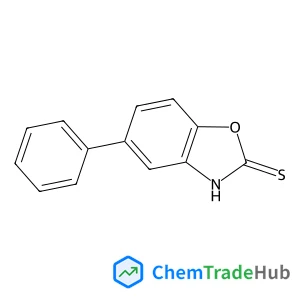
![2-[1-(4-Chlorobenzyl)-1H-indol-3-yl]-2-oxo-N-(6-quinolinyl)acetamide structure](https://static.chemtradehub.com/structs/501/501921-61-5-756a.webp "2-[1-(4-Chlorobenzyl)-1H-indol-3-yl]-2-oxo-N-(6-quinolinyl)acetamide structure")