












Attosecond charge migration following oxygen K-shell ionization in DNA bases and base pairs
Literature Information
Publication Date
2021-10-06
DOI
10.1039/D1CP02920G
Impact Factor
3.676
Authors
Fatemeh Khalili, Mohsen Vafaee
View Original
Abstract
Core ionization of DNA begins a cascade of events which could lead to cellular inactivation or death. The created core–hole following an impulse inner-shell ionization of molecules naturally decays in the auger timescale. We simulated charge migration (CM) phenomena following an impulsive core ionization of individual DNA bases at the oxygen K-edge which occurs before Auger decay of the oxygen. Our approach is based on real-time time dependent density functional theory (RT-TDDFT). It is shown that the pronounced hole fluctuation observed around bonds of the initial core–hole results in various valence orbital migrations. Also, the same photo-core-ionized dynamics is studied for the related base pairs. We investigate the role of base pairing and H-bonding interactions in the attosecond CM dynamics. In particular, the creation of a core–hole in the oxygen involved in H-bonding leads to an enhancement of charge migration relative to the respective single bases. Importantly, the hole oscillation of the adenine–thymine base pair upon creation of a core–hole at the oxygen, which does not contribute to the donor–acceptor interactions (not H-bonded), decreases compared to the single thymine base. Understanding the detailed dynamics of the localized core–hole initiating CM process would open the way for chemically controlling DNA damage/repair in the future.
Related Literature
Probing the validity of the Derjaguin approximation for heterogeneous colloidal particles
Samuel Rentsch, Ramon Pericet-Camara, Georg Papastavrou, Michal Borkovec
2006-04-24
Paper
DOI: 10.1039/B602145J
How are the ready and unready states of nickel–iron hydrogenase activated by H2? A density functional theory study
Prabha Jayapal, Mahesh Sundararajan, Ian H. Hillier, Neil A. Burton
2006-07-27
Paper
DOI: 10.1039/B608069C
Molecular dynamics simulations of the aqueous interface with the [BMI][PF6] ionic liquid: comparison of different solvent models‡
G. Chevrot, R. Schurhammer, G. Wipff
2006-08-03
Paper
DOI: 10.1039/B608218A
Bright luminescence from silane substituted and bridged silicon nanoclusters
Olli Lehtonen, Dage Sundholm
2006-08-10
Paper
DOI: 10.1039/B606643G
Extended tunnelling states in the benzoic acid crystal: Infrared and Raman spectra of the OH and OD stretching modes
2006-08-18
Paper
DOI: 10.1039/B609078H
Time-resolved photoelectron and photoion fragmentation spectroscopy study of 9-methyladenine and its hydrates: a contribution to the understanding of the ultrafast radiationless decay of excited DNA bases
Clélia Canuel, Mohamed Elhanine, Michel Mons, François Piuzzi, Benjamin Tardivel, Iliana Dimicoli
2006-07-17
Paper
DOI: 10.1039/B606437J
An ab initio investigation of the O(3P)–H2(1Σ +g) van der Waals well
Sule Atahan, Jacek Kłos, Piotr S. Żuchowski
2006-08-29
Paper
DOI: 10.1039/B608871F
You might also like
Compound Q&A
How is Ethyl 4-chlorothieno[2,3-b]pyridine-5-carboxylate (CAS: 59713-58-5) typically synthesized?
Ethyl 4-chlorothieno[2,3-b]pyridine-5-carboxylate (CAS: 59713-58-5) can be synth...
59713-58-5Ethyl 4-chlorothieno...
Compound Q&A
What regulatory guidelines apply to 5-Methyl-1H-indole-3-carbaldehyde (CAS: 52562-50-2)?
5-Methyl-1H-indole-3-carbaldehyde (CAS: 52562-50-2) is subject to various regula...
52562-50-25-Methyl-1H-indole-3...
Compound Q&A
What are the physical and chemical properties of (1,3-Dimethyl-2,4-dioxo-1,2,3,4-tetrahydro-5-pyrimidinyl)boronic acid (CAS: 223418-73-3)?
(1,3-Dimethyl-2,4-dioxo-1,2,3,4-tetrahydro-5-pyrimidinyl)boronic acid is a white...
223418-73-3(1,3-Dimethyl-2,4-di...
Compound Q&A
How should waste containing Sulfocostunolide A (CAS: 1016983-51-9) be handled?
Waste containing Sulfocostunolide A (CAS: 1016983-51-9) should be handled with c...
1016983-51-9Sulfocostunolide A
Compound Q&A
What precautions should be taken when handling Murraxocin (CAS: 88478-44-8)?
When handling Murraxocin (CAS: 88478-44-8), ensure proper personal protective eq...
88478-44-8Murraxocin
Compound Q&A
What are the physical and chemical properties of Formvar (CAS: 63148-64-1)?
Formvar (CAS: 63148-64-1) is an alkyd resin characterized by a high molecular we...
63148-64-1Formvar(R)
Compound Q&A
Is (S)-4-benzyl-2-((benzyloxy)methyl)morpholine (CAS: 205242-66-6) safe?
(S)-4-benzyl-2-((benzyloxy)methyl)morpholine is generally safe when handled with...
205242-66-6(S)-4-benzyl-2-((ben...
Compound Q&A
What industries use Methyl 1-(5-bromo-2-pyrimidinyl)cyclopropanecarboxylate (CAS: 1447607-69-3)?
Methyl 1-(5-bromo-2-pyrimidinyl)cyclopropanecarboxylate (CAS: 1447607-69-3) is p...
1447607-69-3Methyl 1-(5-bromo-2-...
Compound Q&A
Is 2-Methyl-1-phenyl-1-propanamine hydrochloride (CAS: 24290-47-9) safe?
2-Methyl-1-phenyl-1-propanamine hydrochloride (CAS: 24290-47-9) is generally con...
24290-47-92-Methyl-1-phenyl-1-...
Compound Q&A
How is 3-(4-Bromophenyl)-2-methylpropanoic acid (CAS: 66735-01-1) typically synthesized?
3-(4-Bromophenyl)-2-methylpropanoic acid is synthesized through a multi-step pro...
66735-01-13-(4-Bromophenyl)-2-...
Source Journal
Physical Chemistry Chemical Physics

CiteScore:
5.5
Self-citation Rate:
10.3%
Articles per Year:
3036
Physical Chemistry Chemical Physics (PCCP) is an international journal co-owned by 19 physical chemistry and physics societies from around the world. This journal publishes original, cutting-edge research in physical chemistry, chemical physics and biophysical chemistry. To be suitable for publication in PCCP, articles must include significant innovation and/or insight into physical chemistry; this is the most important criterion that reviewers and Editors will judge against when evaluating submissions. The journal has a broad scope and welcomes contributions spanning experiment, theory, computation and data science. Topical coverage includes spectroscopy, dynamics, kinetics, statistical mechanics, thermodynamics, electrochemistry, catalysis, surface science, quantum mechanics, quantum computing and machine learning. Interdisciplinary research areas such as polymers and soft matter, materials, nanoscience, energy, surfaces/interfaces, and biophysical chemistry are welcomed if they demonstrate significant innovation and/or insight into physical chemistry. Joined experimental/theoretical studies are particularly appreciated when complementary and based on up-to-date approaches.
Recommended Compounds
![2-Methyl-2-propanyl 1,6-diazaspiro[3.4]octane-6-carboxylate structure](https://static.chemtradehub.com/structs/115/1158749-79-1-81ee.webp "2-Methyl-2-propanyl 1,6-diazaspiro[3.4]octane-6-carboxylate structure")
2-Methyl-2-propanyl 1,6-diazaspiro[3.4]octane-6-carboxylate
CAS Number:
1158749-79-1
Molecular Formula:
C11H20N2O2

![2-(Methylsulfonyl)-2,4,5,6-tetrahydropyrrolo[3,4-c]pyrazole structure](https://static.chemtradehub.com/structs/122/1226781-80-1-09d5.webp "2-(Methylsulfonyl)-2,4,5,6-tetrahydropyrrolo[3,4-c]pyrazole structure")
2-(Methylsulfonyl)-2,4,5,6-tetrahydropyrrolo[3,4-c]pyrazole
CAS Number:
1226781-80-1
Molecular Formula:
C6H9N3O2S
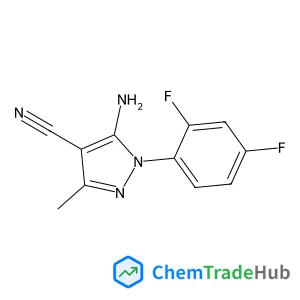
5-Amino-1-(2,4-difluorophenyl)-3-methyl-1H-pyrazole-4-carbonitrile
CAS Number:
1020057-92-4
Molecular Formula:
C11H8F2N4
Recommended Suppliers





Disclaimer
This page provides academic journal information for reference and research purposes only. We are not affiliated with any journal publishers and do not handle publication submissions. For publication-related inquiries, please contact the respective journal publishers directly.
If you notice any inaccuracies in the information displayed, please contact us at support@chemtradehub.com. We will promptly review and address your concerns.