


Theoretical study of the Cl(2P) + SiH4 reaction: global potential energy surface and product pair-correlated distributions. Comparison with experiment
Literature Information
Publication Date
2021-09-13
DOI
10.1039/D1CP02563E
Impact Factor
3.676
Authors
J. Espinosa-Garcia, J. C. Corchado
View Original
Abstract
For the theoretical study of the title reaction, an analytical full-dimensional potential energy surface named PES-2021 was developed for the first time, by fitting high-level explicitly-correlated ab initio data. This reaction presented high exothermicity, (298 K) = −11.6 kcal mol−1, reproducing the experimental evidence; it is a barrierless reaction and no intermediate complexes were found. PES-2021 is a continuous and smooth potential energy surface, it includes intuitive concepts in its development and fitting, such as stretching and bending nuclear motions, and it presents analytical first energy derivatives. Based on PES-2021, kinetics and dynamics studies were carried out using quasi-classical trajectory calculations. In the kinetics study, over the temperature range 300–450 K, we observed that rate constants were practically independent of temperature, with an almost zero activation energy, as compared to 0.0 and −0.48 kcal mol−1 experimentally reported. In this kinetics study the role of the spin–orbit effect on reactivity was analysed. In the dynamics study, different product pair-correlated dynamics properties were compared with the only experimental evidence: product energy partition, product vibrational distribution, product angular distribution and product speed distribution. We observed two mechanisms of reaction, a stripping mechanism associated with large impact parameters and forward scattering, and an indirect mechanism associated with sideways-backward scattering related with “nearly-trapped” trajectories due to the product rotation. In general, theoretical results reasonably simulate the experimental measurements when they consider some rotational and vibrational constraints as well as binning techniques to mimic a quantum-mechanical behaviour. Although the agreement is not quantitative, the present results shed light on the mechanism of this difficult polyatomic reactive system.
Recommended Journals

Chemistry Education Research and Practice

Russian Chemical Bulletin

Russian Journal of General Chemistry

Organic Process Research & Development

Chemical Communications

New Journal of Chemistry

Current Opinion in Colloid & Interface Science

Crystallography Reports

Saudi Pharmaceutical Journal

Russian Journal of Bioorganic Chemistry
Related Literature
Functionalised thermally induced phase separation (TIPS) microparticles enabled for “click” chemistry
João C. F. Nogueira, Ketevan Paliashvili, Alexandra Bradford, Francesco Di Maggio, Daniel A. Richards, Vijay Chudasama
2020-03-02
Communication
DOI: 10.1039/D0OB00106F
A lysosome-targeted near-infrared fluorescent probe for imaging of acid phosphatase in living cells
Songtao Cai, Chang Liu, Xiaojie Jiao, Song He, Liancheng Zhao
2020-01-15
Paper
DOI: 10.1039/C9OB02188D
Phenylboronic acid-catalyzed tandem construction of S–S and C–S bonds: a new method for the synthesis of benzyl disulfanylsulfone derivatives from S-benzyl thiosulfonates
Raju Jannapu Reddy, Md. Waheed, Gamidi Rama Krishna
2020-04-03
Communication
DOI: 10.1039/D0OB00442A
The quasi-irreversible inactivation of cytochrome P450 enzymes by paroxetine: a computational approach
2020-04-06
Paper
DOI: 10.1039/D0OB00529K
Enantioselective synthesis and determination of the absolute configuration of the male sex pheromone of the parasitoid wasp Urolepis rufipes
Kristina Melnik, Christopher Grimm, Johannes Wittbrodt, Joachim Ruther, Stefan Schulz
2020-04-08
Communication
DOI: 10.1039/D0OB00614A
β-Selective xylulofuranosylation via a conformationally-restricted glycosyl donor
Bo-Shun Huang, Todd L. Lowary
2020-02-28
Paper
DOI: 10.1039/D0OB00260G
Synthesis of methylene cyclopropane-fused chromenes and dihydroquinolines by sequential [4 + 2]- and [1 + 2]-annulation
Tianyu Lu, Xuange Zhang
2020-04-07
Paper
DOI: 10.1039/D0OB00389A
Highly selective staining and quantification of intracellular lipid droplets with a compact push–pull fluorophore based on benzothiadiazole
S. Israel Suarez, Caroline C. Warner, Heather Brown-Harding, Andrea M. Thooft, Brett VanVeller, John C. Lukesh, III
2019-12-12
Paper
DOI: 10.1039/C9OB02486G
You might also like
Compound Q&A
What regulatory guidelines apply to 6-Bromo-2-methylimidazo[1,2-a]pyrimidine (CAS: 1111638-05-1)?
6-Bromo-2-methylimidazo[1,2-a]pyrimidine (CAS: 1111638-05-1) falls under various...
1111638-05-16-Bromo-2-methylimid...
Compound Q&A
Are there alternatives to 1-Pyrrolidineethanol, β-methyl-α-phenyl-, (αS,βR) (CAS: 123620-80-4) in synthesis?
While there are no direct alternatives, similar compounds like 1-Pyrrolidineetha...
123620-80-41-Pyrrolidineethanol...
Compound Q&A
Is 4-Methyl-2,6-bis(2-methyl-2-propanyl)phenyl methylcarbamate (CAS: 1918-11-2) safe?
4-Methyl-2,6-bis(2-methyl-2-propanyl)phenyl methylcarbamate (CAS: 1918-11-2) is ...
1918-11-24-Methyl-2,6-bis(2-m...
Compound Q&A
How should 2-(3-Bromo-4-fluorophenyl)-1,3-dioxolane (CAS: 77771-04-1) be stored?
2-(3-Bromo-4-fluorophenyl)-1,3-dioxolane (CAS: 77771-04-1) should be stored in a...
77771-04-12-(3-Bromo-4-fluorop...
Compound Q&A
What are the physical and chemical properties of 4,5,6,7-Tetrahydro-1H-indazole hydrochloride (CAS: 18161-11-0)?
4,5,6,7-Tetrahydro-1H-indazole hydrochloride is a white crystalline solid with a...
18161-11-04,5,6,7-Tetrahydro-1...
Compound Q&A
What is (2R)-1-Methoxy-3-phenyl-2-propanamine (CAS: 59919-07-2)?
(2R)-1-Methoxy-3-phenyl-2-propanamine is a chiral organic compound with the CAS ...
59919-07-2(2R)-1-Methoxy-3-phe...
Compound Q&A
What industries use Ethyl 1-(1-phenylethyl)-1H-imidazole-5-carboxylate (CAS: 56649-47-9)?
Ethyl 1-(1-phenylethyl)-1H-imidazole-5-carboxylate is used in various industries...
56649-47-9Ethyl 1-(1-phenyleth...
Compound Q&A
What regulatory guidelines apply to 4-[(1E,3S)-1-(4-Hydroxyphenyl)-1,4-pentadien-3-yl]phenol (CAS: 17676-24-3)?
4-[(1E,3S)-1-(4-Hydroxyphenyl)-1,4-pentadien-3-yl]phenol (CAS: 17676-24-3) falls...
17676-24-34-[(1E,3S)-1-(4-Hydr...
Compound Q&A
What industries use (S)-3-Amino-5-phenylpentanoic acid hydrochloride (CAS: 331846-97-0)?
(S)-3-Amino-5-phenylpentanoic acid hydrochloride is primarily used in the pharma...
331846-97-0(S)-3-Amino-5-phenyl...
Compound Q&A
How is 7-methoxy-1-benzothiophene-2-carboxylic acid (CAS: 88791-07-5) typically synthesized?
7-Methoxy-1-benzothiophene-2-carboxylic acid is typically synthesized by reactin...
88791-07-57-methoxy-1-benzothi...
Source Journal
Physical Chemistry Chemical Physics

CiteScore:
5.5
Self-citation Rate:
10.3%
Articles per Year:
3036
Physical Chemistry Chemical Physics (PCCP) is an international journal co-owned by 19 physical chemistry and physics societies from around the world. This journal publishes original, cutting-edge research in physical chemistry, chemical physics and biophysical chemistry. To be suitable for publication in PCCP, articles must include significant innovation and/or insight into physical chemistry; this is the most important criterion that reviewers and Editors will judge against when evaluating submissions. The journal has a broad scope and welcomes contributions spanning experiment, theory, computation and data science. Topical coverage includes spectroscopy, dynamics, kinetics, statistical mechanics, thermodynamics, electrochemistry, catalysis, surface science, quantum mechanics, quantum computing and machine learning. Interdisciplinary research areas such as polymers and soft matter, materials, nanoscience, energy, surfaces/interfaces, and biophysical chemistry are welcomed if they demonstrate significant innovation and/or insight into physical chemistry. Joined experimental/theoretical studies are particularly appreciated when complementary and based on up-to-date approaches.
Recommended Compounds
![Benzeneacetic acid, 2-[(2,6-dichlorophenyl)amino]-, compd. with 1-pyrrolidineethanol (1:1) structure](https://static.chemtradehub.com/structs/119/119623-66-4-5301.webp "Benzeneacetic acid, 2-[(2,6-dichlorophenyl)amino]-, compd. with 1-pyrrolidineethanol (1:1) structure")
Benzeneacetic acid, 2-[(2,6-dichlorophenyl)amino]-, compd. with 1-pyrrolidineethanol (1:1)
CAS Number:
119623-66-4
Molecular Formula:
C20H24Cl2N2O3
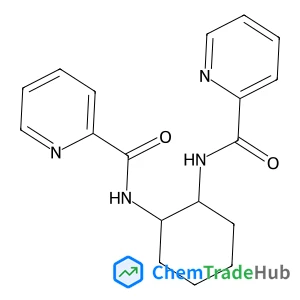
N,N'-(1R,2R)-1,2-Cyclohexanediyldi(2-pyridinecarboxamide)
CAS Number:
218290-24-5
Molecular Formula:
C18H20N4O2
Recommended Suppliers






Disclaimer
This page provides academic journal information for reference and research purposes only. We are not affiliated with any journal publishers and do not handle publication submissions. For publication-related inquiries, please contact the respective journal publishers directly.
If you notice any inaccuracies in the information displayed, please contact us at support@chemtradehub.com. We will promptly review and address your concerns.