













Effects of surface contamination on the interfacial properties of CO2/water/calcite systems
Literature Information
Publication Date
2021-08-12
DOI
10.1039/D1CP01106E
Impact Factor
3.676
Authors
Tran Thi Bao Le, Candice Divine-Ayela, Alberto Striolo, David R. Cole
View Original
Abstract
Understanding the wetting properties of reservoir rocks can be of great benefit for advanced applications such as the effective trapping and geological storage of CO2. Despite their importance, not all mechanisms responsible for wetting mineral surfaces in subsurface environments are well understood. Factors such as temperature, pressure and salinity are often studied, achieving results with little unanimity; other possible factors are left somewhat unexplored. One such factor is the effect of contamination. In the present study, the effects of adding a non-aqueous organic contaminant, ethanol, on the CO2–water interfacial tension (IFT) and the CO2/water/calcite contact angle were investigated using molecular dynamics simulations. Within the conditions studied, relatively small amounts of ethanol cause a significant decrease in the CO2–water IFTs, as well as a pronounced increase in the water-calcite-CO2 three phase contact angle. The latter result is due to the decrease of the IFT between CO2 and water and the strong adsorption of ethanol on the solid substrate. These findings could be helpful for explaining how impurities can affect experimental data and could lead to effective carbon sequestration strategies.
Related Literature
Block copolymer mediated deposition of metal nanoparticles on germanium nanowires
Jiguang Zhang, Yuan Gao, Tobias Hanrath, Brian A. Korgel, Jillian M. Buriak
2007-01-29
Communication
DOI: 10.1039/B616883C
An unprecedented twofold interpenetrating (3,4)-connected 3-D metal–organic framework
Seunghee Hong, Yang Zou, Dohyun Moon, Myoung Soo Lah
2007-03-30
Communication
DOI: 10.1039/B702216F
Aqueous-biphasic hydroformylation of higher alkenes promoted by alkylimidazolium salts
Simon L. Desset, David J. Cole-Hamilton, Douglas F. Foster
2007-04-10
Communication
DOI: 10.1039/B618785D
Acridinone-based anion receptors and sensors
Sergio E. García-Garrido, Claudia Caltagirone, Mark E. Light, Philip A. Gale
2007-01-26
Communication
DOI: 10.1039/B618072H
Nanofibers from self-assembly of an aromatic facial amphiphile with oligo(ethylene oxide) dendrons
Dong-Je Hong, Eunji Lee, Myongsoo Lee
2007-02-12
Communication
DOI: 10.1039/B617404C
Hybrid lipid bilayers in nanostructured silicon: a biomimetic mesoporous scaffold for optical detection of cholera toxin
Kristopher A. Kilian, Katharina Gaus, Justin King-Lacroix, Michael Gal, J. Justin Gooding
2007-04-05
Communication
DOI: 10.1039/B702762A
Au–silicananoparticles by “reverse” synthesis of cores in hollow silica shells
Sara Cavaliere-Jaricot, Masih Darbandi, Thomas Nann
2007-04-13
Communication
DOI: 10.1039/B703811A
An entry route into non-aqueous plutonyl coordination chemistry
Andrew J. Gaunt, Sean D. Reilly, Trevor W. Hayton, Brian L. Scott, Mary P. Neu
2007-02-08
Communication
DOI: 10.1039/B618577K
You might also like
Compound Q&A
What precautions should be taken when handling 2-Chloro-1,2-bis(4-methylphenyl)ethanone (CAS: 71193-32-3)?
When handling 2-Chloro-1,2-bis(4-methylphenyl)ethanone (CAS: 71193-32-3), it is ...
71193-32-32-Chloro-1,2-bis(4-m...
Compound Q&A
What industries use 4-Ethoxy-3-(5-methyl-4-oxo-7-propyl-1,4-dihydroimidazo[5,1-f][1,2,4]triazin-2-yl)benzenesulfonyl chloride (CAS: 224789-26-8)?
4-Ethoxy-3-(5-methyl-4-oxo-7-propyl-1,4-dihydroimidazo[5,1-f][1,2,4]triazin-2-yl...
224789-26-84-Ethoxy-3-(5-methyl...
Compound Q&A
How should Methyl 3-Oxo-4-Androsten-17-Carboxylate (CAS: 2681-55-2) be stored?
Methyl 3-Oxo-4-Androsten-17-Carboxylate (CAS: 2681-55-2) should be stored in a c...
2681-55-2Methyl 3-Oxo-4-Andro...
Compound Q&A
What are the main uses of (R)-3-Amino-4-(3-hexylphenylamino)-4-oxobutylphosphonic acid (CAS: 909725-61-7)?
(R)-3-Amino-4-(3-hexylphenylamino)-4-oxobutylphosphonic acid is primarily used i...
909725-61-7(R)-3-Amino-4-(3-hex...
Compound Q&A
What regulatory guidelines apply to 2-Methyl-2-propanyl 3-amino-3-carbamoyl-1-azetidinecarboxylate (CAS: 1254120-14-3)?
2-Methyl-2-propanyl 3-amino-3-carbamoyl-1-azetidinecarboxylate (CAS: 1254120-14-...
1254120-14-32-Methyl-2-propanyl ...
Compound Q&A
Are there alternatives to (E)-4-(tert-Butoxy)-4-oxobut-2-enoic acid (CAS: 135355-96-3) in synthesis?
There are alternative reagents that can be used in synthesis instead of (E)-4-(t...
135355-96-3(E)-4-(tert-Butoxy)-...
Compound Q&A
What are the physical and chemical properties of [2-(3-Chlorophenyl)-1,3-thiazol-4-yl]methanol (CAS: 121202-20-8)?
[2-(3-Chlorophenyl)-1,3-thiazol-4-yl]methanol (CAS: 121202-20-8) is a crystallin...
121202-20-8[2-(3-Chlorophenyl)-...
Compound Q&A
What is the market or research trend for Methyl (2S)-[(4S)-2,2-dimethyl-1,3-dioxolan-4-yl]{[(4-methylphenyl)sulfonyl]oxy}acetate (CAS: 166249-17-8)?
The market and research trends for Methyl (2S)-[(4S)-2,2-dimethyl-1,3-dioxolan-4...
166249-17-8Methyl (2S)-[(4S)-2,...
Compound Q&A
What is the market or research trend for 1-Bromo-2-isocyanatoethane (CAS: 42865-19-0)?
The market for 1-Bromo-2-isocyanatoethane (CAS: 42865-19-0) is driven by its use...
42865-19-01-Bromo-2-isocyanato...
Compound Q&A
What are the main uses of 4-Nitro-D-phenylalanine hydrochloride (CAS: 147065-06-3)?
4-Nitro-D-phenylalanine hydrochloride (CAS: 147065-06-3) is primarily used in re...
147065-06-34-Nitro-D-phenylalan...
Source Journal
Physical Chemistry Chemical Physics

CiteScore:
5.5
Self-citation Rate:
10.3%
Articles per Year:
3036
Physical Chemistry Chemical Physics (PCCP) is an international journal co-owned by 19 physical chemistry and physics societies from around the world. This journal publishes original, cutting-edge research in physical chemistry, chemical physics and biophysical chemistry. To be suitable for publication in PCCP, articles must include significant innovation and/or insight into physical chemistry; this is the most important criterion that reviewers and Editors will judge against when evaluating submissions. The journal has a broad scope and welcomes contributions spanning experiment, theory, computation and data science. Topical coverage includes spectroscopy, dynamics, kinetics, statistical mechanics, thermodynamics, electrochemistry, catalysis, surface science, quantum mechanics, quantum computing and machine learning. Interdisciplinary research areas such as polymers and soft matter, materials, nanoscience, energy, surfaces/interfaces, and biophysical chemistry are welcomed if they demonstrate significant innovation and/or insight into physical chemistry. Joined experimental/theoretical studies are particularly appreciated when complementary and based on up-to-date approaches.
Recommended Compounds

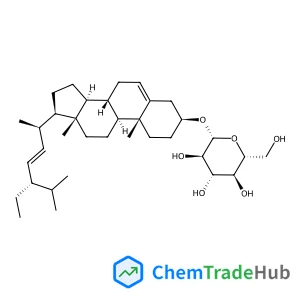
(3beta,22E)-Stigmasta-5,22-dien-3-yl beta-D-glucopyranoside
CAS Number:
19716-26-8
Molecular Formula:
C35H58O6
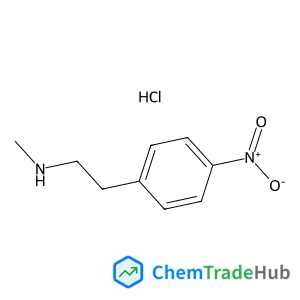
N-Methyl-2-(4-nitrophenyl)ethanamine hydrochloride (1:1)
CAS Number:
166943-39-1
Molecular Formula:
C9H13ClN2O2
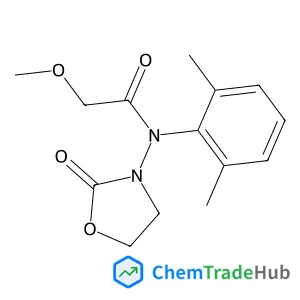
N-(2,6-Dimethylphenyl)-2-methoxy-N-(2-oxo-1,3-oxazolidin-3-yl)acetamide
CAS Number:
77732-09-3
Molecular Formula:
C14H18N2O4
Recommended Suppliers



Disclaimer
This page provides academic journal information for reference and research purposes only. We are not affiliated with any journal publishers and do not handle publication submissions. For publication-related inquiries, please contact the respective journal publishers directly.
If you notice any inaccuracies in the information displayed, please contact us at support@chemtradehub.com. We will promptly review and address your concerns.