












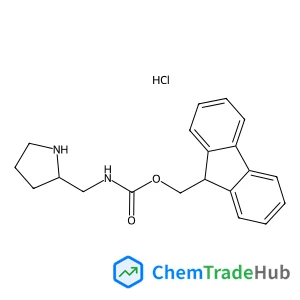
(S)-(9H-Fluoren-9-yl)methyl (pyrrolidin-2-ylmethyl)carbamate hydrochloride
CAS Number:
1217813-15-4
Molecular Formula:
C20H23ClN2O2
Timothy W. Marin, Ireneusz Janik, David M. Bartels, Daniel M. Chipman
The lowest band in the charge-transfer-to-solvent ultraviolet absorption spectrum of aqueous chloride ion is studied by experiment and computation. Interestingly, the experiments indicate that at concentrations up to at least 0.25 M, where calculations indicate ion pairing to be significant, there is no notable effect of ionic strength on the spectrum. The experimental spectra are fitted to aid comparison with computations. Classical molecular dynamic simulations are carried out on dilute aqueous Cl−, Na+, and NaCl, producing radial distribution functions in reasonable agreement with experiment and, for NaCl, clear evidence of ion pairing. Clusters are extracted from the simulations for quantum mechanical excited state calculations. Accurate ab initio coupled-cluster benchmark calculations on a small number of representative clusters are carried out and used to identify and validate an efficient protocol based on time-dependent density functional theory. The latter is used to carry out quantum mechanical calculations on thousands of clusters. The resulting computed spectrum is in excellent agreement with experiment for the peak position, with little influence from ion pairing, but is in qualitative disagreement on the width, being only about half as wide. It is concluded that simulation by classical molecular dynamics fails to provide an adequate variety of structures to explain the experimental CTTS spectrum of aqueous Cl−.
Yang Zhang, Wenxing Jiang, Zhenying Chen, Yingying Liu, Chengwei Deng, Xiaodong Zhuang, Junliang Zhang, Changchun Ke
DOI: 10.1039/D3SE01401K
Jiali Nie, Ying Li, Dongyue Gao, Yi Fang, Jing Lin, Chengchun Tang, Zhonglu Guo
DOI: 10.1039/D3CP04718K
Jianglu Huang, Donggang Zhao, Yu Zhao
DOI: 10.1039/D3SE01403G
Alasdair D. Keith, Elizabeth B. Sawyer, Desmond C. Y. Choy, Yuhang Xie, George S. Biggs, Oskar James Klein, Paul D. Brear, David J. Wales, Paul D. Barker
DOI: 10.1039/D3CP03897A
DOI: 10.1039/D3CP03393G
Abhishek Kalpattu, Tristan Dilbeck, Kenneth Hanson
DOI: 10.1039/D3CP90241B
Qifeng Mu, Jian Hu
DOI: 10.1039/D3CP04160C
Naixia Lv, Hongshun Ran, Jinrui Zhang, Jie Yin, Yuan Zhang, Hongping Li, Linhua Zhu
DOI: 10.1039/D3CP04963A
Jiarui Li, Tao Zeng, Zexing Qu, Yu Zhai, Hui Li
DOI: 10.1039/D3CP05278H
Waste containing N-Methoxy-N-methyl-1,3-thiazole-5-carboxamide (CAS: 898825-89-3...
N-(4-Biphenylyl)dibenzo[b,d]furan-4-amine should be stored in a tightly sealed c...
The market for 3-Acetamido-5-amino-2,4,6-triiodobenzoic acid (CAS: 1713-07-1) is...
Benzyl 2-O-acetyl-3,4,6-tri-O-benzyl-beta-D-galactopyranoside (CAS: 61820-03-9) ...
2-Ethylpiperazine dihydrochloride (CAS: 438050-52-3) is regulated under the Glob...
1,1'-[1,3-Phenylenebis(methylene)]bis(3-methyl-1H-pyrrole-2,5-dione) (CAS: 11946...
Several alternatives can be used in the synthesis of 5-Fluoro-2-(1-pyrrolidinyl)...
Proper personal protective equipment (PPE) must be worn when handling this compo...
When handling 6-Bromoimidazo[1,2-a]pyridin-8-amine, it is important to wear appr...
Alternatives to (2S,4R)-4-(4-Nitrobenzyl)pyrrolidine-2-carboxylic acid hydrochlo...

Physical Chemistry Chemical Physics (PCCP) is an international journal co-owned by 19 physical chemistry and physics societies from around the world. This journal publishes original, cutting-edge research in physical chemistry, chemical physics and biophysical chemistry. To be suitable for publication in PCCP, articles must include significant innovation and/or insight into physical chemistry; this is the most important criterion that reviewers and Editors will judge against when evaluating submissions. The journal has a broad scope and welcomes contributions spanning experiment, theory, computation and data science. Topical coverage includes spectroscopy, dynamics, kinetics, statistical mechanics, thermodynamics, electrochemistry, catalysis, surface science, quantum mechanics, quantum computing and machine learning. Interdisciplinary research areas such as polymers and soft matter, materials, nanoscience, energy, surfaces/interfaces, and biophysical chemistry are welcomed if they demonstrate significant innovation and/or insight into physical chemistry. Joined experimental/theoretical studies are particularly appreciated when complementary and based on up-to-date approaches.
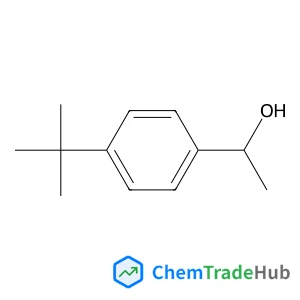
![2-Methyl-2-propanyl {3-[4-(4,4,5,5-tetramethyl-1,3,2-dioxaborolan-2-yl)phenyl]-3-oxetanyl}carbamate structure](https://static.chemtradehub.com/structs/127/1279090-25-3-1b84.webp "2-Methyl-2-propanyl {3-[4-(4,4,5,5-tetramethyl-1,3,2-dioxaborolan-2-yl)phenyl]-3-oxetanyl}carbamate structure")
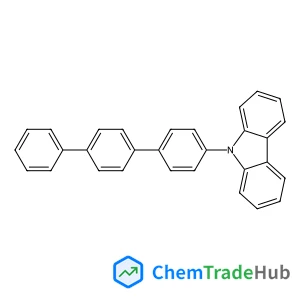
![2-Methylbenzo[h]quinoline structure](https://static.chemtradehub.com/structs/605/605-88-9-ac43.webp "2-Methylbenzo[h]quinoline structure")



