













Mechanism and kinetics of the oxidation of 1,3-butadien-1-yl (n-C4H5): a theoretical study
Literature Information
Publication Date
2021-04-03
DOI
10.1039/D1CP00567G
Impact Factor
3.676
Authors
Valeriy N. Azyazov
View Original
Abstract
Ab initio CCSD(T)-F12/cc-pVTZ-f12//B3LYP/6-311G(d,p) calculations of the C4H5O2 potential energy surface have been combined with Rice–Ramsperger–Kassel–Marcus Master Equation (RRKM-ME) calculations of temperature- and pressure-dependent rate constants and product branching ratios to unravel the mechanism and kinetics of the n-C4H5 + O2 reaction. The results indicate that the reaction is fast, with the total rate constant being in the range of 3.4–5.6 × 10⁻¹¹ cm3 molecule−1 s−1. The main products include 1-oxo-n-butadienyl + O and acrolein + HCO, with their cumulative yield exceeding 90% at temperatures above 1500 K. Two conformers of 1-oxo-n-butadienyl + O are formed via a simple mechanism of O2 addition to the radical site of n-C4H5 followed by the cleavage of the O–O bond proceeding via a van der Waals C4H5O⋯O complex. Alternatively, the pathways leading to acrolein + HCO involve significant reorganization of the heavy-atom skeleton either via formal migration of one O atom to the opposite end of the molecule or its insertion into the C1–C2 bond. Not counting thermal stabilization of the initial peroxy adducts, which prevails at low temperatures and high pressures, all other products share a minor yield of under 5%. Rate constants for the significant reaction channels have been fitted to modified Arrhenius expressions and are proposed for kinetic modeling of the oxidation of aromatic molecules and 1,3-butadiene. As a secondary reaction, n-C4H5 + O2 can be a source for the formation of acrolein observed experimentally in oxidation of the phenyl radical at low combustion temperatures, whereas another significant (secondary) product of the C6H5 + O2 reaction, furan, could be formed through unimolecular decomposition of 1-oxo-n-butadienyl. Both the n-C4H5 + O2 reaction and unimolecular decomposition of its 1-oxo-n-butadienyl primary product are shown not to be a substantial source of ketene.
Related Literature
Confinement effects for ionic carriers in SrTiO3 ultrathin films: first-principles calculations of oxygen vacancies
R. A. Evarestov, J. Maier
2010-11-29
Communication
DOI: 10.1039/C0CP01060J
Sensitive and selective electrochemical sensing of l-cysteine based on a caterpillar-like manganese dioxide–carbon nanocomposite
Chunhui Xiao, Jinhua Chen, Bo Liu, Xiaochen Chu, Liang Wu, Shouzhuo Yao
2010-11-23
Paper
DOI: 10.1039/C0CP00980F
The hunt for HCO(aq)
Svend Knak Jensen, Søren Rud Keiding, Jan Thøgersen
2010-06-18
Paper
DOI: 10.1039/B924902H
Selective adsorption and chiral amplification of amino acids in vermiculite clay-implications for the origin of biochirality
Daniel Fitz, T. Jakschitz, Bernd M. Rode
2010-10-28
Paper
DOI: 10.1039/C0CP01388A
Unraveling the similarity of the photoabsorption of deprotonated p-coumaric acid in the gas phase and within the photoactive yellow protein
Tomás Rocha-Rinza, Kristian Sneskov, Ove Christiansen, Ulf Ryde, Jacob Kongsted
2010-12-06
Paper
DOI: 10.1039/C0CP01075H
Effect of protonation on the electronic structure of aromatic molecules: naphthaleneH+
Ivan Alata, Otto Dopfer
2010-10-06
Communication
DOI: 10.1039/C0CP00792G
Spectroelectrochemical studies of hole percolation on functionalised nanocrystalline TiO2 films: a comparison of two different ruthenium complexes
Xiaoe Li, Mohammad K. Nazeeruddin, Mukundan Thelakkat, Piers R. F. Barnes, Ramón Vilar, James R. Durrant
2010-11-16
Paper
DOI: 10.1039/C0CP01013H
Enhanced performance of a dye-sensitized solar cell with the incorporation of titanium carbide in the TiO2 matrix
Chuan-Pei Lee, Po-Yen Chen, R. Vittal
2010-06-23
Paper
DOI: 10.1039/B923477B
Photoinduced tautomeric transformations of xanthurenic acid
Vadim V. Yanshole, Peter S. Sherin, Nina P. Gritsan, Olga A. Snytnikova, Victor I. Mamatyuk, Jakob Grilj, Eric Vauthey, Renad Z. Sagdeev, Yuri P. Tsentalovich
2010-07-08
Paper
DOI: 10.1039/C000735H
A chemical dynamics, kinetics, and theoretical study on the reaction of the cyano radical (CN; X2Σ+) with phenylacetylene (C6H5CCH; X1A1)
Chris J. Bennett, Sébastien B. Morales, Sébastien D. Le Picard, André Canosa, Ian R. Sims, Y. H. Shih, A. H. H. Chang, Xibin Gu, Fantong Zhang, Ralf I. Kaiser
2010-04-06
Paper
DOI: 10.1039/B925072G
You might also like
Compound Q&A
How should waste containing N-Methoxy-N-methyl-1,3-thiazole-5-carboxamide (CAS: 898825-89-3) be handled?
Waste containing N-Methoxy-N-methyl-1,3-thiazole-5-carboxamide (CAS: 898825-89-3...
898825-89-3N-Methoxy-N-methyl-1...
Compound Q&A
How should N-(4-Biphenylyl)dibenzo[b,d]furan-4-amine (CAS: 1318338-47-4) be stored?
N-(4-Biphenylyl)dibenzo[b,d]furan-4-amine should be stored in a tightly sealed c...
1318338-47-4N-(4-Biphenylyl)dibe...
Compound Q&A
What is the market or research trend for 3-Acetamido-5-amino-2,4,6-triiodobenzoic acid (CAS: 1713-07-1)?
The market for 3-Acetamido-5-amino-2,4,6-triiodobenzoic acid (CAS: 1713-07-1) is...
1713-07-13-Acetamido-5-amino-...
Compound Q&A
How should Benzyl 2-O-acetyl-3,4,6-tri-O-benzyl-beta-D-galactopyranoside (CAS: 61820-03-9) be stored?
Benzyl 2-O-acetyl-3,4,6-tri-O-benzyl-beta-D-galactopyranoside (CAS: 61820-03-9) ...
61820-03-9Benzyl 2-O-acetyl-3,...
Compound Q&A
What regulatory guidelines apply to 2-Ethylpiperazine dihydrochloride (CAS: 438050-52-3)?
2-Ethylpiperazine dihydrochloride (CAS: 438050-52-3) is regulated under the Glob...
438050-52-32-Ethylpiperazine di...
Compound Q&A
What regulatory guidelines apply to 1,1'-[1,3-Phenylenebis(methylene)]bis(3-methyl-1H-pyrrole-2,5-dione) (CAS: 119462-56-5)?
1,1'-[1,3-Phenylenebis(methylene)]bis(3-methyl-1H-pyrrole-2,5-dione) (CAS: 11946...
119462-56-51,1'-[1,3-Phenyleneb...
Compound Q&A
Are there alternatives to 5-Fluoro-2-(1-pyrrolidinyl)pyridine (CAS: 1287217-79-1) in synthesis?
Several alternatives can be used in the synthesis of 5-Fluoro-2-(1-pyrrolidinyl)...
1287217-79-15-Fluoro-2-(1-pyrrol...
Compound Q&A
What precautions should be taken when handling 1-((2R,3R,4R,5R)-5-((bis(4-methoxyphenyl)(phenyl)methoxy)methyl)-4-hydroxy-3-methoxytetrahydrofuran-2-yl)-5-methylpyrimidine-2,4(1H,3H)-dione (CAS: 153631-19-7)?
Proper personal protective equipment (PPE) must be worn when handling this compo...
153631-19-71-((2R,3R,4R,5R)-5-(...
Compound Q&A
What precautions should be taken when handling 6-Bromoimidazo[1,2-a]pyridin-8-amine (CAS: 676371-00-9)?
When handling 6-Bromoimidazo[1,2-a]pyridin-8-amine, it is important to wear appr...
676371-00-96-Bromoimidazo[1,2-a...
Compound Q&A
Are there alternatives to (2S,4R)-4-(4-Nitrobenzyl)pyrrolidine-2-carboxylic acid hydrochloride (CAS: 1049740-22-8) in synthesis?
Alternatives to (2S,4R)-4-(4-Nitrobenzyl)pyrrolidine-2-carboxylic acid hydrochlo...
1049740-22-8(2S,4R)-4-(4-Nitrobe...
Source Journal
Physical Chemistry Chemical Physics

CiteScore:
5.5
Self-citation Rate:
10.3%
Articles per Year:
3036
Physical Chemistry Chemical Physics (PCCP) is an international journal co-owned by 19 physical chemistry and physics societies from around the world. This journal publishes original, cutting-edge research in physical chemistry, chemical physics and biophysical chemistry. To be suitable for publication in PCCP, articles must include significant innovation and/or insight into physical chemistry; this is the most important criterion that reviewers and Editors will judge against when evaluating submissions. The journal has a broad scope and welcomes contributions spanning experiment, theory, computation and data science. Topical coverage includes spectroscopy, dynamics, kinetics, statistical mechanics, thermodynamics, electrochemistry, catalysis, surface science, quantum mechanics, quantum computing and machine learning. Interdisciplinary research areas such as polymers and soft matter, materials, nanoscience, energy, surfaces/interfaces, and biophysical chemistry are welcomed if they demonstrate significant innovation and/or insight into physical chemistry. Joined experimental/theoretical studies are particularly appreciated when complementary and based on up-to-date approaches.
Recommended Compounds

N1,N1-Bis(4-aminophenyl)benzene-1,4-diamine trihydrochloride
CAS Number:
114254-48-7
Molecular Formula:
C18H21Cl3N4
![2-Methyl-2-propanyl {3-[4-(4,4,5,5-tetramethyl-1,3,2-dioxaborolan-2-yl)phenyl]-3-oxetanyl}carbamate structure](https://static.chemtradehub.com/structs/127/1279090-25-3-1b84.webp "2-Methyl-2-propanyl {3-[4-(4,4,5,5-tetramethyl-1,3,2-dioxaborolan-2-yl)phenyl]-3-oxetanyl}carbamate structure")
2-Methyl-2-propanyl {3-[4-(4,4,5,5-tetramethyl-1,3,2-dioxaborolan-2-yl)phenyl]-3-oxetanyl}carbamate
CAS Number:
1279090-25-3
Molecular Formula:
C20H30BNO5
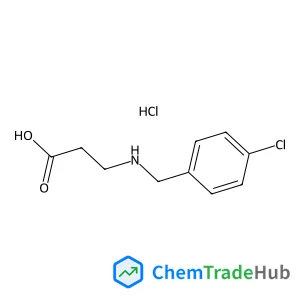
N-(4-Chlorobenzyl)-beta-alanine hydrochloride (1:1)
CAS Number:
1172479-10-5
Molecular Formula:
C10H13Cl2NO2
Recommended Suppliers






Disclaimer
This page provides academic journal information for reference and research purposes only. We are not affiliated with any journal publishers and do not handle publication submissions. For publication-related inquiries, please contact the respective journal publishers directly.
If you notice any inaccuracies in the information displayed, please contact us at support@chemtradehub.com. We will promptly review and address your concerns.