


Lead-free perovskite compounds CsSn1−xGexI3−yBry explored for superior visible-light absorption
Literature Information
Publication Date
2021-06-18
DOI
10.1039/D1CP00024A
Impact Factor
3.676
Authors
Junli Chang, Liping Jiang, Guangzhao Wang, Wei Zhao, Yuhong Huang
View Original
Abstract
Hybrid perovskites are favoured over other numerous optoelectronic materials, thanks to their rapidly enhanced power conversion efficiency (PCE) and facile processing. At present, future developments are seriously hampered by the high toxicity of heavy metals and poor stability. Inorganic lead-free perovskites, CsSn1−xGexI3−yBry, are herein explored for superior optical performance by first-principles calculations based on density functional theory (DFT). It is unveiled that the valence band maximum (VBM) is mainly occupied by the p-orbit of halide ions, while the conduction band minimum (CBM) is composed of the p-orbit of the metal ion. Moreover, Bader charge analysis shows that CsSn0.5Ge0.5I3 corresponds to the most obvious charge transfer compared to the others. The defect formation energy indicates that perovskite compounds CsSn1−xGexI3−yBry, are more easily synthesized than the series CsSn1−xGexI3, and the physically accessible area is also determined in the coordinate system defined by the chemical potential change of the host atoms, ΔμSn and ΔμI. Additionally, the absorption spectra show that among the doped compounds of the form CsSn0.5Ge0.5I3−yBry, perovskite CsSn0.5Ge0.5I2Br is superior in terms of optical response in the visible-light range. The results shed a new light on the study of highly efficient and stable lead-free perovskite-based solar cells (PSCs).
Recommended Journals

Current Opinion in Colloid & Interface Science

Russian Journal of Applied Chemistry

Crystallography Reports

Russian Journal of General Chemistry

Chemistry Education Research and Practice

Current Opinion in Solid State & Materials Science

Russian Journal of Coordination Chemistry

New Journal of Chemistry

Saudi Pharmaceutical Journal

Chemical Communications
Related Literature
A base-promoted tandem approach to bicyclic 8-membered ring ketones
Emerson E. F. dos Santos, Gabriela F. P. de Souza, Deborah A. Simoni, Airton G. Salles, Jr
2020-04-13
Communication
DOI: 10.1039/D0OB00618A
Toward the total synthesis of grayanane diterpene mollanol A by a Prins [3 + 2] strategy
Jianzhuang Miao, Yi-Xuan Zheng, Shi-Chao Lu, Shi-Peng Zhang, Ya-Ling Gong, Shu Xu
2020-02-15
Communication
DOI: 10.1039/D0OB00160K
Copper-catalyzed diastereoselective hydrothioetherification of oxa(aza)benzonorbornadienes
Yongqi Yao, Wen Yang, Yun Tan, Shuqi Chen, Donghan Chen, Dingqiao Yang
2020-04-20
Paper
DOI: 10.1039/D0OB00659A
Asymmetric total syntheses of naturally occurring α,β-enone-containing RALs, L-783290 and L-783277 through intramolecular base-mediated macrolactonization reaction
Joy Chakraborty, Samik Nanda
2020-03-09
Paper
DOI: 10.1039/D0OB00237B
Stereoselective Michael additions on α-aminoacrylates as the key step to an l-Oic analogue bearing a quaternary stereocenter
Federico Maria Cecchinelli, Giuseppe Celentano, Alessandra Puglisi, Nicoletta Gaggero
2019-12-16
Paper
DOI: 10.1039/C9OB02084E
Synthesis of 3-fluoro-2,5-disubstituted furans through ring expansion of gem-difluorocyclopropyl ketones
Tsuyuka Sugiishi, Chihori Matsumura, Hideki Amii
2020-02-28
Communication
DOI: 10.1039/C9OB02713K
Structure elucidation of bacterial nonribosomal lipopeptides
Sebastian Götze, Pierre Stallforth
2020-02-03
Review Article
DOI: 10.1039/C9OB02539A
Examination of pinanediol–boronic acid ester formation in aqueous media: relevance to the relative stability of trigonal and tetrahedral boronate esters
Mayte A. Martínez-Aguirre, Marcos Flores-Alamo, Felipe Medrano, Anatoly K. Yatsimirsky
2020-03-18
Paper
DOI: 10.1039/D0OB00201A
You might also like
Compound Q&A
What regulatory guidelines apply to 6-Bromo-2-methylimidazo[1,2-a]pyrimidine (CAS: 1111638-05-1)?
6-Bromo-2-methylimidazo[1,2-a]pyrimidine (CAS: 1111638-05-1) falls under various...
1111638-05-16-Bromo-2-methylimid...
Compound Q&A
Are there alternatives to 1-Pyrrolidineethanol, β-methyl-α-phenyl-, (αS,βR) (CAS: 123620-80-4) in synthesis?
While there are no direct alternatives, similar compounds like 1-Pyrrolidineetha...
123620-80-41-Pyrrolidineethanol...
Compound Q&A
Is 4-Methyl-2,6-bis(2-methyl-2-propanyl)phenyl methylcarbamate (CAS: 1918-11-2) safe?
4-Methyl-2,6-bis(2-methyl-2-propanyl)phenyl methylcarbamate (CAS: 1918-11-2) is ...
1918-11-24-Methyl-2,6-bis(2-m...
Compound Q&A
How should 2-(3-Bromo-4-fluorophenyl)-1,3-dioxolane (CAS: 77771-04-1) be stored?
2-(3-Bromo-4-fluorophenyl)-1,3-dioxolane (CAS: 77771-04-1) should be stored in a...
77771-04-12-(3-Bromo-4-fluorop...
Compound Q&A
What are the physical and chemical properties of 4,5,6,7-Tetrahydro-1H-indazole hydrochloride (CAS: 18161-11-0)?
4,5,6,7-Tetrahydro-1H-indazole hydrochloride is a white crystalline solid with a...
18161-11-04,5,6,7-Tetrahydro-1...
Compound Q&A
What is (2R)-1-Methoxy-3-phenyl-2-propanamine (CAS: 59919-07-2)?
(2R)-1-Methoxy-3-phenyl-2-propanamine is a chiral organic compound with the CAS ...
59919-07-2(2R)-1-Methoxy-3-phe...
Compound Q&A
What industries use Ethyl 1-(1-phenylethyl)-1H-imidazole-5-carboxylate (CAS: 56649-47-9)?
Ethyl 1-(1-phenylethyl)-1H-imidazole-5-carboxylate is used in various industries...
56649-47-9Ethyl 1-(1-phenyleth...
Compound Q&A
What regulatory guidelines apply to 4-[(1E,3S)-1-(4-Hydroxyphenyl)-1,4-pentadien-3-yl]phenol (CAS: 17676-24-3)?
4-[(1E,3S)-1-(4-Hydroxyphenyl)-1,4-pentadien-3-yl]phenol (CAS: 17676-24-3) falls...
17676-24-34-[(1E,3S)-1-(4-Hydr...
Compound Q&A
What industries use (S)-3-Amino-5-phenylpentanoic acid hydrochloride (CAS: 331846-97-0)?
(S)-3-Amino-5-phenylpentanoic acid hydrochloride is primarily used in the pharma...
331846-97-0(S)-3-Amino-5-phenyl...
Compound Q&A
How is 7-methoxy-1-benzothiophene-2-carboxylic acid (CAS: 88791-07-5) typically synthesized?
7-Methoxy-1-benzothiophene-2-carboxylic acid is typically synthesized by reactin...
88791-07-57-methoxy-1-benzothi...
Source Journal
Physical Chemistry Chemical Physics

CiteScore:
5.5
Self-citation Rate:
10.3%
Articles per Year:
3036
Physical Chemistry Chemical Physics (PCCP) is an international journal co-owned by 19 physical chemistry and physics societies from around the world. This journal publishes original, cutting-edge research in physical chemistry, chemical physics and biophysical chemistry. To be suitable for publication in PCCP, articles must include significant innovation and/or insight into physical chemistry; this is the most important criterion that reviewers and Editors will judge against when evaluating submissions. The journal has a broad scope and welcomes contributions spanning experiment, theory, computation and data science. Topical coverage includes spectroscopy, dynamics, kinetics, statistical mechanics, thermodynamics, electrochemistry, catalysis, surface science, quantum mechanics, quantum computing and machine learning. Interdisciplinary research areas such as polymers and soft matter, materials, nanoscience, energy, surfaces/interfaces, and biophysical chemistry are welcomed if they demonstrate significant innovation and/or insight into physical chemistry. Joined experimental/theoretical studies are particularly appreciated when complementary and based on up-to-date approaches.
Recommended Compounds
![9H-Fluoren-9-ylmethyl {15-[(2,5-dioxo-1-pyrrolidinyl)oxy]-15-oxo-3,6,9,12-tetraoxapentadec-1-yl}carbamate structure](https://static.chemtradehub.com/structs/131/1314378-14-7-4316.webp "9H-Fluoren-9-ylmethyl {15-[(2,5-dioxo-1-pyrrolidinyl)oxy]-15-oxo-3,6,9,12-tetraoxapentadec-1-yl}carbamate structure")
9H-Fluoren-9-ylmethyl {15-[(2,5-dioxo-1-pyrrolidinyl)oxy]-15-oxo-3,6,9,12-tetraoxapentadec-1-yl}carbamate
CAS Number:
1314378-14-7
Molecular Formula:
C30H36N2O10
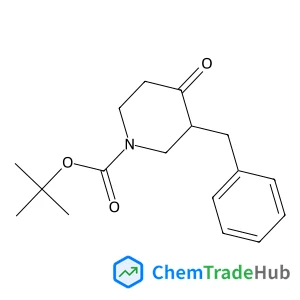
2-Methyl-2-propanyl 3-benzyl-4-oxo-1-piperidinecarboxylate
CAS Number:
193274-82-7
Molecular Formula:
C17H23NO3
Recommended Suppliers





Disclaimer
This page provides academic journal information for reference and research purposes only. We are not affiliated with any journal publishers and do not handle publication submissions. For publication-related inquiries, please contact the respective journal publishers directly.
If you notice any inaccuracies in the information displayed, please contact us at support@chemtradehub.com. We will promptly review and address your concerns.