



Catalytic sugarcane bagasse transformation into a suitable biocrude for hydrocarbon production in typical refinery processes
Literature Information
Publication Date
2020-05-26
DOI
10.1039/D0SE00220H
Impact Factor
6.367
Authors
Débora N. dos Santos, Igor V. Pedrosa, Abdou Lachgar, Marcio Neli, Rafael Garrett, Yiu Lau Lam, Marcelo M. Pereira
View Original
Abstract
The conversion of biomass to green hydrocarbons offers great advantages to shorten our path to sustainability. Unfortunately, none of the existing approaches produces a biocrude that is compatible (in terms of density, viscosity, and reactivity) with current refinery processes. In this work, sugarcane bagasse was converted completely to a biocrude rich in O-isopropylidene acetals by an acetalization process using a continuous flow reactor. Hemicellulose is the first component that transformed into acetals followed by amorphous and crystalline cellulose. Hence, the composition of the biocrude to be collected under specific reaction conditions could be tuned in terms of the type of carbohydrate (pentoses and hexoses) and their derivatives. The process was also applied at a larger scale (20-fold increase) to produce a stable biocrude with density ≈1.2 g cm−3, viscosity of 200 cp (60 °C) and specific heat 1.8 J g °C−1 confirming its properties for conversion in typical refinery processes.
Recommended Journals

Crystallography Reports

Saudi Pharmaceutical Journal

New Journal of Chemistry

Journal of Peptide Science

Russian Journal of Bioorganic Chemistry

Journal of Saudi Chemical Society

Current Opinion in Solid State & Materials Science

Chemical Communications

Journal of Natural Medicines

Russian Journal of Organic Chemistry
Related Literature
The base-catalysed cyclisation of phenyl N-(2-hydroxybenzyl)-N-methylcarbamates is concerted
Vojeslav Štěrba, Oldřich Hrabík, Jaromír Kaválek, Jaromír Mindl, Andrew Williams
2002-12-11
Paper
DOI: 10.1039/B209323P
Bioactive polycyclic polyprenylated acylphloroglucinols from Hypericum perforatum
Yi Guo, Na Zhang, Weiguang Sun, Xueyan Duan, Qing Zhang, Qun Zhou, Chunmei Chen, Hucheng Zhu, Zengwei Luo, Junjun Liu, Xiao-Nian Li, Yongbo Xue, Yonghui Zhang
2018-10-08
Paper
DOI: 10.1039/C8OB02067A
A donor–acceptor substituted molecular motor: unidirectional rotation driven by visible light
Richard A. van Delden, Nagatoshi Koumura, Annemarie Schoevaars, Auke Meetsma, Ben L. Feringa
2002-11-08
Communication
DOI: 10.1039/B209378B
A facile tandem decyanation/cyanation reaction of α-iminonitriles toward cyano-substituted amides
Pei Liang, Botao Liu, Haiqing Luo, Jing Zheng, Xiaowei Wen, Tanggao Liu, Min Ye
2018-10-25
Communication
DOI: 10.1039/C8OB02186D
DNA recognition by the anthracycline antibiotic respinomycin D: NMR structure of the intercalation complex with d(AGACGTCT)2
Mark S. Searle, Allister J. Maynard, Huw E. L. Williams
2002-12-05
Paper
DOI: 10.1039/B208622K
Intramolecular charge transfer with N-benzoylaminonaphthalenes. 1-Aminonaphthaleneversus2-aminonaphthalene as electron donors
Xuan Zhang, Chun-Hua Liu, Li-Hong Liu, Lin Guo, Chao-Jie Wang, Yun-Bao Jiang
2003-01-29
Paper
DOI: 10.1039/B210106H
Tuning the keto equilibrium in 4-substituted dipicolinic acid derivatives
Anne-Sophie Chauvin, Sandrine Gras, Jean-Claude G. Bünzli
2003-01-22
Paper
DOI: 10.1039/B211267C
Palladium-catalyzed cascade carboesterification of norbornene with alkynes
Can Li, Jianxiao Li, Huanfeng Jiang
2018-08-29
Paper
DOI: 10.1039/C8OB01799A
HIV-1 protease: mechanism and drug discovery
Ashraf Brik, Chi-Huey Wong
2002-11-26
Perspective
DOI: 10.1039/B208248A
Inherently chiral cone-calix[4]arenes via a subsequent upper rim ring-closing/opening methodology
José Augusto Berrocal, Matthew B. Baker, Laura Baldini, Alessandro Casnati, Stefano Di Stefano
2018-09-22
Paper
DOI: 10.1039/C8OB01813H
You might also like
Compound Q&A
Is 4-Benzyl-2,2-dimethylmorpholine (CAS: 84761-04-6) safe?
4-Benzyl-2,2-dimethylmorpholine is generally considered safe when handled under ...
84761-04-64-Benzyl-2,2-dimethy...
Compound Q&A
What is (5,6-Dimethoxy-3-pyridinyl)boronic acid (CAS: 1346526-61-1)?
(5,6-Dimethoxy-3-pyridinyl)boronic acid is a chemical compound with the molecula...
1346526-61-1(5,6-Dimethoxy-3-pyr...
Compound Q&A
How is 1,1,3,3-Tetramethyl-1,3-bis(2-methyl-2-propanyl)disiloxane (CAS: 67875-55-2) typically synthesized?
1,1,3,3-Tetramethyl-1,3-bis(2-methyl-2-propanyl)disiloxane is synthesized throug...
67875-55-21,1,3,3-Tetramethyl-...
Compound Q&A
What are the main uses of (2R,4S)-1-Boc-4-methylpyrrolidine-2-carboxylic acid (CAS: 1018818-04-6)?
(2R,4S)-1-Boc-4-methylpyrrolidine-2-carboxylic acid is primarily used as a build...
1018818-04-6(2R,4S)-1-Boc-4-meth...
Compound Q&A
What precautions should be taken when handling 2,3-Dichloroacrylonitrile (CAS: 22410-58-8)?
When handling 2,3-Dichloroacrylonitrile, it is crucial to wear appropriate perso...
22410-58-82,3-Dichloroacryloni...
Compound Q&A
How should (S)-1-(o-Tolyl)ethanamine hydrochloride (CAS: 1332832-16-2) be stored?
(S)-1-(o-Tolyl)ethanamine hydrochloride should be stored in a cool, dry place to...
1332832-16-2(S)-1-(o-Tolyl)ethan...
Compound Q&A
What are the physical and chemical properties of Benzyl [1-(hydroxyamino)-1-imino-2-methyl-2-propanyl]carbamate (CAS: 518047-98-8)?
Benzyl [1-(hydroxyamino)-1-imino-2-methyl-2-propanyl]carbamate (CAS: 518047-98-8...
518047-98-8Benzyl [1-(hydroxyam...
Compound Q&A
What industries use 2-Methyloxazole-5-carbaldehyde (CAS: 885273-42-7)?
2-Methyloxazole-5-carbaldehyde is used in the pharmaceutical industry for the sy...
885273-42-72-Methyloxazole-5-ca...
Compound Q&A
What is the market or research trend for 2-Methyl-2-propanyl 4-[(1S)-1-hydroxyethyl]-1-piperidinecarboxylate (CAS: 389889-82-1)?
The market for 2-Methyl-2-propanyl 4-[(1S)-1-hydroxyethyl]-1-piperidinecarboxyla...
389889-82-12-Methyl-2-propanyl ...
Compound Q&A
Is 1-Butyl-3-methylpyridinium bromide (CAS: 26576-85-2) safe?
1-Butyl-3-methylpyridinium bromide is generally considered safe for laboratory u...
26576-85-21-Butyl-3-methylpyri...
Source Journal
Recommended Compounds

2-Bromo-1-(bromomethyl)-3-(trifluoromethyl)benzene
CAS Number:
1214372-35-6
Molecular Formula:
C8H5Br2F3
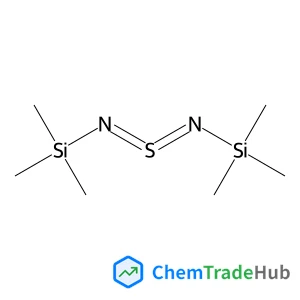
1,3-Bis(trimethylsilyl)-2lambda~4~-diazathia-1,2-diene
CAS Number:
18156-25-7
Molecular Formula:
C6H18N2SSi2
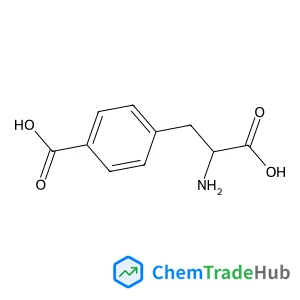
![2-Methyl-2-propanyl 3-[2-(2-{[(4-methylphenyl)sulfonyl]oxy}ethoxy)ethoxy]propanoate structure](https://static.chemtradehub.com/structs/850/850090-13-0-26a7.webp "2-Methyl-2-propanyl 3-[2-(2-{[(4-methylphenyl)sulfonyl]oxy}ethoxy)ethoxy]propanoate structure")
2-Methyl-2-propanyl 3-[2-(2-{[(4-methylphenyl)sulfonyl]oxy}ethoxy)ethoxy]propanoate
CAS Number:
850090-13-0
Molecular Formula:
C18H28O7S
Recommended Suppliers






Disclaimer
This page provides academic journal information for reference and research purposes only. We are not affiliated with any journal publishers and do not handle publication submissions. For publication-related inquiries, please contact the respective journal publishers directly.
If you notice any inaccuracies in the information displayed, please contact us at support@chemtradehub.com. We will promptly review and address your concerns.