












A facile approach for preparing tadpole and barbell-shaped cyclic polymers through combining ATRP and atom transfer radical coupling (ATRC) reactions
Literature Information
Publication Date
2020-09-04
DOI
10.1039/D0PY01116A
Impact Factor
5.582
Authors
Xiaoqiang Xue, Kang Liang, Wenyan Huang, Hongjun Yang, Li Jiang, QiMin Jiang, Hongting Pu
View Original
Abstract
The ring-forming behavior of polymers with an odd number of arms in highly dilute solutions has been studied using tri-arm polystyrene (PSt3) as a model through combining atom transfer radical polymerization (ATRP) and atom transfer radical coupling (ATRC) technologies. The star polymer, PSt3, with three arms and a central core was obtained by ATRP of styrene using a designed initiator with three active Br terminals and ester groups, followed by the Br terminal–Br terminal radical coupling of PSt3, which was implemented via intramolecular ATRC under high dilution conditions. A tadpole-shaped cyclic polymer (tadpole-PSt) was successfully prepared, proving that there no intermolecular side reactions that occur during the intramolecular ATRC of PSt3. Interestingly, the tadpole-PSt not only possesses a cyclic topology, but also contains a living chain, in contrast to other cyclic analogues that have been previously reported. Finally, the tadpole-PSt was used as a building block to construct a type of barbell polymer (barbell-PSt) by removing most of the solvent via vacuum distillation at the end of the intramolecular ATRC of PSt3. Size exclusion chromatography, matrix-assisted laser desorption/ionization time-of-flight mass spectrometry, 1H nuclear magnetic resonance spectroscopy and hydrolysis experiments proved that high-purity cyclic polymers (tadpole-PSt and barbell-PSt) were successfully prepared. The thermal properties of the cyclic and star polymers were analyzed using differential scanning calorimetry and thermogravimetric analysis. The results demonstrated that the formation of a cyclic topology makes a huge contribution to the increase in the glass transition temperature (Tg) and thermal stability of the polymer.
Recommended Journals
Related Literature
Rapid, quantitative analysis of ppm/ppb nicotine using surface-enhanced Raman scattering from polymer-encapsulated Ag nanoparticles (gel-colls)
Steven E. J. Bell, Narayana M. S. Sirimuthu
2004-09-16
Paper
DOI: 10.1039/B408775E
Determination of alkaloids in capsules, milk and ethanolic extracts of poppy (Papaver somniferum L.) by ATR-FT-IR and FT-Raman spectroscopy
Hartwig Schulz, Rolf Quilitzsch, Wolfgang Schütze
2004-09-13
Paper
DOI: 10.1039/B408930H
Screening of specific antigens for SARS clinical diagnosis using a protein microarray
Dan-Dan Lu, Su-Hong Chen, Shi-Meng Zhang, Min-Li Zhang, Wei Zhang, Xiao-Chen Bo, Sheng-Qi Wang
2005-02-14
Paper
DOI: 10.1039/B415888A
Immunoassay for B. globigii spores as a model for detecting B. anthracis spores in finished water
Svetlana Farrell, H. Brian Halsall, William R. Heineman
2005-02-10
Paper
DOI: 10.1039/B413652G
Activating lattice oxygen of single-layer ZnO for the catalytic oxidation reaction
Le Lin, Hao Wu, Rentao Mu, Qiang Fu
2023-07-11
Paper
DOI: 10.1039/D3CP02580B
Novel approach for mono-segmented flow micro-titration with sequential injection using a lab-on-valve system: a model study for the assay of acidity in fruit juices
Lop Pathimapornlert
2005-01-10
Paper
DOI: 10.1039/B413585G
The application of a SERS fiber probe for the investigation of sensitive biological samples
R. Geßner, P. Rösch, R. Petry, M. Schmitt, M. A. Strehle, W. Kiefer, J. Popp
2004-11-10
Paper
DOI: 10.1039/B411690A
Identification of synthetic precursors of amphetamine-like drugs using Raman spectroscopy and ab initio calculations: β-Methyl-β-nitrostyrene derivatives
Rita Calheiros
2004-09-03
Paper
DOI: 10.1039/B405290K
Paraquat enzyme-immunoassays in biological samples: assessment of the effects of hapten–protein bridge structures on assay sensitivity
Ramadan A. Abuknesha, Connie Luk
2005-04-25
Paper
DOI: 10.1039/B418087A
Alkaline earth metal ion doping to enhance the light emission from Er3+:SnO2 nanocrystal Co-doped silica films
Enze Qu, Lixiang Wang, Jiaming Chen, Jingjie Zhao, Jun Xu, Kunji Chen
2023-06-15
Paper
DOI: 10.1039/D3CP00337J
You might also like
Compound Q&A
What are the main uses of 1H-Indazole-6-carbonitrile (CAS: 141290-59-7)?
1H-Indazole-6-carbonitrile finds applications in pharmaceuticals, where it serve...
141290-59-71H-Indazole-6-carbon...
Compound Q&A
How should waste containing Dioctyl (2E)-2-butenedioate (CAS: 2997-85-5) be handled?
Waste containing Dioctyl (2E)-2-butenedioate (CAS: 2997-85-5) should be collecte...
2997-85-5Dioctyl (2E)-2-buten...
Compound Q&A
What industries use Sodium [(1,2-benzoxazol-3-ylmethyl)sulfonyl]azanide (CAS: 68291-98-5)?
Sodium [(1,2-benzoxazol-3-ylmethyl)sulfonyl]azanide is primarily used in pharmac...
68291-98-5Sodium [(1,2-benzoxa...
Compound Q&A
Are there alternatives to Dimethyl 4-(4,4,5,5-tetramethyl-1,3,2-dioxaborolan-2-yl)-2,6-pyridinedicarboxylate (CAS: 741709-66-0) in synthesis?
Dimethyl 4-(4,4,5,5-tetramethyl-1,3,2-dioxaborolan-2-yl)-2,6-pyridinedicarboxyla...
741709-66-0Dimethyl 4-(4,4,5,5-...
Compound Q&A
How should waste containing 2-Fluoro-6-hydrazinopyridine (CAS: 80714-39-2) be handled?
Waste containing 2-Fluoro-6-hydrazinopyridine (CAS: 80714-39-2) should be manage...
80714-39-22-Fluoro-6-hydrazino...
Compound Q&A
What is 6-Formyl-2-pyridinecarboxylic acid (CAS: 499214-11-8)?
6-Formyl-2-pyridinecarboxylic acid is an organic compound with the molecular for...
499214-11-86-Formyl-2-pyridinec...
Compound Q&A
What is the market or research trend for 3-(3,4-dimethoxyphenyl)-2,5-dimethyl-N-(2-morpholin-4-ylethyl)pyrazolo[1,5-a]pyrimidin-7-amine (CAS: 900874-91-1)?
Research trends for this compound indicate a focus on its potential applications...
900874-91-13-(3,4-dimethoxyphen...
Compound Q&A
How is 9H-Tribenzo[b,d,f]azepine (CAS: 29875-73-8) typically synthesized?
9H-Tribenzo[b,d,f]azepine is typically synthesized via a multi-step process invo...
29875-73-89H-Tribenzo[b,d,f]az...
Compound Q&A
How is 1-Cyclopropyl-7-ethoxy-6-fluoro-8-methoxy-4-oxo-1,4-dihydro-3-quinolinecarboxylic acid (CAS: 1797982-51-4) typically synthesized?
1-Cyclopropyl-7-ethoxy-6-fluoro-8-methoxy-4-oxo-1,4-dihydro-3-quinolinecarboxyli...
1797982-51-41-Cyclopropyl-7-etho...
Compound Q&A
How should waste containing Methyl 3-oxo-1,2,3,4-tetrahydro-6-quinoxalinecarboxylate (CAS: 671820-52-3) be handled?
Waste containing Methyl 3-oxo-1,2,3,4-tetrahydro-6-quinoxalinecarboxylate (CAS: ...
671820-52-3Methyl 3-oxo-1,2,3,4...
Source Journal
Polymer Chemistry

CiteScore:
8.6
Self-citation Rate:
7.3%
Articles per Year:
457
Polymer Chemistry welcomes submissions in all areas of polymer science that have a strong focus on macromolecular chemistry. Manuscripts may cover a broad range of fields, yet no direct application focus is required.
Recommended Compounds
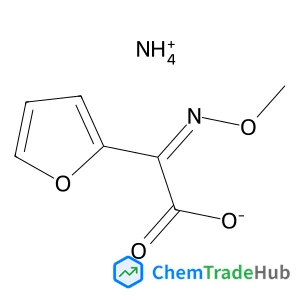
Ammonium (Z)-2-(furan-2-yl)-2-(methoxyimino)acetate
CAS Number:
97148-39-5
Molecular Formula:
C7H10N2O4
![Sodium (2Z)-7-{[(2R)-2-amino-2-carboxyethyl]sulfanyl}-2-({[(1S)-2,2-dimethylcyclopropyl]carbonyl}amino)-2-heptenoate structure](https://static.chemtradehub.com/structs/811/81129-83-1-441c.webp "Sodium (2Z)-7-{[(2R)-2-amino-2-carboxyethyl]sulfanyl}-2-({[(1S)-2,2-dimethylcyclopropyl]carbonyl}amino)-2-heptenoate structure")
Sodium (2Z)-7-{[(2R)-2-amino-2-carboxyethyl]sulfanyl}-2-({[(1S)-2,2-dimethylcyclopropyl]carbonyl}amino)-2-heptenoate
CAS Number:
81129-83-1
Molecular Formula:
C16H25N2NaO5S
Recommended Suppliers






Disclaimer
This page provides academic journal information for reference and research purposes only. We are not affiliated with any journal publishers and do not handle publication submissions. For publication-related inquiries, please contact the respective journal publishers directly.
If you notice any inaccuracies in the information displayed, please contact us at support@chemtradehub.com. We will promptly review and address your concerns.