












Functionalization of polyisoprene and polystyrene via reactive processing using azidoformate grafting agents, and its application to the synthesis of dioxaborolane-based polyisoprene vitrimers
Literature Information
Publication Date
2020-09-04
DOI
10.1039/D0PY00164C
Impact Factor
5.582
Authors
Antoine Breuillac, Florent Caffy, Thomas Vialon, Renaud Nicolaÿ
View Original
Abstract
Vitrimers incorporating dioxaborolane covalent links are permanent polymeric networks that combine the processability of thermoplastics with the thermomechanical and chemical resistance of thermosets. Transforming existing polymers into vitrimers via melt processing, a green and economical process, is a significant challenge that would greatly facilitate the development of these materials. In this study, we investigate the potential of azidoformate derivatives to functionalize and/or crosslink diene- and vinyl-based polymers with dioxaborolane moieties. To this aim, two functional azidoformate grafting agents were prepared, and their efficiency to functionalize polystyrene and polyisoprene via compression molding and reactive extrusion was assessed. Grafting yields superior to 50 and 75% could be obtained for polystyrene and polyisoprene, respectively. Polyisoprene was then transformed into a vitrimer by reactive extrusion, eitheir in the presence of a mono-azidoformate dioxaborolane and subsequent crosslinking with a bis-dioxaborolane, or in a single step using a bis-azidoformate dioxaborolane crosslinker. In particular, the latter appraoch allowed preparation of vitrimers that relax stress at elevated temperatures, show excellent creep resistance at room temperature and present good mechanical properties. While highly insoluble in THF, these vitrimers could be entirely de-crosslinked by selective diolysis of the dynamic dioxaborolane crosslinks, opening a simple and efficient route to chemical recycling of polyisoprene elastomers. The mechanical recycling of these vitrimers was also investigated over multiple cycles. Polyisoprene vitrimers could be efficiently recycled once, but their mechanical properties significantly dropped after the first recycling cycle, due to the oxidative degradation of the polyisoprene chains during reprocessing.
Related Literature
Effect of strong phonon–phonon coupling on the temperature dependent structural stability and frequency shift of 2D hexagonal boron nitride
P. Anees, M. C. Valsakumar, B. K. Panigrahi
2015-12-01
Paper
DOI: 10.1039/C5CP06111C
Nuclear quantum tunnelling in enzymatic reactions – an enzymologist's perspective
Linus O. Johannissen, Sam Hay, Nigel S. Scrutton
2015-03-27
Perspective
DOI: 10.1039/C5CP00614G
Photodissociation of medium-sized argon cluster cations in the visible region‡
Martin Stachoň, Aleš Vítek, René Kalus
2015-11-12
Paper
DOI: 10.1039/C5CP05257B
Theoretical study of the coordination behavior of formate and formamidoximate with dioxovanadium(v) cation: implications for selectivity towards uranyl
Nada Mehio, J. Casey Johnson, Vyacheslav S. Bryantsev
2015-10-28
Paper
DOI: 10.1039/C5CP06165B
Revealing photofragmentation dynamics through interactions between Rydberg states: REMPI of HI as a case study
Helgi Rafn Hróðmarsson, Ágúst Kvaran
2015-11-11
Paper
DOI: 10.1039/C5CP06185G
When do defectless alkanethiol SAMs in ionic liquids become penetrable? A molecular dynamics study
Sergey A. Kislenko, Victoria A. Nikitina, Renat R. Nazmutdinov
2015-10-08
Paper
DOI: 10.1039/C5CP04566E
A new look at oxide formation at the copper/electrolyte interface by in situ spectroscopies
Cigdem Toparli, Adnan Sarfraz, Andreas Erbe
2015-11-02
Paper
DOI: 10.1039/C5CP05172J
Requirements of first-principles calculations of X-ray absorption spectra of liquid water
Thomas Fransson, Iurii Zhovtobriukh, Patrick Norman, Lars G. M. Pettersson
2015-11-19
Paper
DOI: 10.1039/C5CP03919C
Structure prediction of the solid forms of methanol: an ab initio random structure searching approach
Tzu-Jen Lin, Cheng-Rong Hsing, Ching-Ming Wei, Jer-Lai Kuo
2015-12-14
Paper
DOI: 10.1039/C5CP06583F
Theoretical study on the dehydrogenation reaction of dihydrogen bonded phenol–borane-trimethylamine in the excited state
Yonggang Yang, Yufang Liu, Dapeng Yang, Hui Li, Kai Jiang, Jinfeng Sun
2015-08-12
Paper
DOI: 10.1039/C5CP02530C
You might also like
Compound Q&A
What are the main uses of 1H-Indazole-6-carbonitrile (CAS: 141290-59-7)?
1H-Indazole-6-carbonitrile finds applications in pharmaceuticals, where it serve...
141290-59-71H-Indazole-6-carbon...
Compound Q&A
How should waste containing Dioctyl (2E)-2-butenedioate (CAS: 2997-85-5) be handled?
Waste containing Dioctyl (2E)-2-butenedioate (CAS: 2997-85-5) should be collecte...
2997-85-5Dioctyl (2E)-2-buten...
Compound Q&A
What industries use Sodium [(1,2-benzoxazol-3-ylmethyl)sulfonyl]azanide (CAS: 68291-98-5)?
Sodium [(1,2-benzoxazol-3-ylmethyl)sulfonyl]azanide is primarily used in pharmac...
68291-98-5Sodium [(1,2-benzoxa...
Compound Q&A
Are there alternatives to Dimethyl 4-(4,4,5,5-tetramethyl-1,3,2-dioxaborolan-2-yl)-2,6-pyridinedicarboxylate (CAS: 741709-66-0) in synthesis?
Dimethyl 4-(4,4,5,5-tetramethyl-1,3,2-dioxaborolan-2-yl)-2,6-pyridinedicarboxyla...
741709-66-0Dimethyl 4-(4,4,5,5-...
Compound Q&A
How should waste containing 2-Fluoro-6-hydrazinopyridine (CAS: 80714-39-2) be handled?
Waste containing 2-Fluoro-6-hydrazinopyridine (CAS: 80714-39-2) should be manage...
80714-39-22-Fluoro-6-hydrazino...
Compound Q&A
What is 6-Formyl-2-pyridinecarboxylic acid (CAS: 499214-11-8)?
6-Formyl-2-pyridinecarboxylic acid is an organic compound with the molecular for...
499214-11-86-Formyl-2-pyridinec...
Compound Q&A
What is the market or research trend for 3-(3,4-dimethoxyphenyl)-2,5-dimethyl-N-(2-morpholin-4-ylethyl)pyrazolo[1,5-a]pyrimidin-7-amine (CAS: 900874-91-1)?
Research trends for this compound indicate a focus on its potential applications...
900874-91-13-(3,4-dimethoxyphen...
Compound Q&A
How is 9H-Tribenzo[b,d,f]azepine (CAS: 29875-73-8) typically synthesized?
9H-Tribenzo[b,d,f]azepine is typically synthesized via a multi-step process invo...
29875-73-89H-Tribenzo[b,d,f]az...
Compound Q&A
How is 1-Cyclopropyl-7-ethoxy-6-fluoro-8-methoxy-4-oxo-1,4-dihydro-3-quinolinecarboxylic acid (CAS: 1797982-51-4) typically synthesized?
1-Cyclopropyl-7-ethoxy-6-fluoro-8-methoxy-4-oxo-1,4-dihydro-3-quinolinecarboxyli...
1797982-51-41-Cyclopropyl-7-etho...
Compound Q&A
How should waste containing Methyl 3-oxo-1,2,3,4-tetrahydro-6-quinoxalinecarboxylate (CAS: 671820-52-3) be handled?
Waste containing Methyl 3-oxo-1,2,3,4-tetrahydro-6-quinoxalinecarboxylate (CAS: ...
671820-52-3Methyl 3-oxo-1,2,3,4...
Source Journal
Polymer Chemistry

CiteScore:
8.6
Self-citation Rate:
7.3%
Articles per Year:
457
Polymer Chemistry welcomes submissions in all areas of polymer science that have a strong focus on macromolecular chemistry. Manuscripts may cover a broad range of fields, yet no direct application focus is required.
Recommended Compounds
![(1S)-1,5-Anhydro-1-[3-(1-benzothiophen-2-ylmethyl)-4-fluorophenyl]-D-glucitol structure](https://static.chemtradehub.com/structs/761/761423-87-4-dbeb.webp "(1S)-1,5-Anhydro-1-[3-(1-benzothiophen-2-ylmethyl)-4-fluorophenyl]-D-glucitol structure")
(1S)-1,5-Anhydro-1-[3-(1-benzothiophen-2-ylmethyl)-4-fluorophenyl]-D-glucitol
CAS Number:
761423-87-4
Molecular Formula:
C21H21FO5S
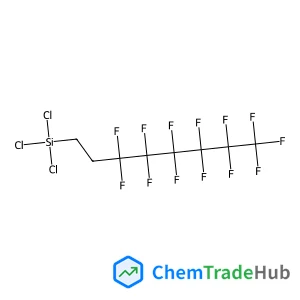
Trichloro(3,3,4,4,5,5,6,6,7,7,8,8,8-tridecafluorooctyl)silane
CAS Number:
78560-45-9
Molecular Formula:
C8H4Cl3F13Si
Recommended Suppliers






Disclaimer
This page provides academic journal information for reference and research purposes only. We are not affiliated with any journal publishers and do not handle publication submissions. For publication-related inquiries, please contact the respective journal publishers directly.
If you notice any inaccuracies in the information displayed, please contact us at support@chemtradehub.com. We will promptly review and address your concerns.