












Molecular photoswitches in aqueous environments
Literature Information
Publication Date
2021-09-30
DOI
10.1039/D0CS00547A
Impact Factor
54.564
Authors
Jana Volarić, Ben L. Feringa
View Original
Abstract
Molecular photoswitches enable dynamic control of processes with high spatiotemporal precision, using light as external stimulus, and hence are ideal tools for different research areas spanning from chemical biology to smart materials. Photoswitches are typically organic molecules that feature extended aromatic systems to make them responsive to (visible) light. However, this renders them inherently lipophilic, while water-solubility is of crucial importance to apply photoswitchable organic molecules in biological systems, like in the rapidly emerging field of photopharmacology. Several strategies for solubilizing organic molecules in water are known, but there are not yet clear rules for applying them to photoswitchable molecules. Importantly, rendering photoswitches water-soluble has a serious impact on both their photophysical and biological properties, which must be taken into consideration when designing new systems. Altogether, these aspects pose considerable challenges for successfully applying molecular photoswitches in aqueous systems, and in particular in biologically relevant media. In this review, we focus on fully water-soluble photoswitches, such as those used in biological environments, in both in vitro and in vivo studies. We discuss the design principles and prospects for water-soluble photoswitches to inspire and enable their future applications.
Related Literature
Non-adiabatic molecular dynamics investigation of the size dependence of the electronic relaxation in polyacenes
Evgeny Posenitskiy, Mathias Rapacioli, Bruno Lepetit, Didier Lemoine, Fernand Spiegelman
2019-05-17
Paper
DOI: 10.1039/C9CP00603F
Role of the hydrogen bond lifetimes and rotations at the water/amorphous silica interface on proton transport
Jesse Lentz, Stephen H. Garofalini
2019-05-23
Paper
DOI: 10.1039/C9CP01994D
Equations of the state of hard sphere fluids based on recent accurate virial coefficients B5–B12
Hua Jiang, A. Mulero
2019-05-20
Paper
DOI: 10.1039/C9CP02116G
Sub-100 nanometer silver doped gold–cysteine supramolecular assemblies with enhanced nonlinear optical properties
Hussein Fakhouri, Martina Perić, Franck Bertorelle, Philippe Dugourd, Xavier Dagany, Isabelle Russier-Antoine, Pierre-François Brevet, Rodolphe Antoine
2019-04-30
Paper
DOI: 10.1039/C9CP00829B
Correction: Sub-Doppler infrared spectroscopy of resonance-stabilized hydrocarbon intermediates: ν3/ν4 CH stretch modes and CH2 internal rotor dynamics of benzyl radical
A. Kortyna, A. J. Samin, T. A. Miller
2019-06-06
Correction
DOI: 10.1039/C9CP90148E
Triplet–triplet annihilation based photon up-conversion in hybrid molecule–semiconductor nanocrystal systems
Alessandra Ronchi, Paolo Brazzo, Mauro Sassi, Luca Beverina, Jacopo Pedrini, Francesco Meinardi, Angelo Monguzzi
2019-05-13
Paper
DOI: 10.1039/C9CP01692A
A new electrochemical cell with a uniformly accessible electrode to study fast catalytic reactions
Jean-Vincent Daurelle, Vincent Fourmond, Jérôme Vicente
2019-05-10
Paper
DOI: 10.1039/C9CP01487J
You might also like
Compound Q&A
What are the main uses of 1H-Indazole-6-carbonitrile (CAS: 141290-59-7)?
1H-Indazole-6-carbonitrile finds applications in pharmaceuticals, where it serve...
141290-59-71H-Indazole-6-carbon...
Compound Q&A
How should waste containing Dioctyl (2E)-2-butenedioate (CAS: 2997-85-5) be handled?
Waste containing Dioctyl (2E)-2-butenedioate (CAS: 2997-85-5) should be collecte...
2997-85-5Dioctyl (2E)-2-buten...
Compound Q&A
What industries use Sodium [(1,2-benzoxazol-3-ylmethyl)sulfonyl]azanide (CAS: 68291-98-5)?
Sodium [(1,2-benzoxazol-3-ylmethyl)sulfonyl]azanide is primarily used in pharmac...
68291-98-5Sodium [(1,2-benzoxa...
Compound Q&A
Are there alternatives to Dimethyl 4-(4,4,5,5-tetramethyl-1,3,2-dioxaborolan-2-yl)-2,6-pyridinedicarboxylate (CAS: 741709-66-0) in synthesis?
Dimethyl 4-(4,4,5,5-tetramethyl-1,3,2-dioxaborolan-2-yl)-2,6-pyridinedicarboxyla...
741709-66-0Dimethyl 4-(4,4,5,5-...
Compound Q&A
How should waste containing 2-Fluoro-6-hydrazinopyridine (CAS: 80714-39-2) be handled?
Waste containing 2-Fluoro-6-hydrazinopyridine (CAS: 80714-39-2) should be manage...
80714-39-22-Fluoro-6-hydrazino...
Compound Q&A
What is 6-Formyl-2-pyridinecarboxylic acid (CAS: 499214-11-8)?
6-Formyl-2-pyridinecarboxylic acid is an organic compound with the molecular for...
499214-11-86-Formyl-2-pyridinec...
Compound Q&A
What is the market or research trend for 3-(3,4-dimethoxyphenyl)-2,5-dimethyl-N-(2-morpholin-4-ylethyl)pyrazolo[1,5-a]pyrimidin-7-amine (CAS: 900874-91-1)?
Research trends for this compound indicate a focus on its potential applications...
900874-91-13-(3,4-dimethoxyphen...
Compound Q&A
How is 9H-Tribenzo[b,d,f]azepine (CAS: 29875-73-8) typically synthesized?
9H-Tribenzo[b,d,f]azepine is typically synthesized via a multi-step process invo...
29875-73-89H-Tribenzo[b,d,f]az...
Compound Q&A
How is 1-Cyclopropyl-7-ethoxy-6-fluoro-8-methoxy-4-oxo-1,4-dihydro-3-quinolinecarboxylic acid (CAS: 1797982-51-4) typically synthesized?
1-Cyclopropyl-7-ethoxy-6-fluoro-8-methoxy-4-oxo-1,4-dihydro-3-quinolinecarboxyli...
1797982-51-41-Cyclopropyl-7-etho...
Compound Q&A
How should waste containing Methyl 3-oxo-1,2,3,4-tetrahydro-6-quinoxalinecarboxylate (CAS: 671820-52-3) be handled?
Waste containing Methyl 3-oxo-1,2,3,4-tetrahydro-6-quinoxalinecarboxylate (CAS: ...
671820-52-3Methyl 3-oxo-1,2,3,4...
Source Journal
Chemical Society Reviews

CiteScore:
80.8
Self-citation Rate:
1.2%
Articles per Year:
250
Chem Soc Rev publishes review articles covering important topics at the forefront of the chemical sciences. Reviews should be of the very highest quality and international impact. We particularly encourage international and multidisciplinary collaborations among our authors. Our scope covers the breadth of the chemical sciences, including interdisciplinary topics where the article has a basis in chemistry. Topics include: Analytical chemistry Biomaterials chemistry Bioorganic/medicinal chemistry Catalysis Chemical Biology Coordination Chemistry Crystal Engineering Energy Sustainable chemistry Green chemistry Inorganic chemistry Inorganic materials Main group chemistry Nanoscience Organic chemistry Organic materials Organometallics Physical chemistry Supramolecular chemistry Synthetic methodology Theoretical and computational chemistry
Recommended Compounds

Trichloro(3,3,4,4,5,5,6,6,7,7,8,8,8-tridecafluorooctyl)silane
CAS Number:
78560-45-9
Molecular Formula:
C8H4Cl3F13Si
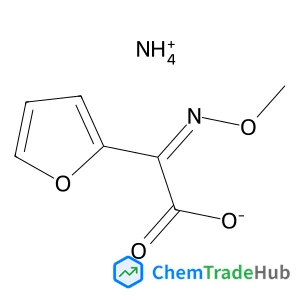
Ammonium (Z)-2-(furan-2-yl)-2-(methoxyimino)acetate
CAS Number:
97148-39-5
Molecular Formula:
C7H10N2O4
Recommended Suppliers






Disclaimer
This page provides academic journal information for reference and research purposes only. We are not affiliated with any journal publishers and do not handle publication submissions. For publication-related inquiries, please contact the respective journal publishers directly.
If you notice any inaccuracies in the information displayed, please contact us at support@chemtradehub.com. We will promptly review and address your concerns.