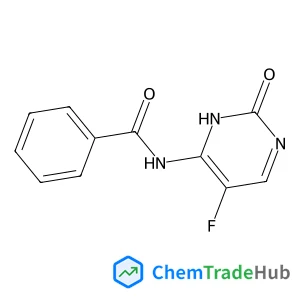
N-(5-Fluoro-2-oxo-2,3-dihydro-4-pyrimidinyl)benzamide
CAS Number:
10357-07-0
Molecular Formula:
C11H8FN3O2
Suting Zhou, Qi Yang, Haijun Zhang, Xiaomeng Zhou
The mechanism of thermal decomposition and fire suppression, and the fire-extinguishing performance of HFO-1234yf, HCFO-1233xf and 2-BTP agents were investigated by using both experimental and theoretical methods. The different halogen atoms connected with the middle carbon atom result in the varied strength of C–X (X = F, Cl, Br) bonds, and thus different thermal stability of these agents, which could further affect the pyrolysis mechanism/products and the fire-extinguishing mechanism/performance of these agents. Owing to the generation of CF3˙, Cl˙ and Br˙ radicals, as well as some unsaturated small molecules produced by their pyrolysis, the HFO-1234yf, HCFO-1233xf and 2-BTP agents have minimum extinguishing concentrations (MECs) of 9.80 vol%, 7.28 vol% and 2.92 vol% (9.80 vol%, 7.28 vol% and 2.56 vol%) for suppressing propane-air (methane-air) flame, respectively, which are comparable to or even better than those of other hydrofluoroolefin (HFO) and hydrofluorocarbon (HFC) agents. Despite the contribution of directly produced Br˙ radicals, which have the lowest energy barrier and the highest efficiency in capturing free radicals, the Br˙ and CF3˙ radicals produced by the follow-up reactions with OH˙/H˙ radicals may also contribute a lot to the best fire-suppressing performance of 2-BTP. Due to the high reactivity of these unsaturated halogenated olefins and their pyrolysis products, exothermic reactions could occur between the original agents (or their pyrolysis products) and the OH˙/O: radicals, thus leading to the combustion-promotion effect of the HFO-1234yf, HCFO-1233xf and 2-BTP agents. The slightest combustion-promotion effect of the 2-BTP extinguishant may result from the easier generation and best performance of the Br˙ radicals, as well as the lowest energies released by the exothermic reactions.
M. Ligare, F. Siouri, O. Bludsky, D. Nachtigallová, M. S. de Vries
DOI: 10.1039/C5CP03516C
Kevin M. Schmidt, Victor R. Vasquez
DOI: 10.1039/C5CP03792A
Mengmeng Ren, Changshuai Dong, Baoyin Li, Yang Liu, Teng Chen, Peng Wu, Zheng Cheng, Xiangyang Liu
DOI: 10.1039/C5CP03473F
Myeongjin Kim, Jaeho Choi, Ilgeun Oh, Jooheon Kim
DOI: 10.1039/C6CP03064E
Goutam Nandi, Bhaskar Chilukuri, K. W. Hipps, Ursula Mazur
DOI: 10.1039/C6CP04454A
Kenneth R. Harris, Mitsuhiro Kanakubo
DOI: 10.1039/C5CP04277A
Xiaoyong Luo, Yi Gu
DOI: 10.1039/C5CP90128F
Chenghua Ding, Fengpu Cao, Liqun Ye, Kecheng Liu, Haiquan Xie, Xiaoli Jin, Yurong Su
DOI: 10.1039/C5CP04374C
Jingya Dai, Qitang Fan, Tao Wang, Julian Kuttner, Gerhard Hilt, J. Michael Gottfried, Junfa Zhu
DOI: 10.1039/C6CP03551E
Li-Ming Yang, Thomas Frauenheim, Eric Ganz
DOI: 10.1039/C5CP03465E
Waste containing N-Methoxy-N-methyl-1,3-thiazole-5-carboxamide (CAS: 898825-89-3...
N-(4-Biphenylyl)dibenzo[b,d]furan-4-amine should be stored in a tightly sealed c...
The market for 3-Acetamido-5-amino-2,4,6-triiodobenzoic acid (CAS: 1713-07-1) is...
Benzyl 2-O-acetyl-3,4,6-tri-O-benzyl-beta-D-galactopyranoside (CAS: 61820-03-9) ...
2-Ethylpiperazine dihydrochloride (CAS: 438050-52-3) is regulated under the Glob...
1,1'-[1,3-Phenylenebis(methylene)]bis(3-methyl-1H-pyrrole-2,5-dione) (CAS: 11946...
Several alternatives can be used in the synthesis of 5-Fluoro-2-(1-pyrrolidinyl)...
Proper personal protective equipment (PPE) must be worn when handling this compo...
When handling 6-Bromoimidazo[1,2-a]pyridin-8-amine, it is important to wear appr...
Alternatives to (2S,4R)-4-(4-Nitrobenzyl)pyrrolidine-2-carboxylic acid hydrochlo...

Physical Chemistry Chemical Physics (PCCP) is an international journal co-owned by 19 physical chemistry and physics societies from around the world. This journal publishes original, cutting-edge research in physical chemistry, chemical physics and biophysical chemistry. To be suitable for publication in PCCP, articles must include significant innovation and/or insight into physical chemistry; this is the most important criterion that reviewers and Editors will judge against when evaluating submissions. The journal has a broad scope and welcomes contributions spanning experiment, theory, computation and data science. Topical coverage includes spectroscopy, dynamics, kinetics, statistical mechanics, thermodynamics, electrochemistry, catalysis, surface science, quantum mechanics, quantum computing and machine learning. Interdisciplinary research areas such as polymers and soft matter, materials, nanoscience, energy, surfaces/interfaces, and biophysical chemistry are welcomed if they demonstrate significant innovation and/or insight into physical chemistry. Joined experimental/theoretical studies are particularly appreciated when complementary and based on up-to-date approaches.
![tert-Butyl 6-chloro-4-oxospiro[chroman-2,4'-piperidine]-1'-carboxylate structure](https://static.chemtradehub.com/structs/101/1011482-37-3-88a5.webp "tert-Butyl 6-chloro-4-oxospiro[chroman-2,4'-piperidine]-1'-carboxylate structure")
![2-Methylbenzo[h]quinoline structure](https://static.chemtradehub.com/structs/605/605-88-9-ac43.webp "2-Methylbenzo[h]quinoline structure")