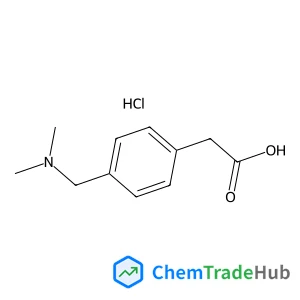
4-(Dimethylaminomethyl)phenylacetic acid hydrochloride
CAS Number:
99985-52-1
Molecular Formula:
C11H16ClNO2
Mengmeng Ren, Changshuai Dong, Baoyin Li, Yang Liu, Teng Chen, Peng Wu, Zheng Cheng, Xiangyang Liu
The effect of ultraviolet irradiation on fluorinated graphene (FG) dispersed in toluene was investigated for the first time. The chemical and physical characteristics of FG before and after ultraviolet irradiation were analyzed by UV-vis, FTIR, XPS,EDS, oxygen flask combustion (OFC), XRD, TGA, Raman, SEM, TEM and fluorescence spectroscopy. It is found that the F/C ratio initially decreases rapidly and then slowly with irradiation time, finally to 0.179 after irradiation for 48 h. The nature of partial C–F bonds transforms from covalent to “semi-covalent” bonding in the process of irradiation. The restoration of new sp2 clusters is fast at the early stage within 6 h of irradiation, promoting the structural rearrangement. The morphology of irradiated fluorinated graphene (iFG) is not significantly destroyed by ultraviolet while more overlapped sheets are formed due to quick defluorination. Photoluminescence (PL) properties show that “blue emission” located at 432 nm is enhanced due to the recovery of sp2 domains. In particular, compared to non-aromatic solvents, there is a “synergistic effect” between aromatic solvents and ultraviolet in the defluorination process. FG is unstable and shows some structural transformations under ultraviolet irradiation, which can be used to tune its structure and properties.
Ronny Cheng, Chun Wu, Zexing Cao, Binju Wang
DOI: 10.1039/D0CP03053H
Shinian Cheng, Zaneta Wojnarowska, Małgorzata Musiał, Marian Paluch
DOI: 10.1039/D0CP03422C
Lei Jin, Weizhen Meng, Xunan Shen, Liying Wang, Xuefang Dai
DOI: 10.1039/D0CP02981E
Dong-Peng Yang, Xiao-Gang Yang, Quan-Long Xu, Wei Chen, Shaoming Huang
DOI: 10.1039/D0CP00284D
Hyo Jeong Yoo, Byeong Eun Kwak, Do Hyun Kim
DOI: 10.1039/D0CP02120B
Valentina Migliorati, Andrea Lapi, Paola D'Angelo
DOI: 10.1039/D0CP03977B
DOI: 10.1039/C9CP03473K
Catherine J. Davies, Alexander Mayer, Jess Gabb, Jake M. Walls, Volkan Degirmenci, Giannantonio Cibin, Stan Golunski, Simon A. Kondrat
DOI: 10.1039/D0CP01227K
Ivan S. Proskurkin, Pavel S. Smelov, Vladimir K. Vanag
DOI: 10.1039/D0CP01858A
Waste containing N-Methoxy-N-methyl-1,3-thiazole-5-carboxamide (CAS: 898825-89-3...
N-(4-Biphenylyl)dibenzo[b,d]furan-4-amine should be stored in a tightly sealed c...
The market for 3-Acetamido-5-amino-2,4,6-triiodobenzoic acid (CAS: 1713-07-1) is...
Benzyl 2-O-acetyl-3,4,6-tri-O-benzyl-beta-D-galactopyranoside (CAS: 61820-03-9) ...
2-Ethylpiperazine dihydrochloride (CAS: 438050-52-3) is regulated under the Glob...
1,1'-[1,3-Phenylenebis(methylene)]bis(3-methyl-1H-pyrrole-2,5-dione) (CAS: 11946...
Several alternatives can be used in the synthesis of 5-Fluoro-2-(1-pyrrolidinyl)...
Proper personal protective equipment (PPE) must be worn when handling this compo...
When handling 6-Bromoimidazo[1,2-a]pyridin-8-amine, it is important to wear appr...
Alternatives to (2S,4R)-4-(4-Nitrobenzyl)pyrrolidine-2-carboxylic acid hydrochlo...

Physical Chemistry Chemical Physics (PCCP) is an international journal co-owned by 19 physical chemistry and physics societies from around the world. This journal publishes original, cutting-edge research in physical chemistry, chemical physics and biophysical chemistry. To be suitable for publication in PCCP, articles must include significant innovation and/or insight into physical chemistry; this is the most important criterion that reviewers and Editors will judge against when evaluating submissions. The journal has a broad scope and welcomes contributions spanning experiment, theory, computation and data science. Topical coverage includes spectroscopy, dynamics, kinetics, statistical mechanics, thermodynamics, electrochemistry, catalysis, surface science, quantum mechanics, quantum computing and machine learning. Interdisciplinary research areas such as polymers and soft matter, materials, nanoscience, energy, surfaces/interfaces, and biophysical chemistry are welcomed if they demonstrate significant innovation and/or insight into physical chemistry. Joined experimental/theoretical studies are particularly appreciated when complementary and based on up-to-date approaches.
![[(5-Methyl-1,3,4-thiadiazol-2-yl)sulfanyl]acetic acid structure](https://static.chemtradehub.com/structs/509/50918-26-8-4ce8.webp "[(5-Methyl-1,3,4-thiadiazol-2-yl)sulfanyl]acetic acid structure")
![4-[(2-{2-[2-(2-Aminoethoxy)ethoxy]ethoxy}ethyl)amino]-2-(2,6-dioxo-3-piperidinyl)-1H-isoindole-1,3(2H)-dione structure](https://static.chemtradehub.com/structs/209/2093416-31-8-3162.webp "4-[(2-{2-[2-(2-Aminoethoxy)ethoxy]ethoxy}ethyl)amino]-2-(2,6-dioxo-3-piperidinyl)-1H-isoindole-1,3(2H)-dione structure")