












Exploring the kinetics of actinyl–EDTA reduction by ferrous iron using quantum-mechanical calculations
Literature Information
Publication Date
2021-02-17
DOI
10.1039/D0CP05179A
Impact Factor
3.676
Authors
Sooyeon Kim, Udo Becker
View Original
Abstract
The reduction of An(VI) (An = U, Np, and Pu) to An(IV) significantly decreases its solubility and mobility. This reaction can be hindered by complexation with inorganic (e.g., carbonate) or organic ligands. Ethylenediaminetetraacetic acid (EDTA) is one such organic ligand that forms stable complexes with actinides. Therefore, it may enhance the mobility of actinides. However, the redox kinetics and mechanisms of actinyl (An(V/VI)O2+/2+)–EDTA are not well characterized yet and are thus studied here using quantum-mechanical calculations. The principle is to approach the actinyl–EDTA and Fe2+ (reductant) in small incremental steps and calculate the system energy at each distance. The overall reaction is then delineated into sub-processes (encounter frequency in bulk solution, formation of outer-sphere complex, transition from outer- to inner-sphere complex, and electron transfer), and reaction rates are determined for each sub-process. The formation of outer-sphere complexes occurs rapidly in microseconds to seconds over a wide range of actinyl concentrations (pM to μM); in contrast, the transition to the inner-sphere complex is relatively slow (milliseconds to a few seconds). Immediate electron transfer to form the pentavalent actinide is observed along the reaction path for Np(VI) and Pu(VI), but not for U(VI). Surprisingly, in acidic conditions, one of the carboxylic groups gets protonated in EDTA of [UO2(edta)]2− rather than one of the amino groups. This process-based series of calculations can be applied to any redox reaction and allows the prediction of changes to the rate law and rate-limiting step in a more fundamental way for different environments.
Related Literature
Graphene oxide–Li+@C60 donor–acceptor composites for photoenergy conversion
Mustafa Supur, Yuki Kawashima, Kei Ohkubo, Hayato Sakai, Taku Hasobe
2015-05-13
Paper
DOI: 10.1039/C5CP01403D
Non-fullerene acceptors: exciton dissociation with PTCDA versus C60
Gregory J. Dutton, Steven W. Robey
2015-05-22
Paper
DOI: 10.1039/C5CP02800K
Multiple scale investigation of molecular diffusion inside functionalized porous hosts using a combination of magnetic resonance methods
Martin Wessig, Martin Spitzbarth, Malte Drescher, Rainer Winter, Sebastian Polarz
2015-05-13
Paper
DOI: 10.1039/C5CP01369K
Tuning magnetism by biaxial strain in native ZnO
Chengxiao Peng, Yuanxu Wang, Guangbiao Zhang, Chao Wang, Gui Yang
2015-05-27
Paper
DOI: 10.1039/C5CP00364D
Release of proteins and enzymes from vesicular compartments by alternating magnetic fields
Yue Lin, Julie E. Gough
2015-03-06
Paper
DOI: 10.1039/C4CP05872K
Novel benzimidazole salts for lithium ion battery electrolytes: effects of substituents
T. Sriana, E. G. Leggesse, J. C. Jiang
2015-05-19
Paper
DOI: 10.1039/C5CP00982K
Effects of different electrolytes on the electrochemical and dynamic behavior of electric double layer capacitors based on a porous silicon carbide electrode
Myeongjin Kim, Ilgeun Oh, Jooheon Kim
2015-05-27
Paper
DOI: 10.1039/C5CP01728A
DNA-assisted photoinduced charge transfer between a cationic poly(phenylene vinylene) and a cationic fullerene
Youngil Park, Cheng-Yu Kuo, Young-Shin Park, Hsinhan Tsai, Jennifer S. Martinez, Andrew P. Shreve, Hsing-Lin Wang
2015-04-10
Communication
DOI: 10.1039/C5CP01309G
Self-reactions in the HCl+ (DCl+) + HCl system: a state-selective investigation of the role of rotation
Till Uhlemann, Jens Wallauer, Karl-Michael Weitzel
2015-05-29
Paper
DOI: 10.1039/C5CP02266E
You might also like
Compound Q&A
How should waste containing 6-Chloro-5-(2'-hydroxy-3'-methoxy-4-biphenylyl)-3-(3-methoxyphenyl)-1H-pyrrolo[3,2-d]pyrimidine-2,4(3H,5H)-dione (CAS: 1346607-05-3) be handled?
Waste containing 6-Chloro-5-(2'-hydroxy-3'-methoxy-4-biphenylyl)-3-(3-methoxyphe...
1346607-05-36-Chloro-5-(2'-hydro...
Compound Q&A
What are the main uses of (3alpha,5alpha)-3-Hydroxypregnane-11,20-dione (CAS: 23930-19-0)?
(3alpha,5alpha)-3-Hydroxypregnane-11,20-dione is primarily used in the pharmaceu...
23930-19-0(3alpha,5alpha)-3-Hy...
Compound Q&A
What is the market or research trend for 4-Amino-6-chloro-2-pyridinecarboxylic acid (CAS: 546141-56-4)?
The market for 4-Amino-6-chloro-2-pyridinecarboxylic acid (CAS: 546141-56-4) is ...
546141-56-44-Amino-6-chloro-2-p...
Compound Q&A
Are there alternatives to (2-Benzoylethyl)trimethylammonium chloride (CAS: 24472-88-6) in synthesis?
Alternatives to (2-Benzoylethyl)trimethylammonium chloride (CAS: 24472-88-6) in ...
24472-88-6(2-Benzoylethyl)trim...
Compound Q&A
Is N-[4-Nitro-3-(trifluoromethyl)phenyl]acetamide (CAS: 393-12-4) safe?
N-[4-Nitro-3-(trifluoromethyl)phenyl]acetamide (CAS: 393-12-4) is generally safe...
393-12-4N-[4-Nitro-3-(triflu...
Compound Q&A
Are there alternatives to [(4R,5R,6S)-5-hydroxy-10-imino-3,7-dioxa-1,9-diazatricyclo[6.4.0.02,6]dodeca-8,11-dien-4-yl]methyl dihydrogen phosphate (CAS: 39679-56-6) in synthesis?
Alternative reagents such as other phosphates or similar functional groups can b...
39679-56-6[(4R,5R,6S)-5-hydrox...
Compound Q&A
Are there alternatives to N,N'-Bis(3-aminopropyl)-1,3-propanediamine (CAS: 4605-14-5) in synthesis?
There are alternatives to N,N'-Bis(3-aminopropyl)-1,3-propanediamine (CAS: 4605-...
4605-14-5N,N'-Bis(3-aminoprop...
Compound Q&A
What precautions should be taken when handling Aluminium trihexadecanoate (CAS: 555-35-1)?
When handling Aluminium trihexadecanoate, it is important to use appropriate per...
555-35-1Aluminium trihexadec...
Compound Q&A
What is (1,1-Dioxido-3-oxo-1,2-benzothiazol-2(3H)-yl)acetic acid (CAS: 52188-11-1)?
(1,1-Dioxido-3-oxo-1,2-benzothiazol-2(3H)-yl)acetic acid is a chemical compound ...
52188-11-1(1,1-Dioxido-3-oxo-1...
Compound Q&A
Are there alternatives to 5,5-dimethyloxolan-2-one (CAS: 3123-97-5) in synthesis?
Several alternatives to 5,5-dimethyloxolan-2-one (CAS: 3123-97-5) can be used in...
3123-97-55,5-dimethyloxolan-2...
Source Journal
Physical Chemistry Chemical Physics

CiteScore:
5.5
Self-citation Rate:
10.3%
Articles per Year:
3036
Physical Chemistry Chemical Physics (PCCP) is an international journal co-owned by 19 physical chemistry and physics societies from around the world. This journal publishes original, cutting-edge research in physical chemistry, chemical physics and biophysical chemistry. To be suitable for publication in PCCP, articles must include significant innovation and/or insight into physical chemistry; this is the most important criterion that reviewers and Editors will judge against when evaluating submissions. The journal has a broad scope and welcomes contributions spanning experiment, theory, computation and data science. Topical coverage includes spectroscopy, dynamics, kinetics, statistical mechanics, thermodynamics, electrochemistry, catalysis, surface science, quantum mechanics, quantum computing and machine learning. Interdisciplinary research areas such as polymers and soft matter, materials, nanoscience, energy, surfaces/interfaces, and biophysical chemistry are welcomed if they demonstrate significant innovation and/or insight into physical chemistry. Joined experimental/theoretical studies are particularly appreciated when complementary and based on up-to-date approaches.
Recommended Compounds
![1-{3-[4-Amino-3-(4-phenoxyphenyl)-1H-pyrazolo[3,4-d]pyrimidin-1-yl]-1-piperidinyl}-2,3-dihydroxy-1-propanone structure](https://static.chemtradehub.com/structs/122/1226872-27-0-e037.webp "1-{3-[4-Amino-3-(4-phenoxyphenyl)-1H-pyrazolo[3,4-d]pyrimidin-1-yl]-1-piperidinyl}-2,3-dihydroxy-1-propanone structure")
1-{3-[4-Amino-3-(4-phenoxyphenyl)-1H-pyrazolo[3,4-d]pyrimidin-1-yl]-1-piperidinyl}-2,3-dihydroxy-1-propanone
CAS Number:
1226872-27-0
Molecular Formula:
C25H26N6O4
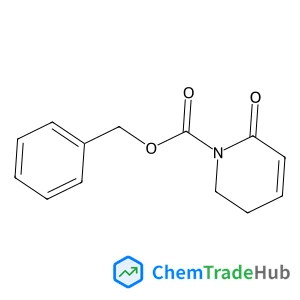
Benzyl 6-oxo-3,6-dihydro-1(2H)-pyridinecarboxylate
CAS Number:
725746-35-0
Molecular Formula:
C13H13NO3
![N-{[(2-Methyl-2-propanyl)oxy]carbonyl}-L-methionylglycine structure](https://static.chemtradehub.com/structs/234/23446-03-9-e1e5.webp "N-{[(2-Methyl-2-propanyl)oxy]carbonyl}-L-methionylglycine structure")
N-{[(2-Methyl-2-propanyl)oxy]carbonyl}-L-methionylglycine
CAS Number:
23446-03-9
Molecular Formula:
C12H22N2O5S
Recommended Suppliers




Disclaimer
This page provides academic journal information for reference and research purposes only. We are not affiliated with any journal publishers and do not handle publication submissions. For publication-related inquiries, please contact the respective journal publishers directly.
If you notice any inaccuracies in the information displayed, please contact us at support@chemtradehub.com. We will promptly review and address your concerns.