


Threshold photoionization shows no sign of nitryl hydride in methane oxidation with nitric oxide
Literature Information
Publication Date
2020-12-10
DOI
10.1039/D0CP04924G
Impact Factor
3.676
Authors
Martin Hoener, Andras Bodi, Patrick Hemberger, Torsten Endres, Tina Kasper
View Original
Abstract
Methane was doped with nitric oxide and oxidized in a high-pressure flow reactor. The nitrogen chemistry during partial oxidation was studied using photoelectron photoion coincidence spectroscopy with vacuum ultraviolet synchrotron radiation. The adiabatic ionization energy of nitrous acid, HONO, has been determined as 10.95 ± 0.03 eV. The HONO breakdown diagram was plotted based solely on the measured parent signal and the computed Franck–Condon envelope of trans-HONO, confirming the trans-HONO dissociative photoionization threshold to NO+ + ˙OH at 11.34 eV. The spectra show strong indication for the presence of cis-HONO. We expected the m/z 47 photoion mass selected threshold photoelectron signal to rebound near 12 eV, i.e., at the ionization energy of nitryl hydride, the third HNO2 isomer. Recent computational studies suggest nitryl hydride is formed at a rate similar to trans-HONO, is more thermally stable than nitrous acid, its cation is bound, and its photoelectron spectrum is predicted to exhibit a strong origin band near 12 eV. The absence of its mass selected threshold photoelectron signal shows that nitryl hydride is either not formed in measurable amounts or is consumed faster than nitrous acid, for instance by isomerization to trans-HONO.
Recommended Journals

Russian Journal of Coordination Chemistry

Russian Journal of Bioorganic Chemistry

Drug Discovery Today

Chemistry Education Research and Practice

Acta Materialia

Journal of Natural Medicines

Crystallography Reports

Russian Journal of Organic Chemistry

Current Opinion in Solid State & Materials Science

Russian Journal of General Chemistry
Related Literature
The selective trimerisation of isoprene with chromium N,N-bis(diarylphosphino)amine catalysts
Lucy E. Bowen, Manutsavin Charernsuk, Duncan F. Wass
2007-05-01
Communication
DOI: 10.1039/B702331F
A simple route to chiralphosphinous acid–boranes
Delphine Moraleda, David Gatineau, David Martin, Laurent Giordano, Gérard Buono
2008-04-22
Communication
DOI: 10.1039/B802817F
Valence isomer of a β-diketiminate-supported phosphinidene: a case of C–H activation and ring contraction
Zheng Lu, Michael Findlater, Alan H. Cowley
2007-05-08
Communication
DOI: 10.1039/B704266C
Synthetic studies and biosynthetic speculation on marine alkaloid chartelline
Shigeo Kajii, Toshio Nishikawa, Minoru Isobe
2008-05-09
Communication
DOI: 10.1039/B803797C
Templated fabrication of sub-100 nm periodic nanostructures
Chih-Hung Sun, Wei-Lun Min, Peng Jiang
2008-05-07
Communication
DOI: 10.1039/B804182B
Novel neutral imidazole-lipophosphoramides for transfection assays
Mathieu Mével, Cécile Neveu, Cristine Gonçalves, Jean-Jacques Yaouanc, Chantal Pichon, Paul-Alain Jaffrès, Patrick Midoux
2008-06-16
Communication
DOI: 10.1039/B805226C
Gold nanoparticles become stable to cyanide etch when coated with hybrid lipid bilayers
Sarita Sitaula, Marilyn R. Mackiewicz, Scott M. Reed
2008-05-15
Communication
DOI: 10.1039/B801525B
O-Dihaloarenes as aryne precursors for nickel-catalyzed [2 + 2 + 2] cycloaddition with alkynes and nitriles
Jen-Chieh Hsieh, Chien-Hong Cheng
2008-05-06
Communication
DOI: 10.1039/B801870G
You might also like
Compound Q&A
Are there alternatives to 1-(4-Chlorophenyl)-N-hydroxymethanimine (CAS: 3848-36-0) in synthesis?
When considering alternatives to 1-(4-Chlorophenyl)-N-hydroxymethanimine (CAS: 3...
3848-36-01-(4-Chlorophenyl)-N...
Compound Q&A
How should (1R,9S,10S,12S,14E,16S,19R,20R,21S,22R)-3,9,21-Trihydroxy-5,10,12,14,16,20,22-heptamethyl-23,24-dioxatetracyclo[17.3.1.1~6,9~.0~2,7~]tetracosa-2,5,7,14-tetraen-4-one (CAS: 183202-73-5) be stored?
This compound should be stored in a cool, dry place away from direct sunlight. I...
183202-73-5(1R,9S,10S,12S,14E,1...
Compound Q&A
How is 3-(4-Bromophenyl)-5-(2-fluorophenyl)-1,2,4-oxadiazole (CAS: 419553-16-5) typically synthesized?
3-(4-Bromophenyl)-5-(2-fluorophenyl)-1,2,4-oxadiazole is synthesized through a m...
419553-16-53-(4-Bromophenyl)-5-...
Compound Q&A
How is 5-Chloro-2-(4-chlorophenyl)-4-methyl-6-[3-(1-piperidinyl)propoxy]pyrimidine (CAS: 1639220-19-1) typically synthesized?
5-Chloro-2-(4-chlorophenyl)-4-methyl-6-[3-(1-piperidinyl)propoxy]pyrimidine (CAS...
1639220-19-15-Chloro-2-(4-chloro...
Compound Q&A
What industries use 2-Chloro-4-(difluoromethoxy)pyridine (CAS: 1206978-15-5)?
2-Chloro-4-(difluoromethoxy)pyridine is used in the pharmaceutical industry for ...
1206978-15-52-Chloro-4-(difluoro...
Compound Q&A
What regulatory guidelines apply to 3-Chloro-6-methylpyridazine (CAS: 1121-79-5)?
3-Chloro-6-methylpyridazine (CAS: 1121-79-5) is classified under the Globally Ha...
1121-79-53-Chloro-6-methylpyr...
Compound Q&A
Are there alternatives to Methyl 4,5-dimethyl-2-nitrobenzoate in synthesis?
Several alternatives can be used in the synthesis of Methyl 4,5-dimethyl-2-nitro...
90922-74-0Methyl 4,5-dimethyl-...
Compound Q&A
Are there alternatives to (2E,2'E)-3,3'-(1,4-Phenylene)bisacrylaldehyde in synthesis?
Alternatives to (2E,2'E)-3,3'-(1,4-Phenylene)bisacrylaldehyde include other acry...
63405-68-5(2E,2'E)-3,3'-(1,4-P...
Compound Q&A
What is 3-Amino-5-chloropyridin-2-ol hydrochloride (CAS: 1261906-29-9)?
3-Amino-5-chloropyridin-2-ol hydrochloride is an organic compound with the CAS n...
1261906-29-93-Amino-5-chloropyri...
Compound Q&A
What precautions should be taken when handling 6,7-Difluoro-2,3-dihydro-4H-chromen-4-one (CAS: 1092349-93-3)?
When handling 6,7-Difluoro-2,3-dihydro-4H-chromen-4-one, it is essential to wear...
1092349-93-36,7-Difluoro-2,3-dih...
Source Journal
Physical Chemistry Chemical Physics

CiteScore:
5.5
Self-citation Rate:
10.3%
Articles per Year:
3036
Physical Chemistry Chemical Physics (PCCP) is an international journal co-owned by 19 physical chemistry and physics societies from around the world. This journal publishes original, cutting-edge research in physical chemistry, chemical physics and biophysical chemistry. To be suitable for publication in PCCP, articles must include significant innovation and/or insight into physical chemistry; this is the most important criterion that reviewers and Editors will judge against when evaluating submissions. The journal has a broad scope and welcomes contributions spanning experiment, theory, computation and data science. Topical coverage includes spectroscopy, dynamics, kinetics, statistical mechanics, thermodynamics, electrochemistry, catalysis, surface science, quantum mechanics, quantum computing and machine learning. Interdisciplinary research areas such as polymers and soft matter, materials, nanoscience, energy, surfaces/interfaces, and biophysical chemistry are welcomed if they demonstrate significant innovation and/or insight into physical chemistry. Joined experimental/theoretical studies are particularly appreciated when complementary and based on up-to-date approaches.
Recommended Compounds
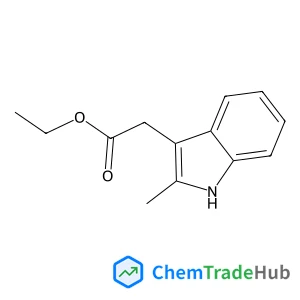

(E)-2-methyl-4-(4,4,5,5-tetramethyl-1,3,2-dioxaborolan-2-yl)but-3-en-2-ol
CAS Number:
581802-26-8
Molecular Formula:
C11H21BO3
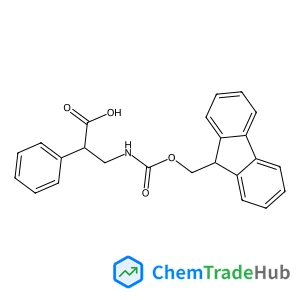
(S)-3-((((9H-Fluoren-9-yl)methoxy)carbonyl)amino)-2-phenylpropanoic acid
CAS Number:
1217663-60-9
Molecular Formula:
C24H21NO4
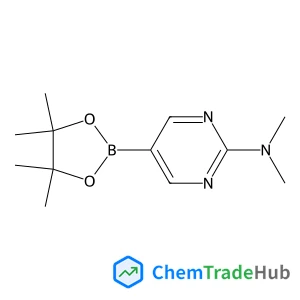
N,N-Dimethyl-5-(4,4,5,5-tetramethyl-1,3,2-dioxaborolan-2-yl)-2-pyrimidinamine
CAS Number:
1032759-30-0
Molecular Formula:
C12H20BN3O2
Recommended Suppliers





Disclaimer
This page provides academic journal information for reference and research purposes only. We are not affiliated with any journal publishers and do not handle publication submissions. For publication-related inquiries, please contact the respective journal publishers directly.
If you notice any inaccuracies in the information displayed, please contact us at support@chemtradehub.com. We will promptly review and address your concerns.