












Atomic-scale analysis of the physical strength and phonon transport mechanisms of monolayer β-bismuthene
Literature Information
Publication Date
2020-12-09
DOI
10.1039/D0CP04785F
Impact Factor
3.676
Authors
Emdadul Haque Chowdhury, Md. Habibur Rahman, Pritom Bose, Rahul Jayan, Md Mahbubul Islam
View Original
Abstract
Bismuthene has opened up a new avenue in the field of nanotechnology because of its spectacular electronic and thermoelectric features. The strong spin–orbit-coupling enables its operation as the largest nontrivial bandgap topological insulator and quantum spin hall material at room temperature, which is unlikely for any other 2D material. It is also known to be the most promising thermoelectric material due to its remarkable thermoelectric properties, including a substantially high power factor. However, an in-depth understanding of the mechanical and thermal transport properties of bismuthene is crucial for its practical implementation and efficient operation. Employing the Stillinger–Weber potential, we utilized molecular dynamics simulations to inspect the mechanical strength and thermal conductivity of the monolayer β-bismuthene for the first time. We analyzed the effect of temperature on the tensile mechanical properties along the armchair and zigzag directions of bismuthene nanosheets and found that increasing temperature causes a significant deterioration in these properties. The material shows superior fracture resistance with zigzag loading, whereas the armchair direction exhibits an improved elasticity. Next, we showed that increasing vacancy concentration and crack length notably reduce the fracture stress and strain of β-bismuthene. Under all these conditions, β-bismuthene showed a strong chirality effect under tensile loading. We also explored the fracture phenomena of a pre-cracked β-bismuthene, which reveal that the armchair-directed crack possesses a higher fracture resistance than the zigzag-directed crack. Interestingly, branching phenomena occurred during crack propagation for the armchair crack; meanwhile, the crack propagates perpendicular to loading for the zigzag crack. Afterward, we investigated the effect of loading rate on the fracture properties of bismuthene along the armchair and zigzag directions. Finally, we calculated the thermal conductivity of bismuthene under the influence of temperature and vacancy and recorded a substantial decrement in thermal conductivity with increasing temperature and vacancy. The obtained results are comprehensively discussed in the light of phonon density of states, phonon dispersion spectrum, and phonon group velocities. It is also disclosed that the thermal conductivity of β-bismuthene is considerably lower than that of other analogous honeycomb structures. This study can add a new dimension to the successful realization of bismuthene in future (opto)electronic, spintronic, and thermoelectric devices.
Recommended Journals
Related Literature
The effect of chemical ordering and lattice mismatch on structural transitions in phase segregating nanoalloys
Kevin Rossi, Francesca Baletto
2017-04-03
Paper
DOI: 10.1039/C7CP01397C
The effect of pressure on the crystallization of rapidly supercooled zirconium melts
Zean Tian, Rangsu Liu, Lili Zhou, Zhaoyang Hou
2017-04-13
Paper
DOI: 10.1039/C7CP00865A
The nanostructure of a lithium glyme solvate ionic liquid at electrified interfaces
Samuel W. Coles, Susan Perkin, Vladislav B. Ivaništšev
2017-04-05
Communication
DOI: 10.1039/C7CP00837F
Determination of bending rigidity and tilt modulus of lipid membranes from real-space fluctuation analysis of molecular dynamics simulations
D. Harries
2017-06-12
Paper
DOI: 10.1039/C7CP01921A
Direct and cluster-assisted dehydrogenation of methane by Nb+ and Ta+: a theoretical investigation
Emilia Sicilia, Gloria Mazzone, Adriana Pérez-González, Jenny Pirillo, Annia Galano, Thomas Heine, Nino Russo
2017-05-24
Paper
DOI: 10.1039/C7CP01833A
Electromagnetic field coupling characteristics in graphene plasmonic oligomers: from isolated to collective modes
Junbo Ren, Weibin Qiu, Houbo Chen, Pingping Qiu, Zhili Lin, Jia-Xian Wang, Qiang Kan, Jiao-Qing Pan
2017-05-17
Paper
DOI: 10.1039/C7CP01734K
The role of acid–base equilibria in formal hydrogen transfer reactions: tryptophan radical repair by uric acid as a paradigmatic case
Leonardo Muñoz-Rugeles, Annia Galano, Juan Raúl Alvarez-Idaboy
2017-05-16
Paper
DOI: 10.1039/C7CP01557G
Multi-level quantum mechanics theories and molecular mechanics study of the double-inversion mechanism of the F− + CH3I reaction in aqueous solution
Peng Liu, Jingxue Zhang, Dunyou Wang
2017-05-25
Paper
DOI: 10.1039/C7CP02313H
Extra electronic outer-shell peculiarities accessible under a joint XPS and DFT study
A. R. Cholach, A. A. Bryliakova
2017-05-22
Paper
DOI: 10.1039/C7CP00900C
You might also like
Compound Q&A
Are there alternatives to 1-(4-Chlorophenyl)-N-hydroxymethanimine (CAS: 3848-36-0) in synthesis?
When considering alternatives to 1-(4-Chlorophenyl)-N-hydroxymethanimine (CAS: 3...
3848-36-01-(4-Chlorophenyl)-N...
Compound Q&A
How should (1R,9S,10S,12S,14E,16S,19R,20R,21S,22R)-3,9,21-Trihydroxy-5,10,12,14,16,20,22-heptamethyl-23,24-dioxatetracyclo[17.3.1.1~6,9~.0~2,7~]tetracosa-2,5,7,14-tetraen-4-one (CAS: 183202-73-5) be stored?
This compound should be stored in a cool, dry place away from direct sunlight. I...
183202-73-5(1R,9S,10S,12S,14E,1...
Compound Q&A
How is 3-(4-Bromophenyl)-5-(2-fluorophenyl)-1,2,4-oxadiazole (CAS: 419553-16-5) typically synthesized?
3-(4-Bromophenyl)-5-(2-fluorophenyl)-1,2,4-oxadiazole is synthesized through a m...
419553-16-53-(4-Bromophenyl)-5-...
Compound Q&A
How is 5-Chloro-2-(4-chlorophenyl)-4-methyl-6-[3-(1-piperidinyl)propoxy]pyrimidine (CAS: 1639220-19-1) typically synthesized?
5-Chloro-2-(4-chlorophenyl)-4-methyl-6-[3-(1-piperidinyl)propoxy]pyrimidine (CAS...
1639220-19-15-Chloro-2-(4-chloro...
Compound Q&A
What industries use 2-Chloro-4-(difluoromethoxy)pyridine (CAS: 1206978-15-5)?
2-Chloro-4-(difluoromethoxy)pyridine is used in the pharmaceutical industry for ...
1206978-15-52-Chloro-4-(difluoro...
Compound Q&A
What regulatory guidelines apply to 3-Chloro-6-methylpyridazine (CAS: 1121-79-5)?
3-Chloro-6-methylpyridazine (CAS: 1121-79-5) is classified under the Globally Ha...
1121-79-53-Chloro-6-methylpyr...
Compound Q&A
Are there alternatives to Methyl 4,5-dimethyl-2-nitrobenzoate in synthesis?
Several alternatives can be used in the synthesis of Methyl 4,5-dimethyl-2-nitro...
90922-74-0Methyl 4,5-dimethyl-...
Compound Q&A
Are there alternatives to (2E,2'E)-3,3'-(1,4-Phenylene)bisacrylaldehyde in synthesis?
Alternatives to (2E,2'E)-3,3'-(1,4-Phenylene)bisacrylaldehyde include other acry...
63405-68-5(2E,2'E)-3,3'-(1,4-P...
Compound Q&A
What is 3-Amino-5-chloropyridin-2-ol hydrochloride (CAS: 1261906-29-9)?
3-Amino-5-chloropyridin-2-ol hydrochloride is an organic compound with the CAS n...
1261906-29-93-Amino-5-chloropyri...
Compound Q&A
What precautions should be taken when handling 6,7-Difluoro-2,3-dihydro-4H-chromen-4-one (CAS: 1092349-93-3)?
When handling 6,7-Difluoro-2,3-dihydro-4H-chromen-4-one, it is essential to wear...
1092349-93-36,7-Difluoro-2,3-dih...
Source Journal
Physical Chemistry Chemical Physics

CiteScore:
5.5
Self-citation Rate:
10.3%
Articles per Year:
3036
Physical Chemistry Chemical Physics (PCCP) is an international journal co-owned by 19 physical chemistry and physics societies from around the world. This journal publishes original, cutting-edge research in physical chemistry, chemical physics and biophysical chemistry. To be suitable for publication in PCCP, articles must include significant innovation and/or insight into physical chemistry; this is the most important criterion that reviewers and Editors will judge against when evaluating submissions. The journal has a broad scope and welcomes contributions spanning experiment, theory, computation and data science. Topical coverage includes spectroscopy, dynamics, kinetics, statistical mechanics, thermodynamics, electrochemistry, catalysis, surface science, quantum mechanics, quantum computing and machine learning. Interdisciplinary research areas such as polymers and soft matter, materials, nanoscience, energy, surfaces/interfaces, and biophysical chemistry are welcomed if they demonstrate significant innovation and/or insight into physical chemistry. Joined experimental/theoretical studies are particularly appreciated when complementary and based on up-to-date approaches.
Recommended Compounds
![[4-(Isobutyrylamino)phenyl]boronic acid structure](https://static.chemtradehub.com/structs/874/874219-50-8-6ab5.webp "[4-(Isobutyrylamino)phenyl]boronic acid structure")
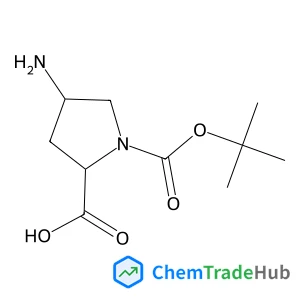
(2R,4R)-1-Boc-4-Aminopyrrolidine-2-carboxylic acid
CAS Number:
132622-98-1
Molecular Formula:
C10H18N2O4
Recommended Suppliers



Disclaimer
This page provides academic journal information for reference and research purposes only. We are not affiliated with any journal publishers and do not handle publication submissions. For publication-related inquiries, please contact the respective journal publishers directly.
If you notice any inaccuracies in the information displayed, please contact us at support@chemtradehub.com. We will promptly review and address your concerns.