











Structure, stability, infrared spectra, and bonding of OHm(H2O)7 (m = 0, ±1) clusters: ab initio study combining the particle swarm optimization algorithm
Literature Information
Publication Date
2020-10-29
DOI
10.1039/D0CP04332J
Impact Factor
3.676
Authors
Zhenwei Niu, Mei Tang, Nina Ge
View Original
Abstract
The various structural candidates of anionic, neutral, and cationic water clusters OHm(H2O)7 (m = 0, ±1) have been globally predicted by combining the particle swarm optimization method and quantum chemical calculations. Geometry optimization and vibrational analysis for the optimal structures were performed with the MP2/aug-cc-pVDZ method, and the energy profile was further refined at the CCSD(T)/CBS level. Special attention was paid to the relationships between configurations and energies, particularly the first solvation shell coordination number of OH− and OH. For OH−(H2O)7, OH(H2O)7, and OH+(H2O)7 clusters, the most stable species at room temperature are predicted to be the tetra-solvated multi-ring structure A6, the tri-solvated hemibond cage structure N1, and the single five-membered ring structure C2, respectively. The temperature effects on the stability of these three systems were also explored via Gibbs free energies. Furthermore, for the OH−(H2O)7 clusters, the assignments of vibrational transitions in the OH stretching region are in good agreement with the studies of small hydroxide ion-water clusters, and the IR spectra of two isomers (tetra-solvated multi-ring A6 and penta-solvated cage A3) may match future experimental observation well. By topological analysis and reduced density gradient analysis, the structural characteristics and bonding strengths of the studied clusters were investigated. This work indicates the excellent performance of the PSO search algorithm and CALYPSO on water clusters, and may further provide extensive insights into the chemical behavior such as the transport mechanism of OH− ions and OH radicals in the aqueous phase.
Related Literature
Unraveling ligand exchange reactions in linear neutral Au(i) and Cu(i) N-heterocyclic carbene complexes for biological applications
Gustavo C. Rodrigues, Manoel V. F. Barrionuevo, Miguel A. San-Miguel, Camilla Abbehausen
2023-12-27
Paper
DOI: 10.1039/D3NJ04945K
Facile one-pot synthesis of a waste copper phthalocyanine-derived nanocomposite for efficiently removing dyes from wastewater
Munazza Munshi, Tanzila Khan, Madhuri Bhakare, Ankita Kadam, Surajit Some
2024-01-09
Paper
DOI: 10.1039/D3NJ05351B
Enhancing photocatalytic CO2 reduction to formate through one-pot self-assembly of a semiartificial cell
Yixin Hong, Jianyu Han, Zhi Wang, Xiaofei Gu, Tianyi Huang, Yafeng Wu, Songqin Liu
2023-10-24
Paper
DOI: 10.1039/D3TA04556K
Crystal structure, magnetic properties and theoretical study of a bithiazolebis(oxamate)-containing [Ni II3] helicate
Lucas H. G. Kalinke, Mariany S. Silva, Ana K. Valdo, Felipe T. Martins, Nicolás Moliner, Miguel Julve, Francesc Lloret, Joan Cano, Danielle Cangussu
2024-01-08
Paper
DOI: 10.1039/D3NJ04701F
Strategies and tactics for the synthesis of lipid I and II and shortened analogues: functional building blocks of bacterial cell wall biosynthesis
Christina Braun, Lukas Martin Wingen, Dirk Menche
2023-07-26
Review Article
DOI: 10.1039/D3NP00018D
One-pot, efficient synthesis of fused quinoline analogues via room temperature C(sp3)–N cleavage/aromatization reaction
Subramaniyan Prasanna Kumari, Subbiah Thamotharan, Subramaniapillai Selva Ganesan
2024-01-02
Paper
DOI: 10.1039/D3NJ05462D
You might also like
Compound Q&A
How should waste containing N-Methoxy-N-methyl-1,3-thiazole-5-carboxamide (CAS: 898825-89-3) be handled?
Waste containing N-Methoxy-N-methyl-1,3-thiazole-5-carboxamide (CAS: 898825-89-3...
898825-89-3N-Methoxy-N-methyl-1...
Compound Q&A
How should N-(4-Biphenylyl)dibenzo[b,d]furan-4-amine (CAS: 1318338-47-4) be stored?
N-(4-Biphenylyl)dibenzo[b,d]furan-4-amine should be stored in a tightly sealed c...
1318338-47-4N-(4-Biphenylyl)dibe...
Compound Q&A
What is the market or research trend for 3-Acetamido-5-amino-2,4,6-triiodobenzoic acid (CAS: 1713-07-1)?
The market for 3-Acetamido-5-amino-2,4,6-triiodobenzoic acid (CAS: 1713-07-1) is...
1713-07-13-Acetamido-5-amino-...
Compound Q&A
How should Benzyl 2-O-acetyl-3,4,6-tri-O-benzyl-beta-D-galactopyranoside (CAS: 61820-03-9) be stored?
Benzyl 2-O-acetyl-3,4,6-tri-O-benzyl-beta-D-galactopyranoside (CAS: 61820-03-9) ...
61820-03-9Benzyl 2-O-acetyl-3,...
Compound Q&A
What regulatory guidelines apply to 2-Ethylpiperazine dihydrochloride (CAS: 438050-52-3)?
2-Ethylpiperazine dihydrochloride (CAS: 438050-52-3) is regulated under the Glob...
438050-52-32-Ethylpiperazine di...
Compound Q&A
What regulatory guidelines apply to 1,1'-[1,3-Phenylenebis(methylene)]bis(3-methyl-1H-pyrrole-2,5-dione) (CAS: 119462-56-5)?
1,1'-[1,3-Phenylenebis(methylene)]bis(3-methyl-1H-pyrrole-2,5-dione) (CAS: 11946...
119462-56-51,1'-[1,3-Phenyleneb...
Compound Q&A
Are there alternatives to 5-Fluoro-2-(1-pyrrolidinyl)pyridine (CAS: 1287217-79-1) in synthesis?
Several alternatives can be used in the synthesis of 5-Fluoro-2-(1-pyrrolidinyl)...
1287217-79-15-Fluoro-2-(1-pyrrol...
Compound Q&A
What precautions should be taken when handling 1-((2R,3R,4R,5R)-5-((bis(4-methoxyphenyl)(phenyl)methoxy)methyl)-4-hydroxy-3-methoxytetrahydrofuran-2-yl)-5-methylpyrimidine-2,4(1H,3H)-dione (CAS: 153631-19-7)?
Proper personal protective equipment (PPE) must be worn when handling this compo...
153631-19-71-((2R,3R,4R,5R)-5-(...
Compound Q&A
What precautions should be taken when handling 6-Bromoimidazo[1,2-a]pyridin-8-amine (CAS: 676371-00-9)?
When handling 6-Bromoimidazo[1,2-a]pyridin-8-amine, it is important to wear appr...
676371-00-96-Bromoimidazo[1,2-a...
Compound Q&A
Are there alternatives to (2S,4R)-4-(4-Nitrobenzyl)pyrrolidine-2-carboxylic acid hydrochloride (CAS: 1049740-22-8) in synthesis?
Alternatives to (2S,4R)-4-(4-Nitrobenzyl)pyrrolidine-2-carboxylic acid hydrochlo...
1049740-22-8(2S,4R)-4-(4-Nitrobe...
Source Journal
Physical Chemistry Chemical Physics

CiteScore:
5.5
Self-citation Rate:
10.3%
Articles per Year:
3036
Physical Chemistry Chemical Physics (PCCP) is an international journal co-owned by 19 physical chemistry and physics societies from around the world. This journal publishes original, cutting-edge research in physical chemistry, chemical physics and biophysical chemistry. To be suitable for publication in PCCP, articles must include significant innovation and/or insight into physical chemistry; this is the most important criterion that reviewers and Editors will judge against when evaluating submissions. The journal has a broad scope and welcomes contributions spanning experiment, theory, computation and data science. Topical coverage includes spectroscopy, dynamics, kinetics, statistical mechanics, thermodynamics, electrochemistry, catalysis, surface science, quantum mechanics, quantum computing and machine learning. Interdisciplinary research areas such as polymers and soft matter, materials, nanoscience, energy, surfaces/interfaces, and biophysical chemistry are welcomed if they demonstrate significant innovation and/or insight into physical chemistry. Joined experimental/theoretical studies are particularly appreciated when complementary and based on up-to-date approaches.
Recommended Compounds
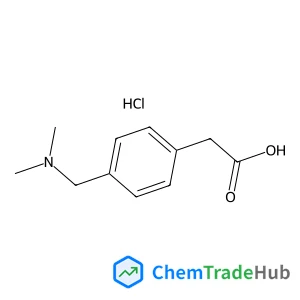
4-(Dimethylaminomethyl)phenylacetic acid hydrochloride
CAS Number:
99985-52-1
Molecular Formula:
C11H16ClNO2
![4-Chloro-2-{[(2-chlorophenoxy)acetyl]amino}benzoic acid structure](https://static.chemtradehub.com/structs/351/351424-20-9-9467.webp "4-Chloro-2-{[(2-chlorophenoxy)acetyl]amino}benzoic acid structure")
4-Chloro-2-{[(2-chlorophenoxy)acetyl]amino}benzoic acid
CAS Number:
351424-20-9
Molecular Formula:
C15H11Cl2NO4
Recommended Suppliers




Disclaimer
This page provides academic journal information for reference and research purposes only. We are not affiliated with any journal publishers and do not handle publication submissions. For publication-related inquiries, please contact the respective journal publishers directly.
If you notice any inaccuracies in the information displayed, please contact us at support@chemtradehub.com. We will promptly review and address your concerns.