












Effects of paramagnetic fluctuations on the thermochemistry of MnO(100) surfaces in the oxygen evolution reaction
Literature Information
Publication Date
2020-10-12
DOI
10.1039/D0CP03779F
Impact Factor
3.676
Authors
Kyoungsuk Jin, Sangmin Lee, Ki Tae Nam, Miyoung Kim, Young-Kyun Kwon
View Original
Abstract
We investigated the effects of paramagnetic (PM) fluctuations on the thermochemistry of the MnO(100) surface in the oxygen evolution reaction (OER) using the “noncollinear magnetic sampling method plus U” (NCMSM+U). Various physical properties, such as the electronic structure, free energy, and charge occupation, of the MnO(100) surface in the PM state with several OER intermediates, were reckoned and compared to those in the antiferromagnetic (AFM) state. We found that PM fluctuation enhances charge transfer from a surface Mn ion to each of the intermediates and strengthens the chemical bond between them, while not altering the overall features, such as the rate determining step and resting state, in reaction pathways. The enhanced charge transfer can be attributed to the delocalized nature of valence bands observed in the PM surface. In addition, it was observed that chemical-bond enhancement depends on the intermediates, resulting in significant deviations in reaction energy barriers. Our study suggests that PM fluctuations play a significant role in the thermochemistry of chemical reactions occurring on correlated oxide surfaces.
Related Literature
Valence isomer of a β-diketiminate-supported phosphinidene: a case of C–H activation and ring contraction
Zheng Lu, Michael Findlater, Alan H. Cowley
2007-05-08
Communication
DOI: 10.1039/B704266C
Synthesis and reactivity of functionalized cycloheptatrienyl–cyclopentadienyl sandwich complexes
2008-05-29
Feature Article
DOI: 10.1039/B802289E
Sulfonated N-heterocyclic carbenes for Suzuki coupling in water
Christoph Fleckenstein, Sutapa Roy, Steffen Leuthäußer, Herbert Plenio
2007-05-02
Communication
DOI: 10.1039/B703658B
Shape-controlled synthesis of protein-conjugated silver sulfide nanocrystals and study on the inhibition of tumor cell viability
Lin Yang, Hua-Jie Wang, Hua-Yan Yang, Shan-Hu Liu, Bao-Fang Zhang, Kui Wang, Xiao-Ming Ma, Zhi Zheng
2008-05-08
Communication
DOI: 10.1039/B804274H
The selective trimerisation of isoprene with chromium N,N-bis(diarylphosphino)amine catalysts
Lucy E. Bowen, Manutsavin Charernsuk, Duncan F. Wass
2007-05-01
Communication
DOI: 10.1039/B702331F
Self-assembled perpendicular growth of organic nanoneedles via simple vapor-phase deposition: one-step fabrication of a superhydrophobic surface
Jong Won Chung, Byeong-Kwan An, Ji Whan Kim, Jang-Joo Kim, Soo Young Park
2008-05-13
Communication
DOI: 10.1039/B802749H
Sulfate aniontemplation of a neutral pseudorotaxane assembly using an indolocarbazole threading component
Michał J. Chmielewski, Liyun Zhao, Asha Brown, David Curiel, Mark R. Sambrook, Amber L. Thompson, Sergio M. Santos, Vitor Felix, Jason J. Davis, Paul D. Beer
2008-05-09
Communication
DOI: 10.1039/B804941F
An expeditious one-step entry to the tetracyclic core of integrastatins
C. V. Ramana, Challa Nageswara Reddy, Rajesh G. Gonnade
2008-05-12
Communication
DOI: 10.1039/B801755G
Highly diastereoselective ionic/radical domino reactions: single electron transfer induced cyclization of bis-sulfoxides‡
Jean-Philippe Goddard, Catherine Gomez, Franck Brebion, Sophie Beauvière, Louis Fensterbank, Max Malacria
2007-06-21
Communication
DOI: 10.1039/B705284G
You might also like
Compound Q&A
Are there alternatives to 1-(4-Chlorophenyl)-N-hydroxymethanimine (CAS: 3848-36-0) in synthesis?
When considering alternatives to 1-(4-Chlorophenyl)-N-hydroxymethanimine (CAS: 3...
3848-36-01-(4-Chlorophenyl)-N...
Compound Q&A
How should (1R,9S,10S,12S,14E,16S,19R,20R,21S,22R)-3,9,21-Trihydroxy-5,10,12,14,16,20,22-heptamethyl-23,24-dioxatetracyclo[17.3.1.1~6,9~.0~2,7~]tetracosa-2,5,7,14-tetraen-4-one (CAS: 183202-73-5) be stored?
This compound should be stored in a cool, dry place away from direct sunlight. I...
183202-73-5(1R,9S,10S,12S,14E,1...
Compound Q&A
How is 3-(4-Bromophenyl)-5-(2-fluorophenyl)-1,2,4-oxadiazole (CAS: 419553-16-5) typically synthesized?
3-(4-Bromophenyl)-5-(2-fluorophenyl)-1,2,4-oxadiazole is synthesized through a m...
419553-16-53-(4-Bromophenyl)-5-...
Compound Q&A
How is 5-Chloro-2-(4-chlorophenyl)-4-methyl-6-[3-(1-piperidinyl)propoxy]pyrimidine (CAS: 1639220-19-1) typically synthesized?
5-Chloro-2-(4-chlorophenyl)-4-methyl-6-[3-(1-piperidinyl)propoxy]pyrimidine (CAS...
1639220-19-15-Chloro-2-(4-chloro...
Compound Q&A
What industries use 2-Chloro-4-(difluoromethoxy)pyridine (CAS: 1206978-15-5)?
2-Chloro-4-(difluoromethoxy)pyridine is used in the pharmaceutical industry for ...
1206978-15-52-Chloro-4-(difluoro...
Compound Q&A
What regulatory guidelines apply to 3-Chloro-6-methylpyridazine (CAS: 1121-79-5)?
3-Chloro-6-methylpyridazine (CAS: 1121-79-5) is classified under the Globally Ha...
1121-79-53-Chloro-6-methylpyr...
Compound Q&A
Are there alternatives to Methyl 4,5-dimethyl-2-nitrobenzoate in synthesis?
Several alternatives can be used in the synthesis of Methyl 4,5-dimethyl-2-nitro...
90922-74-0Methyl 4,5-dimethyl-...
Compound Q&A
Are there alternatives to (2E,2'E)-3,3'-(1,4-Phenylene)bisacrylaldehyde in synthesis?
Alternatives to (2E,2'E)-3,3'-(1,4-Phenylene)bisacrylaldehyde include other acry...
63405-68-5(2E,2'E)-3,3'-(1,4-P...
Compound Q&A
What is 3-Amino-5-chloropyridin-2-ol hydrochloride (CAS: 1261906-29-9)?
3-Amino-5-chloropyridin-2-ol hydrochloride is an organic compound with the CAS n...
1261906-29-93-Amino-5-chloropyri...
Compound Q&A
What precautions should be taken when handling 6,7-Difluoro-2,3-dihydro-4H-chromen-4-one (CAS: 1092349-93-3)?
When handling 6,7-Difluoro-2,3-dihydro-4H-chromen-4-one, it is essential to wear...
1092349-93-36,7-Difluoro-2,3-dih...
Source Journal
Physical Chemistry Chemical Physics

CiteScore:
5.5
Self-citation Rate:
10.3%
Articles per Year:
3036
Physical Chemistry Chemical Physics (PCCP) is an international journal co-owned by 19 physical chemistry and physics societies from around the world. This journal publishes original, cutting-edge research in physical chemistry, chemical physics and biophysical chemistry. To be suitable for publication in PCCP, articles must include significant innovation and/or insight into physical chemistry; this is the most important criterion that reviewers and Editors will judge against when evaluating submissions. The journal has a broad scope and welcomes contributions spanning experiment, theory, computation and data science. Topical coverage includes spectroscopy, dynamics, kinetics, statistical mechanics, thermodynamics, electrochemistry, catalysis, surface science, quantum mechanics, quantum computing and machine learning. Interdisciplinary research areas such as polymers and soft matter, materials, nanoscience, energy, surfaces/interfaces, and biophysical chemistry are welcomed if they demonstrate significant innovation and/or insight into physical chemistry. Joined experimental/theoretical studies are particularly appreciated when complementary and based on up-to-date approaches.
Recommended Compounds
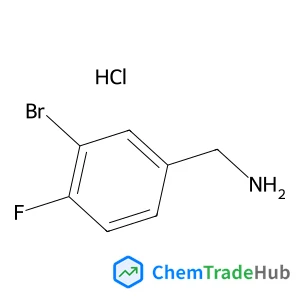
1-(3-Bromo-4-fluorophenyl)methanamine hydrochloride (1:1)
CAS Number:
202865-68-7
Molecular Formula:
C7H8BrClFN
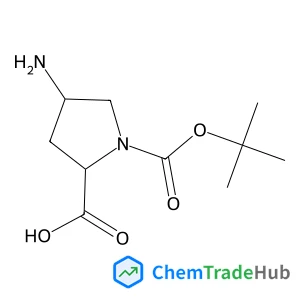
(2R,4R)-1-Boc-4-Aminopyrrolidine-2-carboxylic acid
CAS Number:
132622-98-1
Molecular Formula:
C10H18N2O4
Recommended Suppliers





Disclaimer
This page provides academic journal information for reference and research purposes only. We are not affiliated with any journal publishers and do not handle publication submissions. For publication-related inquiries, please contact the respective journal publishers directly.
If you notice any inaccuracies in the information displayed, please contact us at support@chemtradehub.com. We will promptly review and address your concerns.