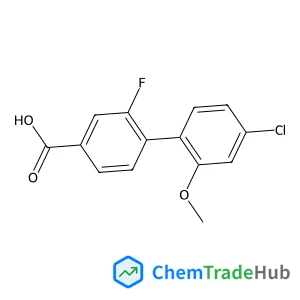
4-(4-Chloro-2-methoxyphenyl)-3-fluorobenzoic acid
CAS Number:
1261970-23-3
Molecular Formula:
C14H10ClFO3
Kazuki Tamai, Kazuo Kato
Improvement of the low-temperature activity for NO oxidation catalysts is a crucial issue to improve the NOx storage performance in automotive catalysts. We have recently reported that the lattice oxygen species in SrFeO3−δ (SFO) are reactive in the oxidation of NO to NO2 at low temperatures. The oxidation of NO using lattice oxygen species is a powerful means to oxidize NO in such kinetically restricted temperature regions. This paper shows that Fe-site substitution of SFO with Mn or Co improves the properties of lattice oxygen such as the temperature and amount of oxygen release/storage, resulting in the enhancement of the activity for NO oxidation in a low-temperature range. In particular, NO oxidation on SrFe0.8Mn0.2O3−δ is found to proceed even at extremely low temperatures <423 K. From oxygen release/storage profiles obtained by temperature-programmed reactions, Co doping into SFO increases the amount of released oxygen owing to the reducibility of the Co species and promotes the phase transformation to the brownmillerite phase. On the other hand, Mn doping does not increase the oxygen release amount and suppresses the phase transformation. However, it significantly decreases the oxygen migration barrier of SFO. Substitution with Mn renders the structure of SFO more robust and maintains the perovskite structure after the release of oxygen. Thus, the oxygen release properties are strongly dependent on the crystal structure change before and after oxygen release from the perovskite structure, which has a significant effect on NO oxidation and the NOx storage performance.
Samuel Tekobo, Eugene Pinkhassik
DOI: 10.1039/B817598E
Jian-Hua Zhu, Shu-Hong Yu, An-Wu Xu, Helmut Cölfen
DOI: 10.1039/B817048G
Dragoslav Vidovic, Glesni A. Pierce, Simon Aldridge
DOI: 10.1039/B816042B
Daeseob Shim, Seung-Ho Jung, Eun-Ha Kim, Dong-Myung Yoon, Kun-Hong Lee, Soo-Hwan Jeong
DOI: 10.1039/B816534C
Zhixun Luo, Yi Luo, Jie Li, Kai Liu, Hongbing Fu, Ying Ma, Jiannian Yao
DOI: 10.1039/B819402E
Jing-Fang Huang
DOI: 10.1039/B819658C
Andrew Mills, Kate McDiarmid, Michael McFarlane, Pauline Grosshans
DOI: 10.1039/B900569B
Stuart T. Caldwell, Louis J. Farrugia, Shanika Gunatilaka Hewage, Nadiya Kryvokhyzha, Vincent M. Rotello, Graeme Cooke
DOI: 10.1039/B900269N
(5-Sulfamoyl-3-pyridinyl)boronic acid is primarily used in chemical synthesis, p...
Benzyl 2-methyl-2-(methylsulfonyl)-4-pentenoate is typically synthesized via est...
When handling 8-Fluoroquinolin-6-ol (CAS: 209353-22-0), it is important to use p...
1,3-Dibromo-5-(2-methyl-2-propanyl)benzene (CAS: 129316-09-2) is a crystalline c...
Ethyl 7-chloro-4-oxo-1-(1,3-thiazol-2-yl)-1,4-dihydro-1,8-naphthyridine-3-carbox...
When handling Delta-7-Avenasterol (CAS: 23290-26-8), it is important to wear app...
Proper handling involves the use of personal protective equipment such as gloves...
When handling 2-Methyl-2-proanyl 4-[(2-aminophenyl)amino]-1-piperidinecarboxylat...
N-Methyl-4-chlorobenzylamine hydrochloride (CAS: 65542-24-7) is a organic compou...
[2-(Dodecyloxy)ethoxy]acetic acid (CAS: 27306-90-7) is generally considered safe...

Physical Chemistry Chemical Physics (PCCP) is an international journal co-owned by 19 physical chemistry and physics societies from around the world. This journal publishes original, cutting-edge research in physical chemistry, chemical physics and biophysical chemistry. To be suitable for publication in PCCP, articles must include significant innovation and/or insight into physical chemistry; this is the most important criterion that reviewers and Editors will judge against when evaluating submissions. The journal has a broad scope and welcomes contributions spanning experiment, theory, computation and data science. Topical coverage includes spectroscopy, dynamics, kinetics, statistical mechanics, thermodynamics, electrochemistry, catalysis, surface science, quantum mechanics, quantum computing and machine learning. Interdisciplinary research areas such as polymers and soft matter, materials, nanoscience, energy, surfaces/interfaces, and biophysical chemistry are welcomed if they demonstrate significant innovation and/or insight into physical chemistry. Joined experimental/theoretical studies are particularly appreciated when complementary and based on up-to-date approaches.
![2-(5-Bromo-1H-pyrrolo[2,3-B]pyridin-3-YL)acetic acid structure](https://static.chemtradehub.com/structs/106/1060795-03-0-0589.webp "2-(5-Bromo-1H-pyrrolo[2,3-B]pyridin-3-YL)acetic acid structure")
![N-[2,6-Di(9-anthryl)-4-oxido-8,9,10,11,12,13,14,15-octahydrodinaphtho[2,1-d:1',2'-f][1,3,2]dioxaphosphepin-4-yl]-1,1,1-trifluoromethanesulfonamide structure](https://static.chemtradehub.com/structs/122/1227374-64-2-cdb5.webp "N-[2,6-Di(9-anthryl)-4-oxido-8,9,10,11,12,13,14,15-octahydrodinaphtho[2,1-d:1',2'-f][1,3,2]dioxaphosphepin-4-yl]-1,1,1-trifluoromethanesulfonamide structure")