












Thermal dissociation of anthracene photodimers in the condensed state: kinetic evaluation and complex phase behaviour
Literature Information
Publication Date
2020-07-14
DOI
10.1039/D0CP03165H
Impact Factor
3.676
Authors
Joost Brancart, Jonas Van Damme, Filip Du Prez, Guy Van Assche
View Original
Abstract
Thermally and photochemically reversible functional groups, such as photodimers of anthracene derivatives, offer interesting stimuli-responsive behaviour. To evaluate their potential for application in reversible polymer networks, accurate kinetic parameters and knowledge of their thermophysical behaviour are required. Accurate kinetic studies of the thermal dissociation of the photodimers in the condensed state, thus without the influence of solvents on their reactivity, is still lacking. A methodology was set up to accurately evaluate the chemical reaction kinetics and complex phase behaviour during the thermal dissociation of photodimers into their corresponding monomers. Temperature-controlled time-resolved FTIR spectroscopy was used to determine the reaction progress, while non-isothermal DSC measurements were used to study the thermophysical changes, resulting from the thermal dissociation reaction. The thermal dissociation behaviour in the condensed state is more challenging than in the solution state due to the crystallinity of the dimers, stabilizing the dimers and thus slowing down the initial dissociation rates. Distinctly different sets of kinetic parameters were found for the dissociation from the molten and the crystalline state. For experiments performed below the melting temperature of the photodimer, the reaction rate changes abruptly as the dimer is partly dissociated and partly dissolved into the formed monomer. This methodology provides an accurate assessment of the reaction kinetics with detailed knowledge about the complex phase behaviour of the mixture of the anthracene photodimer and monomer during thermal dissociation.
Related Literature
Synthesis and investigation of a novel luminous hydrogel
Xu Fei, Jing Tian, Hui Zhi, Longquan Xu, Xiuying Wang, Yi Wang
2016-05-05
Paper
DOI: 10.1039/C6PY00749J
Thermal and living anionic polymerization of 4-vinylbenzyl piperidine
Alison R. Schultz, Chainika Jangu, Timothy E. Long
2014-07-02
Paper
DOI: 10.1039/C4PY00763H
Fixation of carbon dioxide concurrently or in tandem with free radical polymerization for highly transparent polyacrylates with specific UV absorption
Bin Liu, Ying-Ying Zhang, Xing-Hong Zhang, Bin-Yang Du, Zhi-Qiang Fan
2016-04-29
Paper
DOI: 10.1039/C6PY00525J
Synthesis of antimicrobial block copolymers bearing immobilized bacteriostatic groups
N. D. Koromilas, G. Vasilopoulos, A. Vantarakis
2016-04-25
Paper
DOI: 10.1039/C6PY00553E
From nucleobase to DNA templates for precision supramolecular assemblies and synthetic polymers
2016-05-27
Minireview
DOI: 10.1039/C6PY00480F
Hyperbranched polyester nanorods with pyrrolo[2,1-a]isoquinoline end groups for fluorescent recognition of Fe3+
Qiaorong Han, Yuliang Jiang, Can Jin, Shanshan Cheng, Xiaoxia Wang, Xiangyu Wang, Bingxiang Wang
2014-07-09
Communication
DOI: 10.1039/C4PY00787E
You might also like
Compound Q&A
Are there alternatives to 1-(4-Chlorophenyl)-N-hydroxymethanimine (CAS: 3848-36-0) in synthesis?
When considering alternatives to 1-(4-Chlorophenyl)-N-hydroxymethanimine (CAS: 3...
3848-36-01-(4-Chlorophenyl)-N...
Compound Q&A
How should (1R,9S,10S,12S,14E,16S,19R,20R,21S,22R)-3,9,21-Trihydroxy-5,10,12,14,16,20,22-heptamethyl-23,24-dioxatetracyclo[17.3.1.1~6,9~.0~2,7~]tetracosa-2,5,7,14-tetraen-4-one (CAS: 183202-73-5) be stored?
This compound should be stored in a cool, dry place away from direct sunlight. I...
183202-73-5(1R,9S,10S,12S,14E,1...
Compound Q&A
How is 3-(4-Bromophenyl)-5-(2-fluorophenyl)-1,2,4-oxadiazole (CAS: 419553-16-5) typically synthesized?
3-(4-Bromophenyl)-5-(2-fluorophenyl)-1,2,4-oxadiazole is synthesized through a m...
419553-16-53-(4-Bromophenyl)-5-...
Compound Q&A
How is 5-Chloro-2-(4-chlorophenyl)-4-methyl-6-[3-(1-piperidinyl)propoxy]pyrimidine (CAS: 1639220-19-1) typically synthesized?
5-Chloro-2-(4-chlorophenyl)-4-methyl-6-[3-(1-piperidinyl)propoxy]pyrimidine (CAS...
1639220-19-15-Chloro-2-(4-chloro...
Compound Q&A
What industries use 2-Chloro-4-(difluoromethoxy)pyridine (CAS: 1206978-15-5)?
2-Chloro-4-(difluoromethoxy)pyridine is used in the pharmaceutical industry for ...
1206978-15-52-Chloro-4-(difluoro...
Compound Q&A
What regulatory guidelines apply to 3-Chloro-6-methylpyridazine (CAS: 1121-79-5)?
3-Chloro-6-methylpyridazine (CAS: 1121-79-5) is classified under the Globally Ha...
1121-79-53-Chloro-6-methylpyr...
Compound Q&A
Are there alternatives to Methyl 4,5-dimethyl-2-nitrobenzoate in synthesis?
Several alternatives can be used in the synthesis of Methyl 4,5-dimethyl-2-nitro...
90922-74-0Methyl 4,5-dimethyl-...
Compound Q&A
Are there alternatives to (2E,2'E)-3,3'-(1,4-Phenylene)bisacrylaldehyde in synthesis?
Alternatives to (2E,2'E)-3,3'-(1,4-Phenylene)bisacrylaldehyde include other acry...
63405-68-5(2E,2'E)-3,3'-(1,4-P...
Compound Q&A
What is 3-Amino-5-chloropyridin-2-ol hydrochloride (CAS: 1261906-29-9)?
3-Amino-5-chloropyridin-2-ol hydrochloride is an organic compound with the CAS n...
1261906-29-93-Amino-5-chloropyri...
Compound Q&A
What precautions should be taken when handling 6,7-Difluoro-2,3-dihydro-4H-chromen-4-one (CAS: 1092349-93-3)?
When handling 6,7-Difluoro-2,3-dihydro-4H-chromen-4-one, it is essential to wear...
1092349-93-36,7-Difluoro-2,3-dih...
Source Journal
Physical Chemistry Chemical Physics

CiteScore:
5.5
Self-citation Rate:
10.3%
Articles per Year:
3036
Physical Chemistry Chemical Physics (PCCP) is an international journal co-owned by 19 physical chemistry and physics societies from around the world. This journal publishes original, cutting-edge research in physical chemistry, chemical physics and biophysical chemistry. To be suitable for publication in PCCP, articles must include significant innovation and/or insight into physical chemistry; this is the most important criterion that reviewers and Editors will judge against when evaluating submissions. The journal has a broad scope and welcomes contributions spanning experiment, theory, computation and data science. Topical coverage includes spectroscopy, dynamics, kinetics, statistical mechanics, thermodynamics, electrochemistry, catalysis, surface science, quantum mechanics, quantum computing and machine learning. Interdisciplinary research areas such as polymers and soft matter, materials, nanoscience, energy, surfaces/interfaces, and biophysical chemistry are welcomed if they demonstrate significant innovation and/or insight into physical chemistry. Joined experimental/theoretical studies are particularly appreciated when complementary and based on up-to-date approaches.
Recommended Compounds
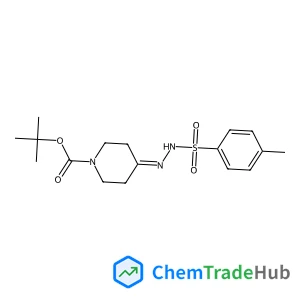
tert-Butyl 4-(2-(p-Tolylsulfonyl)hydrazono)piperidine-1-carboxylate
CAS Number:
1046478-89-0
Molecular Formula:
C17H25N3O4S
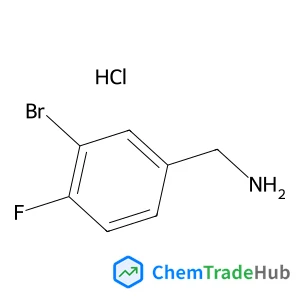
1-(3-Bromo-4-fluorophenyl)methanamine hydrochloride (1:1)
CAS Number:
202865-68-7
Molecular Formula:
C7H8BrClFN
Recommended Suppliers



Disclaimer
This page provides academic journal information for reference and research purposes only. We are not affiliated with any journal publishers and do not handle publication submissions. For publication-related inquiries, please contact the respective journal publishers directly.
If you notice any inaccuracies in the information displayed, please contact us at support@chemtradehub.com. We will promptly review and address your concerns.