


Fixation of carbon dioxide concurrently or in tandem with free radical polymerization for highly transparent polyacrylates with specific UV absorption
Literature Information
Publication Date
2016-04-29
DOI
10.1039/C6PY00525J
Impact Factor
5.582
Authors
Bin Liu, Ying-Ying Zhang, Xing-Hong Zhang, Bin-Yang Du, Zhi-Qiang Fan
View Original
Abstract
It is still a challenging issue to combine the coupling reaction and free radical polymerization (FRP) for well-controlled and efficient synthesis of polyacrylates bearing the cyclic carbonate group from carbon dioxide (CO2) and vinyl epoxides. This work describes the efficient catalytic synthesis of poly(2-oxo-1,3-dioxolane-4-yl)methyl methacrylate (PDOMA) from CO2 and glycidyl methacrylate (GMA) via concurrent or tandem combination of the coupling reaction and FRP. In a concurrent reaction, GMA/CO2 coupling with 100% oxirane conversion was achieved by using a nanolamellar zinc–cobalt(III) double metal cyanide complex [Zn–Co(III) DMCC] (0.30 mol% Zn related to GMA) with cetyltrimethylammonium bromide (CTAB) (0.65 mol% related to GMA) as the catalyst, and PDOMA was obtained via the concurrent free radical polymerization of carbon–carbon double bonds in the presence or absence of additional free radical initiator. In the tandem process, (2-oxo-1,3-dioxolane-4-yl)methyl methacrylate (DOMA) was firstly synthesized via GMA/CO2 coupling catalyzed by Zn–Co(III) DMCC/CTAB and purified by simply passing through a basic aluminum oxide column. DOMA could be polymerized via solution or emulsion polymerization, leading to linear PDOMA or PDOMA nanoparticles with minimized metal residues. The obtained PDOMAs were soluble in strong polar solvents and presented excellent light transmittance in a wavelength range of 314–800 nm (93%) and perfect ultraviolet (UV) absorption in a wavelength range of 200–313 nm (close to 100%), whilst most of the common polyacrylates cannot absorb UV light. In addition, the PDOMAs had tunable number-average molecular weights (Mns) of 12.0–132.0 kg mol−1 and high glass transition temperatures (Tgs) of 121.0–140.4 °C. Such CO2-based PDOMAs could be potentially used as wavelength-specific UV-absorbing materials. This work provides a simple and useful synthetic path to directly utilize CO2 by combining two reaction mechanisms.
Recommended Journals

Acta Materialia

Russian Journal of Organic Chemistry

Nature Medicine

Crystallography Reports

Journal of Natural Medicines

Organic Process Research & Development

Current Opinion in Solid State & Materials Science

Russian Journal of General Chemistry

Journal of Saudi Chemical Society

Saudi Pharmaceutical Journal
Related Literature
The molecular clusters in a supercritical fluid–solid system should be considered as a phase—thermodynamic principle and evidence
Minqiang Hou, Jianling Zhang, Buxing Han, Qingqing Mei, Hui Ning, Dezhong Yang
2013-04-09
Paper
DOI: 10.1039/C3CP44670K
Stability of Si epoxide defects in Si nanowires: a mixed reactive force field/DFT study
Erik C. Neyts, Umedjon Khalilov, Bart Partoens
2013-07-16
Paper
DOI: 10.1039/C3CP51621K
Plant protein interactions studied using AFM force spectroscopy: nanomechanical and adhesion properties
Ahmad Fahs, Guy Louarn
2013-06-04
Paper
DOI: 10.1039/C3CP51007G
Interactions of platinum clusters with a graphite substrate
G. Ramos-Sanchez, P. B. Balbuena
2013-05-31
Paper
DOI: 10.1039/C3CP51791H
New perspectives on potential hydrogen storage materials using high pressure
Yang Song
2013-06-04
Perspective
DOI: 10.1039/C3CP52154K
Mg composition dependent band offsets of Zn1−xMgxO/ZnO heterojunctions
H. H. Zhang, X. H. Pan, B. Lu, J. Y. Huang, P. Ding, W. Chen, H. P. He, J. G. Lu, S. S. Chen, Z. Z. Ye
2013-05-22
Communication
DOI: 10.1039/C3CP51156A
Assemblies of polyvinylpyrrolidone-capped tetrahedral and spherical Pt nanoparticles in polyelectrolytes: hydrogen underpotential deposition and electrochemical characterization
Sarah Jaber, Pamela Nasr, Yan Xin, Fatima Sleem, Lara I. Halaoui
2013-08-09
Paper
DOI: 10.1039/C3CP51061A
Towards systematically improvable models for actinides in condensed phase: the electronic spectrum of uranyl in Cs2UO2Cl4 as a test case
André Severo Pereira Gomes, Christoph R. Jacob, Florent Réal, Lucas Visscher, Valérie Vallet
2013-07-12
Paper
DOI: 10.1039/C3CP52090K
You might also like
Compound Q&A
Are there alternatives to 1-(4-Chlorophenyl)-N-hydroxymethanimine (CAS: 3848-36-0) in synthesis?
When considering alternatives to 1-(4-Chlorophenyl)-N-hydroxymethanimine (CAS: 3...
3848-36-01-(4-Chlorophenyl)-N...
Compound Q&A
How should (1R,9S,10S,12S,14E,16S,19R,20R,21S,22R)-3,9,21-Trihydroxy-5,10,12,14,16,20,22-heptamethyl-23,24-dioxatetracyclo[17.3.1.1~6,9~.0~2,7~]tetracosa-2,5,7,14-tetraen-4-one (CAS: 183202-73-5) be stored?
This compound should be stored in a cool, dry place away from direct sunlight. I...
183202-73-5(1R,9S,10S,12S,14E,1...
Compound Q&A
How is 3-(4-Bromophenyl)-5-(2-fluorophenyl)-1,2,4-oxadiazole (CAS: 419553-16-5) typically synthesized?
3-(4-Bromophenyl)-5-(2-fluorophenyl)-1,2,4-oxadiazole is synthesized through a m...
419553-16-53-(4-Bromophenyl)-5-...
Compound Q&A
How is 5-Chloro-2-(4-chlorophenyl)-4-methyl-6-[3-(1-piperidinyl)propoxy]pyrimidine (CAS: 1639220-19-1) typically synthesized?
5-Chloro-2-(4-chlorophenyl)-4-methyl-6-[3-(1-piperidinyl)propoxy]pyrimidine (CAS...
1639220-19-15-Chloro-2-(4-chloro...
Compound Q&A
What industries use 2-Chloro-4-(difluoromethoxy)pyridine (CAS: 1206978-15-5)?
2-Chloro-4-(difluoromethoxy)pyridine is used in the pharmaceutical industry for ...
1206978-15-52-Chloro-4-(difluoro...
Compound Q&A
What regulatory guidelines apply to 3-Chloro-6-methylpyridazine (CAS: 1121-79-5)?
3-Chloro-6-methylpyridazine (CAS: 1121-79-5) is classified under the Globally Ha...
1121-79-53-Chloro-6-methylpyr...
Compound Q&A
Are there alternatives to Methyl 4,5-dimethyl-2-nitrobenzoate in synthesis?
Several alternatives can be used in the synthesis of Methyl 4,5-dimethyl-2-nitro...
90922-74-0Methyl 4,5-dimethyl-...
Compound Q&A
Are there alternatives to (2E,2'E)-3,3'-(1,4-Phenylene)bisacrylaldehyde in synthesis?
Alternatives to (2E,2'E)-3,3'-(1,4-Phenylene)bisacrylaldehyde include other acry...
63405-68-5(2E,2'E)-3,3'-(1,4-P...
Compound Q&A
What is 3-Amino-5-chloropyridin-2-ol hydrochloride (CAS: 1261906-29-9)?
3-Amino-5-chloropyridin-2-ol hydrochloride is an organic compound with the CAS n...
1261906-29-93-Amino-5-chloropyri...
Compound Q&A
What precautions should be taken when handling 6,7-Difluoro-2,3-dihydro-4H-chromen-4-one (CAS: 1092349-93-3)?
When handling 6,7-Difluoro-2,3-dihydro-4H-chromen-4-one, it is essential to wear...
1092349-93-36,7-Difluoro-2,3-dih...
Source Journal
Polymer Chemistry

CiteScore:
8.6
Self-citation Rate:
7.3%
Articles per Year:
457
Polymer Chemistry welcomes submissions in all areas of polymer science that have a strong focus on macromolecular chemistry. Manuscripts may cover a broad range of fields, yet no direct application focus is required.
Recommended Compounds
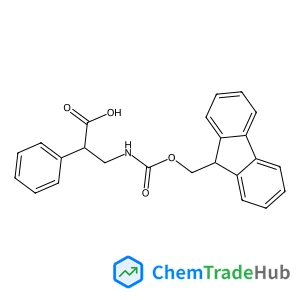
(S)-3-((((9H-Fluoren-9-yl)methoxy)carbonyl)amino)-2-phenylpropanoic acid
CAS Number:
1217663-60-9
Molecular Formula:
C24H21NO4
![[4-(Isobutyrylamino)phenyl]boronic acid structure](https://static.chemtradehub.com/structs/874/874219-50-8-6ab5.webp "[4-(Isobutyrylamino)phenyl]boronic acid structure")
Recommended Suppliers





Disclaimer
This page provides academic journal information for reference and research purposes only. We are not affiliated with any journal publishers and do not handle publication submissions. For publication-related inquiries, please contact the respective journal publishers directly.
If you notice any inaccuracies in the information displayed, please contact us at support@chemtradehub.com. We will promptly review and address your concerns.