












The interaction strength of an intrinsically disordered protein domain with its binding partner is little affected by very different cosolutes
Literature Information
Publication Date
2020-11-20
DOI
10.1039/D0CP03040F
Impact Factor
3.676
Authors
Jan Schnatwinkel, Christian Herrmann
View Original
Abstract
A common feature of intrinsically disordered proteins (IDPs) is a disorder-to-order transition upon binding to other proteins, which has been tied to multiple benefits, including accelerated association rates or binding with low affinity, yet high specificity. Given the balanced equilibrium concentrations of folded and unfolded state of an IDP we asked the question if changes in the chemical environment, such as the presence of osmolytes or crowding agents, have a strong influence on the interaction of an IDP. Here, we demonstrate the impact of cosolutes on the interaction of the intrinsically disordered transcription factor c-Myb and its binding partner, the kinase-inducible interaction domain (KIX) of the CREB-binding protein. Temperature jump relaxation kinetics and microscale thermophoresis were employed in order to quantify the rate constants and the binding affinity of the c-Myb/KIX complex, respectively, in the presence of various cosolutes. We find the binding free energy of the c-Myb/KIX complex only marginally modulated by cosolutes, whereas the enthalpy and entropy of the interaction are very sensitive to the respective solvent conditions. For different cosolutes we observe substantial changes in enthalpy, both favorable and unfavorable, which are going with entropy changes largely compensating the enthalpy effects in each case. These characteristics might reflect a potential mechanism by which c-Myb offsets changes in the physico-chemical environment to maintain a roughly unaltered binding affinity.
Recommended Journals
Related Literature
On-capillary derivatization using a hybrid artificial neural network-genetic algorithm approach
Toni Riveros, Grady Hanrahan, Sarah Muliadi, Jennifer Arceo, Frank A. Gomez
2009-08-03
Paper
DOI: 10.1039/B909143B
Multifunctional magnetic bead-based electrochemical immunoassay for the detection ofaflatoxin B1 in food
Dianping Tang, Zhaoyang Zhong, Reinhard Niessner, Dietmar Knopp
2009-05-20
Paper
DOI: 10.1039/B902401H
Genetic, genomic and physiological state studies on single-needle bio-electrosprayed human cells
Richard P. Hall, Caroline M. Ogilvie, Emma Aarons, Suwan N. Jayasinghe
2008-07-02
Communication
DOI: 10.1039/B806901H
Colorimetric cyanide detection using an azobenzene acid in aqueous solutions
Xiaoding Lou, Jingui Qin, Zhen Li
2009-08-03
Paper
DOI: 10.1039/B903076J
Novel fluorescence enhancement IgE assay using a DNA aptamer
Jing-Lin He, Zai-Sheng Wu, Song-Bai Zhang, Guo-Li Shen, Ru-Qin Yu
2009-03-12
Paper
DOI: 10.1039/B812450G
Development of robust quantitative methods by near-infrared spectroscopy for rapid pharmaceutical determination of content uniformity in complex tablet matrix
Dong Xiang, Michele Konigsberger, Busolo Wabuyele, Karl Hornung, James Cheney
2009-03-31
Paper
DOI: 10.1039/B821836F
Labeling strategies in mass spectrometry-based protein quantitation
Randi L. Gant-Branum, Thomas J. Kerr, John A. McLean
2009-06-09
Minireview
DOI: 10.1039/B904643G
The use of nanoparticles in anti-microbial materials and their characterization
Emma Weir, Antoin Lawlor, Aine Whelan, Fiona Regan
2008-03-12
Critical Review
DOI: 10.1039/B715532H
Imprinted polymers for chiral resolution of (±)-ephedrine. Part 2: probing pre-polymerisation equilibria in different solvents by NMR‡
Richard J. Ansell, Dongyao Wang, Janice K. L. Kuah
2008-09-03
Paper
DOI: 10.1039/B806376A
You might also like
Compound Q&A
Are there alternatives to 1-(4-Chlorophenyl)-N-hydroxymethanimine (CAS: 3848-36-0) in synthesis?
When considering alternatives to 1-(4-Chlorophenyl)-N-hydroxymethanimine (CAS: 3...
3848-36-01-(4-Chlorophenyl)-N...
Compound Q&A
How should (1R,9S,10S,12S,14E,16S,19R,20R,21S,22R)-3,9,21-Trihydroxy-5,10,12,14,16,20,22-heptamethyl-23,24-dioxatetracyclo[17.3.1.1~6,9~.0~2,7~]tetracosa-2,5,7,14-tetraen-4-one (CAS: 183202-73-5) be stored?
This compound should be stored in a cool, dry place away from direct sunlight. I...
183202-73-5(1R,9S,10S,12S,14E,1...
Compound Q&A
How is 3-(4-Bromophenyl)-5-(2-fluorophenyl)-1,2,4-oxadiazole (CAS: 419553-16-5) typically synthesized?
3-(4-Bromophenyl)-5-(2-fluorophenyl)-1,2,4-oxadiazole is synthesized through a m...
419553-16-53-(4-Bromophenyl)-5-...
Compound Q&A
How is 5-Chloro-2-(4-chlorophenyl)-4-methyl-6-[3-(1-piperidinyl)propoxy]pyrimidine (CAS: 1639220-19-1) typically synthesized?
5-Chloro-2-(4-chlorophenyl)-4-methyl-6-[3-(1-piperidinyl)propoxy]pyrimidine (CAS...
1639220-19-15-Chloro-2-(4-chloro...
Compound Q&A
What industries use 2-Chloro-4-(difluoromethoxy)pyridine (CAS: 1206978-15-5)?
2-Chloro-4-(difluoromethoxy)pyridine is used in the pharmaceutical industry for ...
1206978-15-52-Chloro-4-(difluoro...
Compound Q&A
What regulatory guidelines apply to 3-Chloro-6-methylpyridazine (CAS: 1121-79-5)?
3-Chloro-6-methylpyridazine (CAS: 1121-79-5) is classified under the Globally Ha...
1121-79-53-Chloro-6-methylpyr...
Compound Q&A
Are there alternatives to Methyl 4,5-dimethyl-2-nitrobenzoate in synthesis?
Several alternatives can be used in the synthesis of Methyl 4,5-dimethyl-2-nitro...
90922-74-0Methyl 4,5-dimethyl-...
Compound Q&A
Are there alternatives to (2E,2'E)-3,3'-(1,4-Phenylene)bisacrylaldehyde in synthesis?
Alternatives to (2E,2'E)-3,3'-(1,4-Phenylene)bisacrylaldehyde include other acry...
63405-68-5(2E,2'E)-3,3'-(1,4-P...
Compound Q&A
What is 3-Amino-5-chloropyridin-2-ol hydrochloride (CAS: 1261906-29-9)?
3-Amino-5-chloropyridin-2-ol hydrochloride is an organic compound with the CAS n...
1261906-29-93-Amino-5-chloropyri...
Compound Q&A
What precautions should be taken when handling 6,7-Difluoro-2,3-dihydro-4H-chromen-4-one (CAS: 1092349-93-3)?
When handling 6,7-Difluoro-2,3-dihydro-4H-chromen-4-one, it is essential to wear...
1092349-93-36,7-Difluoro-2,3-dih...
Source Journal
Physical Chemistry Chemical Physics

CiteScore:
5.5
Self-citation Rate:
10.3%
Articles per Year:
3036
Physical Chemistry Chemical Physics (PCCP) is an international journal co-owned by 19 physical chemistry and physics societies from around the world. This journal publishes original, cutting-edge research in physical chemistry, chemical physics and biophysical chemistry. To be suitable for publication in PCCP, articles must include significant innovation and/or insight into physical chemistry; this is the most important criterion that reviewers and Editors will judge against when evaluating submissions. The journal has a broad scope and welcomes contributions spanning experiment, theory, computation and data science. Topical coverage includes spectroscopy, dynamics, kinetics, statistical mechanics, thermodynamics, electrochemistry, catalysis, surface science, quantum mechanics, quantum computing and machine learning. Interdisciplinary research areas such as polymers and soft matter, materials, nanoscience, energy, surfaces/interfaces, and biophysical chemistry are welcomed if they demonstrate significant innovation and/or insight into physical chemistry. Joined experimental/theoretical studies are particularly appreciated when complementary and based on up-to-date approaches.
Recommended Compounds
![2-{[(1R,2S)-2-Aminocyclohexyl]amino}-4-{[3-(2H-1,2,3-triazol-2-yl)phenyl]amino}-5-pyrimidinecarboxamide structure](https://static.chemtradehub.com/structs/137/1370261-96-3-40df.webp "2-{[(1R,2S)-2-Aminocyclohexyl]amino}-4-{[3-(2H-1,2,3-triazol-2-yl)phenyl]amino}-5-pyrimidinecarboxamide structure")
2-{[(1R,2S)-2-Aminocyclohexyl]amino}-4-{[3-(2H-1,2,3-triazol-2-yl)phenyl]amino}-5-pyrimidinecarboxamide
CAS Number:
1370261-96-3
Molecular Formula:
C19H23N9O
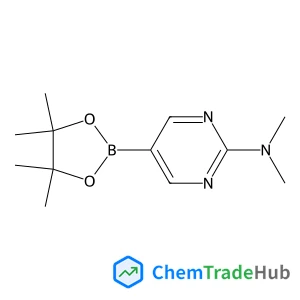
N,N-Dimethyl-5-(4,4,5,5-tetramethyl-1,3,2-dioxaborolan-2-yl)-2-pyrimidinamine
CAS Number:
1032759-30-0
Molecular Formula:
C12H20BN3O2
Recommended Suppliers





Disclaimer
This page provides academic journal information for reference and research purposes only. We are not affiliated with any journal publishers and do not handle publication submissions. For publication-related inquiries, please contact the respective journal publishers directly.
If you notice any inaccuracies in the information displayed, please contact us at support@chemtradehub.com. We will promptly review and address your concerns.