













Highly-excited state properties of cumulenone chlorides in the vacuum-ultraviolet
Literature Information
Publication Date
2020-05-09
DOI
10.1039/D0CP01835J
Impact Factor
3.676
Authors
Quynh L. D. Nguyen, William K. Peters, Ryan C. Fortenberry
View Original
Abstract
Recent observations of chloromethane in interstellar environments suggest that other organohalogens, which are known to be critically important in Earth's atmosphere, may also be of significance beyond our own terrestrial veil. This raises the question of how such molecules behave under extreme conditions such as when exposed to vacuum ultraviolet (VUV) radiation. VUV photons promote molecules to highly excited states that fragment in non-statistical patterns controlled by the initial femtosecond dynamics. A detailed understanding of VUV-driven photochemistry in complex organic molecules that consist of more than one functional group is a particularly challenging task. This quantum chemical analysis reports the electronic states and ionization potentials up to the VUV range (6–11 eV) of the chlorine-substituted cumulenone series molecules. The valence and Rydberg properties of lone-pair terminated, π-conjugated systems are explored for their potential resonance with lone pairs from elsewhere in the system. The carbon chain elongation within the family ClHCnO, where n = 1–4, influences the electronic excitations, associated wavefunctions, and ionization potentials of the molecules. The predicted geometries and ionization potentials are in good agreement with the available experimental photoelectron spectra for formyl chloride and chloroketene, n = 1–2. Furthermore, comparison between the regular cumulenone species and the corresponding chlorinated derivatives exhibit similar behaviors especially for n = 3, where the allene backbone in propadienone chloride is severely bent. Most notably for the excited states is that the Rydberg character becomes more dominant as the energy increases, with some retaining valence characters.
Related Literature
Azacalix[4]arene cation radicals: spin-delocalised doublet- and triplet-ground states observed in the macrocyclic m-phenylene system connected with nitrogen atoms
Koichi Ishibashi, Hirohito Tsue, Naoko Sakai, Satoshi Tokita, Kazuhiro Matsui, Jun Yamauchi, Rui Tamura
2008-04-11
Communication
DOI: 10.1039/B801127C
Formal total synthesis of (−)-haouamine A‡
Alois Fürstner, Jens Ackerstaff
2008-06-02
Communication
DOI: 10.1039/B805295F
Growth, detachment and transfer of highly-ordered TiO2nanotube arrays: use in dye-sensitized solar cells
Jong Hyeok Park, Tae-Woo Lee, Man Gu Kang
2008-05-07
Communication
DOI: 10.1039/B800660A
Rhodium N-confused porphyrin-catalyzed alkene cyclopropanation
Teppei Niino, Motoki Toganoh, Bruno Andrioletti
2006-09-05
Communication
DOI: 10.1039/B608154A
Mechanism for the elimination of aromatic molecules from polyenes in tandem mass spectrometry
Ernani Pinto, Pio Colepicolo, Paul J. Gates
2006-08-23
Communication
DOI: 10.1039/B609672G
p1,n1 Salts: self-assembled supramolecular structures sequestering racemates. Diastereomeric separation and enantiomeric enrichment of trans-chrysanthemic acid
Goffredo Rosini, Claudia Ayoub, Valerio Borzatta, Andrea Mazzanti, Emanuela Marotta, Paolo Righi
2006-08-21
Communication
DOI: 10.1039/B608405B
Surface modification of gold nanorods through a place exchange reaction inside an ionic exchange resin
Qiu Dai, Janelle Coutts, Jianhua Zou, Qun Huo
2008-05-07
Communication
DOI: 10.1039/B804797A
Thermoreversible sol–gel transition of an aqueous solution of polyrotaxane composed of highly methylated α-cyclodextrin and polyethylene glycol
Masatoshi Kidowaki, Toshiyuki Kataoka
2006-08-21
Communication
DOI: 10.1039/B607373E
Crystal engineering of coordination polymers using 4,4′-bipyridine as a bond between transition metal atoms
Kumar Biradha, Madhushree Sarkar, Lalit Rajput
2006-08-16
Feature Article
DOI: 10.1039/B606184B
You might also like
Compound Q&A
What are the main uses of 4-Nitrophenyl phosphate disodium salt hexahydrate (CAS: 333338-18-4)?
4-Nitrophenyl phosphate disodium salt hexahydrate is primarily used as a substra...
333338-18-44-Nitrophenyl phosph...
Compound Q&A
What are the main uses of 2-(Trifluoromethyl)-1,3-oxazole-4-carboxylic Acid (CAS: 1060816-01-4)?
2-(Trifluoromethyl)-1,3-oxazole-4-carboxylic Acid (CAS: 1060816-01-4) is widely ...
1060816-01-42-(Trifluoromethyl)-...
Compound Q&A
How should 2-Fluoro-4-biphenylcarboxylic acid (CAS: 137045-30-8) be stored?
2-Fluoro-4-biphenylcarboxylic acid should be stored in a cool, dry place at room...
137045-30-82-Fluoro-4-biphenylc...
Compound Q&A
What industries use Prednisolone-21-Carboxylic Acid (CAS: 61549-70-0)?
Prednisolone-21-Carboxylic Acid is primarily used in the pharmaceutical industry...
61549-70-0Prednisolone-21-Carb...
Compound Q&A
How should 4-(Hydrazinomethyl)-1,2,3-benzenetriol (CAS: 3614-72-0) be stored?
4-(Hydrazinomethyl)-1,2,3-benzenetriol (CAS: 3614-72-0) should be stored in a co...
3614-72-04-(Hydrazinomethyl)-...
Compound Q&A
What industries use 4-Amino-1-methyl-1H-pyrazole-5-carboxylic acid hydrochloride (CAS: 92534-70-8)?
4-Amino-1-methyl-1H-pyrazole-5-carboxylic acid hydrochloride (CAS: 92534-70-8) i...
92534-70-84-Amino-1-methyl-1H-...
Compound Q&A
What regulatory guidelines apply to dehydropachymic acid (CAS: 77012-31-8)?
Dehydropachymic acid (CAS: 77012-31-8) is regulated by various agencies. It fall...
77012-31-8Dehydropachymic acid
Compound Q&A
What is the market or research trend for 6-[(2,2-Dimethylpropanoyl)amino]nicotinic acid (CAS: 898561-66-5)?
The market and research trends for 6-[(2,2-Dimethylpropanoyl)amino]nicotinic aci...
898561-66-56-[(2,2-Dimethylprop...
Compound Q&A
How should 1,10-Phenanthroline-2,9-dicarbaldehyde (CAS: 57709-62-3) be stored?
1,10-Phenanthroline-2,9-dicarbaldehyde should be stored in a cool, dry place awa...
57709-62-31,10-Phenanthroline-...
Compound Q&A
How is 5-Carbamoyl-11-oxo-10,11-dihydro-5H-dibenzo[b,f]azepin-10-yl acetate (CAS: 113952-21-9) typically synthesized?
5-Carbamoyl-11-oxo-10,11-dihydro-5H-dibenzo[b,f]azepin-10-yl acetate can be synt...
113952-21-95-Carbamoyl-11-oxo-1...
Source Journal
Physical Chemistry Chemical Physics

CiteScore:
5.5
Self-citation Rate:
10.3%
Articles per Year:
3036
Physical Chemistry Chemical Physics (PCCP) is an international journal co-owned by 19 physical chemistry and physics societies from around the world. This journal publishes original, cutting-edge research in physical chemistry, chemical physics and biophysical chemistry. To be suitable for publication in PCCP, articles must include significant innovation and/or insight into physical chemistry; this is the most important criterion that reviewers and Editors will judge against when evaluating submissions. The journal has a broad scope and welcomes contributions spanning experiment, theory, computation and data science. Topical coverage includes spectroscopy, dynamics, kinetics, statistical mechanics, thermodynamics, electrochemistry, catalysis, surface science, quantum mechanics, quantum computing and machine learning. Interdisciplinary research areas such as polymers and soft matter, materials, nanoscience, energy, surfaces/interfaces, and biophysical chemistry are welcomed if they demonstrate significant innovation and/or insight into physical chemistry. Joined experimental/theoretical studies are particularly appreciated when complementary and based on up-to-date approaches.
Recommended Compounds
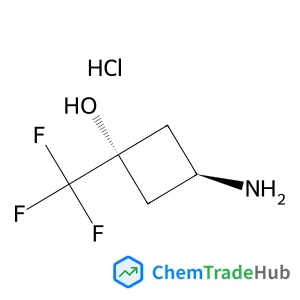
cis-3-Amino-1-(trifluoromethyl)cyclobutanol hydrochloride (1:1)
CAS Number:
1408075-16-0
Molecular Formula:
C5H9ClF3NO

![S-[2,3-Bis(palmitoyloxy)propyl]-N-[(9H-fluoren-9-ylmethoxy)(hydroxy)methylene]cysteine structure](https://static.chemtradehub.com/structs/210/210532-98-2-f6a7.webp "S-[2,3-Bis(palmitoyloxy)propyl]-N-[(9H-fluoren-9-ylmethoxy)(hydroxy)methylene]cysteine structure")
S-[2,3-Bis(palmitoyloxy)propyl]-N-[(9H-fluoren-9-ylmethoxy)(hydroxy)methylene]cysteine
CAS Number:
210532-98-2
Molecular Formula:
C53H83NO8S
Recommended Suppliers





Disclaimer
This page provides academic journal information for reference and research purposes only. We are not affiliated with any journal publishers and do not handle publication submissions. For publication-related inquiries, please contact the respective journal publishers directly.
If you notice any inaccuracies in the information displayed, please contact us at support@chemtradehub.com. We will promptly review and address your concerns.