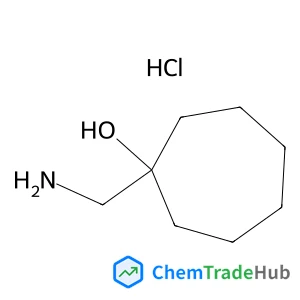
(2S)-2-(Fluoromethyl)piperidine hydrochloride (1:1)
CAS Number:
886216-73-5
Molecular Formula:
C6H13ClFN
Hideharu Mori
Deep eutectic solvents (DESs) have recently attracted significant attention as inexpensive materials with similar characteristics to ionic liquids. For practical applications of DESs in electrochemical devices such as lithium-ion batteries (LIBs), the manipulation of the melting point and electrochemical stability is important as they are important parameters that determine device performance. In this study, we investigated a family of Li-salt/amide-based electrolytes (DEEs) comprised of five amide derivatives (urea, acetamide, N,N′-dimethylpropyleneurea, 2-imidazolidinone and tetramethylurea) and two representative Li-salts (LiCl and LiTFSI), in terms of thermal and electrochemical properties. To verify the effect of the coordination state on the melting point, the coordination state between lithium salt and amide was calculated by a molecular dynamics simulation using four representative DEEs. Regarding electrochemical stability, the HOMO and LUMO were calculated by density functional theory and the correlation with the experimental result of cyclic voltammetry was verified. Hydrogen bonding donor (HBD)-free DEEs comprised of amides without any N–H bonds (e.g. 1,1,3,3-tetramethylurea and 1,3-dimethyl-2-imidazoline) were found to be superior to those containing HBDs derived from amides having N–H bonds (e.g. urea, acetamide and 2-imidazolidinone), in terms of reduction stability. Among various DEEs evaluated in this study, the DEE derived from LiTFSI : 1,1,3,3-tetramethylurea = 1 : 5 mol% was the best electrolyte in terms of melting point, electrochemical stability and ionic conductivity. The results of this study provide important guidelines for designing DESs as LIB electrolytes.
Li Shen, Xiaobo Gao, Zhanqing Chang, Changhao Zhang, Yue Li, Jitao Lu, Qingguo Meng, Qian Wu
DOI: 10.1039/D3CP05199D
Jaemin Park, Dukjoon Kim, Jung Kyu Kim
DOI: 10.1039/D3SE01371E
Ekaterina A. Konopkina, Alexander V. Gopin, Anton S. Pozdeev, Maria G. Chernysheva, Paulina Kalle, Elizaveta A. Pavlova, Stepan N. Kalmykov, Vladimir G. Petrov, Nataliya E. Borisova, Alexander A. Guda, Petr I. Matveev
DOI: 10.1039/D3CP05081E
Yue Lou
DOI: 10.1039/D3CP04958B
Naixia Lv, Hongshun Ran, Jinrui Zhang, Jie Yin, Yuan Zhang, Hongping Li, Linhua Zhu
DOI: 10.1039/D3CP04963A
Jake A. Tan, Ka Un Lao
DOI: 10.1039/D3CP05437C
Umair Shamraiz, Abdul Majeed, Bareera Raza, Noor ul Ain, Amin Badshah
DOI: 10.1039/D3SE00942D
Jiarui Li, Tao Zeng, Zexing Qu, Yu Zhai, Hui Li
DOI: 10.1039/D3CP05278H
Bratislav P. Marinković, Jaime Rosado, Francisco Blanco, Gustavo García, Jelena B. Maljković
DOI: 10.1039/D3CP05052A
Jianglu Huang, Donggang Zhao, Yu Zhao
DOI: 10.1039/D3SE01403G
Waste containing N-Methoxy-N-methyl-1,3-thiazole-5-carboxamide (CAS: 898825-89-3...
N-(4-Biphenylyl)dibenzo[b,d]furan-4-amine should be stored in a tightly sealed c...
The market for 3-Acetamido-5-amino-2,4,6-triiodobenzoic acid (CAS: 1713-07-1) is...
Benzyl 2-O-acetyl-3,4,6-tri-O-benzyl-beta-D-galactopyranoside (CAS: 61820-03-9) ...
2-Ethylpiperazine dihydrochloride (CAS: 438050-52-3) is regulated under the Glob...
1,1'-[1,3-Phenylenebis(methylene)]bis(3-methyl-1H-pyrrole-2,5-dione) (CAS: 11946...
Several alternatives can be used in the synthesis of 5-Fluoro-2-(1-pyrrolidinyl)...
Proper personal protective equipment (PPE) must be worn when handling this compo...
When handling 6-Bromoimidazo[1,2-a]pyridin-8-amine, it is important to wear appr...
Alternatives to (2S,4R)-4-(4-Nitrobenzyl)pyrrolidine-2-carboxylic acid hydrochlo...

Physical Chemistry Chemical Physics (PCCP) is an international journal co-owned by 19 physical chemistry and physics societies from around the world. This journal publishes original, cutting-edge research in physical chemistry, chemical physics and biophysical chemistry. To be suitable for publication in PCCP, articles must include significant innovation and/or insight into physical chemistry; this is the most important criterion that reviewers and Editors will judge against when evaluating submissions. The journal has a broad scope and welcomes contributions spanning experiment, theory, computation and data science. Topical coverage includes spectroscopy, dynamics, kinetics, statistical mechanics, thermodynamics, electrochemistry, catalysis, surface science, quantum mechanics, quantum computing and machine learning. Interdisciplinary research areas such as polymers and soft matter, materials, nanoscience, energy, surfaces/interfaces, and biophysical chemistry are welcomed if they demonstrate significant innovation and/or insight into physical chemistry. Joined experimental/theoretical studies are particularly appreciated when complementary and based on up-to-date approaches.