












Temperature-cycle electron paramagnetic resonance
Literature Information
Publication Date
2020-04-10
DOI
10.1039/D0CP00664E
Impact Factor
3.676
Authors
E. Gabriele Panarelli, Peter Gast, Edgar J. J. Groenen
View Original
Abstract
We report on a novel approach to the study of rates and short-lived intermediates of (bio)chemical reactions that involve paramagnetic species. Temperature-cycle Electron Paramagnetic Resonance (EPR) concerns the repeated heating of a reaction mixture in the cavity of an EPR spectrometer by pulsed irradiation with a near-infrared diode laser combined with intermittent characterization of the sample by 275 GHz EPR at a lower temperature at which the reaction does not proceed. The new technique is demonstrated for the reduction of TEMPOL with sodium dithionite in aqueous solution down to the sub-second time scale. We show that a single sample suffices to obtain a complete kinetic trace. Variation of the length and power of the laser pulse offers great flexibility as regards the time scale of the experiment and the temperature at which the reaction can be studied. For water/glycerol mixtures we introduce a simple way to obtain and load an unreacted sample into the spectrometer at low temperature.
Recommended Journals
Related Literature
Improved fill factor in inverted planar perovskite solar cells with zirconium acetate as the hole-and-ion-blocking layer
Xuewen Zhang, Chunjun Liang, Mengjie Sun, Huimin Zhang, Chao Ji, Zebang Guo, Yajun Xu, Fulin Sun, Qi Song, Zhiqun He
2018-02-23
Communication
DOI: 10.1039/C8CP00563J
Atmospheric chemistry of CH3CHO: the hydrolysis of CH3CHO catalyzed by H2SO4
Xing-Feng Tan, Bo Long, Da-Sen Ren, Zheng-Wen Long, Ellen Mitchell
2018-02-12
Paper
DOI: 10.1039/C7CP07312G
Reply to the ‘Comment on “Methanol dimer formation drastically enhances hydrogen abstraction from methanol by OH at low temperature”’ by D. Heard, R. Shannon, J. Gomez Martin, R. Caravan, M. Blitz, J. Plane, M. Antiñolo, M. Agundez, E. Jimenez, B. Ballesteros, A. Canosa, G. El Dib, J. Albaladejo and J. Cernicharo, Phys. Chem. Chem. Phys., 2018, 20, DOI: 10.1039/C7CP04561A
W. Siebrand, Z. Smedarchina, D. Ferro-Costas, E. Martínez-Núñez, A. Fernández-Ramos
2018-02-22
Comment
DOI: 10.1039/C8CP00519B
Multi-channel dynamics in high harmonic generation of aligned CO2: ab initio analysis with time-dependent B-spline algebraic diagrammatic construction
M. Ruberti, P. Decleva, V. Averbukh
2018-03-13
Paper
DOI: 10.1039/C7CP07849H
From ligand exchange to reaction intermediates: what does really happen during the synthesis of emissive complexes?‡
P. Polzin, I. V. Eliani, J. Ströh, M. Braun, N. Ruser, P. Rönfeldt, F. Bertram, C. Näther, S. Wöhlbrandt, M. Suta, H. Terraschke
2017-12-20
Paper
DOI: 10.1039/C7CP07142F
Photoelectron shake-ups as a probe of molecular symmetry: 4d XPS analysis of I3− in solution
Jesper Norell, Gilbert Grell, Oliver Kühn, Michael Odelius, Sergey I. Bokarev
2018-07-10
Paper
DOI: 10.1039/C8CP02530D
Photolysis of O2 dispersed in solid neon with far-ultraviolet radiation
Sheng-Lung Chou, Jen-Iu Lo, Yu-Chain Peng, Hsiao-Chi Lu, Bing-Ming Cheng
2018-02-27
Paper
DOI: 10.1039/C8CP00078F
You might also like
Compound Q&A
How should waste containing N-Methoxy-N-methyl-1,3-thiazole-5-carboxamide (CAS: 898825-89-3) be handled?
Waste containing N-Methoxy-N-methyl-1,3-thiazole-5-carboxamide (CAS: 898825-89-3...
898825-89-3N-Methoxy-N-methyl-1...
Compound Q&A
How should N-(4-Biphenylyl)dibenzo[b,d]furan-4-amine (CAS: 1318338-47-4) be stored?
N-(4-Biphenylyl)dibenzo[b,d]furan-4-amine should be stored in a tightly sealed c...
1318338-47-4N-(4-Biphenylyl)dibe...
Compound Q&A
What is the market or research trend for 3-Acetamido-5-amino-2,4,6-triiodobenzoic acid (CAS: 1713-07-1)?
The market for 3-Acetamido-5-amino-2,4,6-triiodobenzoic acid (CAS: 1713-07-1) is...
1713-07-13-Acetamido-5-amino-...
Compound Q&A
How should Benzyl 2-O-acetyl-3,4,6-tri-O-benzyl-beta-D-galactopyranoside (CAS: 61820-03-9) be stored?
Benzyl 2-O-acetyl-3,4,6-tri-O-benzyl-beta-D-galactopyranoside (CAS: 61820-03-9) ...
61820-03-9Benzyl 2-O-acetyl-3,...
Compound Q&A
What regulatory guidelines apply to 2-Ethylpiperazine dihydrochloride (CAS: 438050-52-3)?
2-Ethylpiperazine dihydrochloride (CAS: 438050-52-3) is regulated under the Glob...
438050-52-32-Ethylpiperazine di...
Compound Q&A
What regulatory guidelines apply to 1,1'-[1,3-Phenylenebis(methylene)]bis(3-methyl-1H-pyrrole-2,5-dione) (CAS: 119462-56-5)?
1,1'-[1,3-Phenylenebis(methylene)]bis(3-methyl-1H-pyrrole-2,5-dione) (CAS: 11946...
119462-56-51,1'-[1,3-Phenyleneb...
Compound Q&A
Are there alternatives to 5-Fluoro-2-(1-pyrrolidinyl)pyridine (CAS: 1287217-79-1) in synthesis?
Several alternatives can be used in the synthesis of 5-Fluoro-2-(1-pyrrolidinyl)...
1287217-79-15-Fluoro-2-(1-pyrrol...
Compound Q&A
What precautions should be taken when handling 1-((2R,3R,4R,5R)-5-((bis(4-methoxyphenyl)(phenyl)methoxy)methyl)-4-hydroxy-3-methoxytetrahydrofuran-2-yl)-5-methylpyrimidine-2,4(1H,3H)-dione (CAS: 153631-19-7)?
Proper personal protective equipment (PPE) must be worn when handling this compo...
153631-19-71-((2R,3R,4R,5R)-5-(...
Compound Q&A
What precautions should be taken when handling 6-Bromoimidazo[1,2-a]pyridin-8-amine (CAS: 676371-00-9)?
When handling 6-Bromoimidazo[1,2-a]pyridin-8-amine, it is important to wear appr...
676371-00-96-Bromoimidazo[1,2-a...
Compound Q&A
Are there alternatives to (2S,4R)-4-(4-Nitrobenzyl)pyrrolidine-2-carboxylic acid hydrochloride (CAS: 1049740-22-8) in synthesis?
Alternatives to (2S,4R)-4-(4-Nitrobenzyl)pyrrolidine-2-carboxylic acid hydrochlo...
1049740-22-8(2S,4R)-4-(4-Nitrobe...
Source Journal
Physical Chemistry Chemical Physics

CiteScore:
5.5
Self-citation Rate:
10.3%
Articles per Year:
3036
Physical Chemistry Chemical Physics (PCCP) is an international journal co-owned by 19 physical chemistry and physics societies from around the world. This journal publishes original, cutting-edge research in physical chemistry, chemical physics and biophysical chemistry. To be suitable for publication in PCCP, articles must include significant innovation and/or insight into physical chemistry; this is the most important criterion that reviewers and Editors will judge against when evaluating submissions. The journal has a broad scope and welcomes contributions spanning experiment, theory, computation and data science. Topical coverage includes spectroscopy, dynamics, kinetics, statistical mechanics, thermodynamics, electrochemistry, catalysis, surface science, quantum mechanics, quantum computing and machine learning. Interdisciplinary research areas such as polymers and soft matter, materials, nanoscience, energy, surfaces/interfaces, and biophysical chemistry are welcomed if they demonstrate significant innovation and/or insight into physical chemistry. Joined experimental/theoretical studies are particularly appreciated when complementary and based on up-to-date approaches.
Recommended Compounds
![2-(7,7-Difluorobicyclo[4.1.0]hept-1-yl)ethanamine structure](https://static.chemtradehub.com/structs/209/2098065-08-6-ff24.webp "2-(7,7-Difluorobicyclo[4.1.0]hept-1-yl)ethanamine structure")
2-(7,7-Difluorobicyclo[4.1.0]hept-1-yl)ethanamine
CAS Number:
2098065-08-6
Molecular Formula:
C9H15F2N
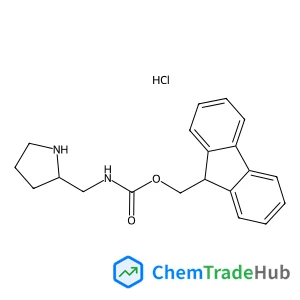
(S)-(9H-Fluoren-9-yl)methyl (pyrrolidin-2-ylmethyl)carbamate hydrochloride
CAS Number:
1217813-15-4
Molecular Formula:
C20H23ClN2O2

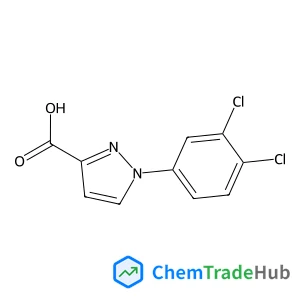
1-(3,4-Dichlorophenyl)-1H-pyrazole-3-carboxylic acid
CAS Number:
1152949-12-6
Molecular Formula:
C10H6Cl2N2O2
Recommended Suppliers






Disclaimer
This page provides academic journal information for reference and research purposes only. We are not affiliated with any journal publishers and do not handle publication submissions. For publication-related inquiries, please contact the respective journal publishers directly.
If you notice any inaccuracies in the information displayed, please contact us at support@chemtradehub.com. We will promptly review and address your concerns.