












Photolysis of O2 dispersed in solid neon with far-ultraviolet radiation
Literature Information
Publication Date
2018-02-27
DOI
10.1039/C8CP00078F
Impact Factor
3.676
Authors
Sheng-Lung Chou, Jen-Iu Lo, Yu-Chain Peng, Hsiao-Chi Lu, Bing-Ming Cheng
View Original
Abstract
Irradiation at 173 or 143 nm of samples of 16O2 or 18O2 in solid Ne near 4 K produced many new spectral lines in absorption and emission from the mid-infrared to the near-ultraviolet regions. The major product was ozone, O3, that was identified with its mid-infrared and near-ultraviolet absorption lines. Oxygen atoms were formed on photolysis of O2 and stored in solid neon until the temperature of a sample was increased to 9 K, which enabled their migration and combination to form O3 and likely also O2. O2 in five excited states and O in two excited states detected through the emission spectra indicate that complicated processes occurred in solid Ne after far-ultraviolet excitation. For the transition 1D2 → 3P1,2 of O, the lifetime was determined to be 5.87 ± 0.10 s; the lifetime of the upper state of an unidentified transition associated with an emission feature at 701.7 nm was determined to be 2.34 ± 0.07 s.
Recommended Journals
Related Literature
High-temperature molecular screening of hybrid polyOAPS-imide networks based on octa(aminophenyl)silsesquioxane for increased thermomechanical resistance
Sylvie Neyertz, Saman Salimi, Farzaneh Radmanesh, Nieck E. Benes, David Brown
2021-04-30
Paper
DOI: 10.1039/D1CP01052B
On the adsorption mechanism of caffeine on MAPbI3 perovskite surfaces: a combined UMC-DFT study
Raphael M. Tromer, Ramiro M. dos Santos
2021-04-01
Paper
DOI: 10.1039/D0CP04308G
Electromechanically active pair dynamics in a Gd-doped ceria single crystal
Simone Santucci, Haiwu Zhang, Ahsanul Kabir, Carlo Marini, Simone Sanna, Jyn Kyu Han, Gregor Ulbrich, Eva Maria Heppke, Ivano E. Castelli, Vincenzo Esposito
2021-04-20
Paper
DOI: 10.1039/D1CP00748C
Molecular dynamics study of the pore formation in single layer graphene oxide by a thermal reduction process
Federico Raffone, Filippo Savazzi, Giancarlo Cicero
2021-04-26
Paper
DOI: 10.1039/D1CP00134E
Understanding the magnetization blocking mechanism in N23−-radical-bridged dilanthanide single-molecule magnets
Giang T. Nguyen, Liviu Ungur
2021-04-09
Paper
DOI: 10.1039/D1CP00452B
Photon-induced deactivations of multiple traps in CH3NH3PbI3 perovskite films by different photon energies
Asmida Herawati, Hui-Ching Lin, Shun-Hsiang Chan, Tsong-Shin Lim, Forest Shih-Sen Chien
2021-04-26
Paper
DOI: 10.1039/D1CP00974E
From photosensitizers to light harvesters adapting the molecular structure in all-BODIPY assemblies
Edurne Avellanal-Zaballa, Alejandro Prieto-Castañeda, Carolina Díaz-Norambuena, Jorge Bañuelos, Antonia R. Agarrabeitia, Inmaculada García-Moreno, Santiago de la Moya, María J. Ortiz
2021-04-19
Communication
DOI: 10.1039/D1CP00991E
Measurement and modelling solubility of amino acids and peptides in aqueous 2-propanol solutions
Hoang Tam Do, Patrick Franke, Sophia Volpert, Marcel Klinksiek, Max Thome, Christoph Held
2021-04-08
Paper
DOI: 10.1039/D1CP00005E
You might also like
Compound Q&A
How should waste containing N-Methoxy-N-methyl-1,3-thiazole-5-carboxamide (CAS: 898825-89-3) be handled?
Waste containing N-Methoxy-N-methyl-1,3-thiazole-5-carboxamide (CAS: 898825-89-3...
898825-89-3N-Methoxy-N-methyl-1...
Compound Q&A
How should N-(4-Biphenylyl)dibenzo[b,d]furan-4-amine (CAS: 1318338-47-4) be stored?
N-(4-Biphenylyl)dibenzo[b,d]furan-4-amine should be stored in a tightly sealed c...
1318338-47-4N-(4-Biphenylyl)dibe...
Compound Q&A
What is the market or research trend for 3-Acetamido-5-amino-2,4,6-triiodobenzoic acid (CAS: 1713-07-1)?
The market for 3-Acetamido-5-amino-2,4,6-triiodobenzoic acid (CAS: 1713-07-1) is...
1713-07-13-Acetamido-5-amino-...
Compound Q&A
How should Benzyl 2-O-acetyl-3,4,6-tri-O-benzyl-beta-D-galactopyranoside (CAS: 61820-03-9) be stored?
Benzyl 2-O-acetyl-3,4,6-tri-O-benzyl-beta-D-galactopyranoside (CAS: 61820-03-9) ...
61820-03-9Benzyl 2-O-acetyl-3,...
Compound Q&A
What regulatory guidelines apply to 2-Ethylpiperazine dihydrochloride (CAS: 438050-52-3)?
2-Ethylpiperazine dihydrochloride (CAS: 438050-52-3) is regulated under the Glob...
438050-52-32-Ethylpiperazine di...
Compound Q&A
What regulatory guidelines apply to 1,1'-[1,3-Phenylenebis(methylene)]bis(3-methyl-1H-pyrrole-2,5-dione) (CAS: 119462-56-5)?
1,1'-[1,3-Phenylenebis(methylene)]bis(3-methyl-1H-pyrrole-2,5-dione) (CAS: 11946...
119462-56-51,1'-[1,3-Phenyleneb...
Compound Q&A
Are there alternatives to 5-Fluoro-2-(1-pyrrolidinyl)pyridine (CAS: 1287217-79-1) in synthesis?
Several alternatives can be used in the synthesis of 5-Fluoro-2-(1-pyrrolidinyl)...
1287217-79-15-Fluoro-2-(1-pyrrol...
Compound Q&A
What precautions should be taken when handling 1-((2R,3R,4R,5R)-5-((bis(4-methoxyphenyl)(phenyl)methoxy)methyl)-4-hydroxy-3-methoxytetrahydrofuran-2-yl)-5-methylpyrimidine-2,4(1H,3H)-dione (CAS: 153631-19-7)?
Proper personal protective equipment (PPE) must be worn when handling this compo...
153631-19-71-((2R,3R,4R,5R)-5-(...
Compound Q&A
What precautions should be taken when handling 6-Bromoimidazo[1,2-a]pyridin-8-amine (CAS: 676371-00-9)?
When handling 6-Bromoimidazo[1,2-a]pyridin-8-amine, it is important to wear appr...
676371-00-96-Bromoimidazo[1,2-a...
Compound Q&A
Are there alternatives to (2S,4R)-4-(4-Nitrobenzyl)pyrrolidine-2-carboxylic acid hydrochloride (CAS: 1049740-22-8) in synthesis?
Alternatives to (2S,4R)-4-(4-Nitrobenzyl)pyrrolidine-2-carboxylic acid hydrochlo...
1049740-22-8(2S,4R)-4-(4-Nitrobe...
Source Journal
Physical Chemistry Chemical Physics

CiteScore:
5.5
Self-citation Rate:
10.3%
Articles per Year:
3036
Physical Chemistry Chemical Physics (PCCP) is an international journal co-owned by 19 physical chemistry and physics societies from around the world. This journal publishes original, cutting-edge research in physical chemistry, chemical physics and biophysical chemistry. To be suitable for publication in PCCP, articles must include significant innovation and/or insight into physical chemistry; this is the most important criterion that reviewers and Editors will judge against when evaluating submissions. The journal has a broad scope and welcomes contributions spanning experiment, theory, computation and data science. Topical coverage includes spectroscopy, dynamics, kinetics, statistical mechanics, thermodynamics, electrochemistry, catalysis, surface science, quantum mechanics, quantum computing and machine learning. Interdisciplinary research areas such as polymers and soft matter, materials, nanoscience, energy, surfaces/interfaces, and biophysical chemistry are welcomed if they demonstrate significant innovation and/or insight into physical chemistry. Joined experimental/theoretical studies are particularly appreciated when complementary and based on up-to-date approaches.
Recommended Compounds

![4-[(2-{2-[2-(2-Aminoethoxy)ethoxy]ethoxy}ethyl)amino]-2-(2,6-dioxo-3-piperidinyl)-1H-isoindole-1,3(2H)-dione structure](https://static.chemtradehub.com/structs/209/2093416-31-8-3162.webp "4-[(2-{2-[2-(2-Aminoethoxy)ethoxy]ethoxy}ethyl)amino]-2-(2,6-dioxo-3-piperidinyl)-1H-isoindole-1,3(2H)-dione structure")
4-[(2-{2-[2-(2-Aminoethoxy)ethoxy]ethoxy}ethyl)amino]-2-(2,6-dioxo-3-piperidinyl)-1H-isoindole-1,3(2H)-dione
CAS Number:
2093416-31-8
Molecular Formula:
C21H28N4O7
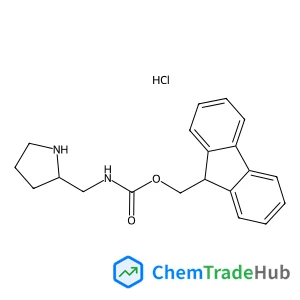
(S)-(9H-Fluoren-9-yl)methyl (pyrrolidin-2-ylmethyl)carbamate hydrochloride
CAS Number:
1217813-15-4
Molecular Formula:
C20H23ClN2O2
Recommended Suppliers






Disclaimer
This page provides academic journal information for reference and research purposes only. We are not affiliated with any journal publishers and do not handle publication submissions. For publication-related inquiries, please contact the respective journal publishers directly.
If you notice any inaccuracies in the information displayed, please contact us at support@chemtradehub.com. We will promptly review and address your concerns.