












The challenging playground of astrochemistry: an integrated rotational spectroscopy – quantum chemistry strategy
Literature Information
Publication Date
2020-03-05
DOI
10.1039/D0CP00561D
Impact Factor
3.676
Authors
Cristina Puzzarini, Vincenzo Barone
View Original
Abstract
While it is now well demonstrated that the interstellar medium (ISM) is characterized by a diverse and complex chemistry, a significant number of features in radioastronomical spectra are still unassigned and call for new laboratory efforts, which are increasingly based on integrated experimental and computational strategies. In parallel, the identification of an increasing number of molecules containing more than five atoms and at least one carbon atom (the so-called “interstellar” complex organic molecules), which can play a relevant role in the chemistry of life, raises the additional issue of how these species can be produced in the typical harsh conditions of the ISM. On these grounds, this perspective aims to present an integrated rotational spectroscopy – quantum chemistry approach for supporting radioastronomical observations and a computational strategy for contributing to the elucidation of chemical reactivity in the interstellar space.
Related Literature
Ionic nano-convection in anodisation of aluminium plate
Shijing Lu, Zixue Su, Jian Sha, Wuzong Zhou
2009-08-06
Communication
DOI: 10.1039/B909256K
Living polymerization of ethylene and α-olefins using a nickel α-keto-β-diimine initiator
Jason D. Azoulay, Yanika Schneider, Griselda B. Galland, Guillermo C. Bazan
2009-09-10
Communication
DOI: 10.1039/B912743G
Exopolyhedral ligand flipping on isomerisation of novel supraicosahedral stannacarboranes
Peter D. Abram, David Ellis, Georgina M. Rosair, Alan J. Welch
2009-08-14
Communication
DOI: 10.1039/B911350A
Centimetre scale assembly of vertically aligned and close packed semiconductor nanorods from solution
S. Ahmed
2009-09-08
Communication
DOI: 10.1039/B914478A
Observation of reaction intermediates and kinetic mistakes in a remarkably slow self-assembly reaction
Virginia M. Cangelosi, Timothy G. Carter, Lev N. Zakharov, Darren W. Johnson
2009-08-20
Communication
DOI: 10.1039/B914750K
The solid-state Ag/AgCl process as a highly sensitive detection mechanism for an electrochemical immunosensor
Boon Ping Ting, Jie Zhang, Majad Khan, Yi Yan Yang, Jackie Y. Ying
2009-09-01
Communication
DOI: 10.1039/B910730D
Bio-bar-code functionalized magnetic nanoparticle label for ultrasensitive flow injection chemiluminescence detection of DNA hybridization
Sai Bi, Hong Zhou, Shusheng Zhang
2009-08-06
Communication
DOI: 10.1039/B910307D
Inclusion of C60 into the hexagonal columnar space formed by intra- and intermolecular CH⋯π interactions
Junji Kobayashi, Yuya Domoto, Takayuki Kawashima
2009-09-17
Communication
DOI: 10.1039/B909881J
High temperature zincation of functionalized aromatics and heteroaromatics using TMPZnCl·LiCl and microwave irradiation
Marc Mosrin, Gabriel Monzon, Tomke Bresser, Paul Knochel
2009-08-24
Communication
DOI: 10.1039/B913693B
You might also like
Compound Q&A
What precautions should be taken when handling lithium chloride hydrate (1:1:1) (CAS: 16712-20-2)?
When handling lithium chloride hydrate (1:1:1) (CAS: 16712-20-2), it is importan...
16712-20-2Lithium chloride hyd...
Compound Q&A
Is 4-(4H-1,2,4-Triazol-4-yl)piperidine (CAS: 690261-92-8) safe?
4-(4H-1,2,4-Triazol-4-yl)piperidine is generally considered safe for use in phar...
690261-92-84-(4H-1,2,4-Triazol-...
Compound Q&A
How should waste containing 1,3-Thiazole-2-carboxamide (CAS: 16733-85-0) be handled?
Waste containing 1,3-Thiazole-2-carboxamide (CAS: 16733-85-0) should be collecte...
16733-85-01,3-Thiazole-2-carbo...
Compound Q&A
What regulatory guidelines apply to 5-(Difluoromethyl)-2-fluorobenzonitrile (CAS: 934175-58-3)?
5-(Difluoromethyl)-2-fluorobenzonitrile (CAS: 934175-58-3) is subject to regulat...
934175-58-35-(Difluoromethyl)-2...
Compound Q&A
How is Methyl 3-acetamido-2-thiophenecarboxylate (CAS: 22288-79-5) typically synthesized?
Methyl 3-acetamido-2-thiophenecarboxylate can be synthesized by the reaction of ...
22288-79-5Methyl 3-acetamido-2...
Compound Q&A
What is 4-Isoquinolinecarbonitrile (CAS: 34846-65-6)?
4-Isoquinolinecarbonitrile is a chemical compound with the CAS number 34846-65-6...
34846-65-64-Isoquinolinecarbon...
Compound Q&A
How should Methyl 1H-1,2,3-triazole-4-carboxylate (CAS: 877309-59-6) be stored?
Store Methyl 1H-1,2,3-triazole-4-carboxylate (CAS: 877309-59-6) in a cool, dry p...
877309-59-6Methyl 1H-1,2,3-tria...
Compound Q&A
What regulatory guidelines apply to 6-Bromo[1,3]thiazolo[5,4-b]pyridin-2-amine (CAS: 1160791-13-8)?
6-Bromo[1,3]thiazolo[5,4-b]pyridin-2-amine (CAS: 1160791-13-8) is subject to the...
1160791-13-86-Bromo[1,3]thiazolo...
Compound Q&A
Is (2S,3S)-2-Ammonio-3-(3,4-dihydroxyphenyl)-3-hydroxypropanoate (CAS: 23651-95-8) safe?
(2S,3S)-2-Ammonio-3-(3,4-dihydroxyphenyl)-3-hydroxypropanoate (CAS: 23651-95-8) ...
23651-95-8(2S,3S)-2-Ammonio-3-...
Compound Q&A
What are the physical and chemical properties of 7-bromo-3-methyl-3,4-dihydroquinazolin-4-one (CAS: 1293987-84-4)?
7-Bromo-3-methyl-3,4-dihydroquinazolin-4-one is a solid with a crystalline form....
1293987-84-47-bromo-3-methyl-3,4...
Source Journal
Physical Chemistry Chemical Physics

CiteScore:
5.5
Self-citation Rate:
10.3%
Articles per Year:
3036
Physical Chemistry Chemical Physics (PCCP) is an international journal co-owned by 19 physical chemistry and physics societies from around the world. This journal publishes original, cutting-edge research in physical chemistry, chemical physics and biophysical chemistry. To be suitable for publication in PCCP, articles must include significant innovation and/or insight into physical chemistry; this is the most important criterion that reviewers and Editors will judge against when evaluating submissions. The journal has a broad scope and welcomes contributions spanning experiment, theory, computation and data science. Topical coverage includes spectroscopy, dynamics, kinetics, statistical mechanics, thermodynamics, electrochemistry, catalysis, surface science, quantum mechanics, quantum computing and machine learning. Interdisciplinary research areas such as polymers and soft matter, materials, nanoscience, energy, surfaces/interfaces, and biophysical chemistry are welcomed if they demonstrate significant innovation and/or insight into physical chemistry. Joined experimental/theoretical studies are particularly appreciated when complementary and based on up-to-date approaches.
Recommended Compounds
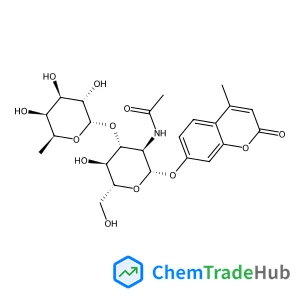
4-Methyl-2-oxo-2H-chromen-7-yl 2-acetamido-2-deoxy-3-O-(6-deoxy-alpha-L-galactopyranosyl)-beta-D-glucopyranoside
CAS Number:
383160-12-1
Molecular Formula:
C24H31NO12
![(1R,5R)-3-{[(2-Methyl-2-propanyl)oxy]carbonyl}-3-azabicyclo[3.1.0]hexane-1-carboxylic acid structure](https://static.chemtradehub.com/structs/116/1165450-63-4-bfe1.webp "(1R,5R)-3-{[(2-Methyl-2-propanyl)oxy]carbonyl}-3-azabicyclo[3.1.0]hexane-1-carboxylic acid structure")
(1R,5R)-3-{[(2-Methyl-2-propanyl)oxy]carbonyl}-3-azabicyclo[3.1.0]hexane-1-carboxylic acid
CAS Number:
1165450-63-4
Molecular Formula:
C11H17NO4
Recommended Suppliers






Disclaimer
This page provides academic journal information for reference and research purposes only. We are not affiliated with any journal publishers and do not handle publication submissions. For publication-related inquiries, please contact the respective journal publishers directly.
If you notice any inaccuracies in the information displayed, please contact us at support@chemtradehub.com. We will promptly review and address your concerns.