












Counting cations involved in cationic clusters of hydroxy-functionalized ionic liquids by means of infrared and solid-state NMR spectroscopy
Literature Information
Publication Date
2020-03-16
DOI
10.1039/D0CP00303D
Impact Factor
3.676
Authors
Jan Neumann, Thomas Niemann, Peter Stange
View Original
Abstract
In hydroxy-functionalized ionic liquids, two types of hydrogen bonding coexist: the conventional H-bonds between cation and anion (c–a) and those between cation and cation (c–c), although the interaction between like-charged ions is supposed to be much weaker due to the repulsive Coulomb forces. Counting the cations involved in either (c–a) or (c–c) clusters is a challenge. For that purpose, we recently performed neutron diffraction (ND) measurements and molecular dynamics (MD) simulations at and above room temperature accompanied by NMR solid-state experiments in the glassy state of the ILs. In principle, these methods are suitable for determining the populations of (c–a) and (c–c) cluster species. For different reasons we could only address single temperatures and/or small temperature intervals above 300 K. The by far largest temperature range with reasonable efforts is accessible by simple infrared (IR) spectroscopy. However, counting (c–a) or (c–c) hydrogen bonds is a difficult task due to the different transition dipole moments resulting in varying intensities and broad vibrational bands. Here we present a method for deriving the number of cations involved in (c–a) ion pairs from IR spectra in the OH stretch region. This procedure provides access to the equilibria of (c–a) and (c–c) hydrogen bonds as a function of temperature allowing derivation of the transition enthalpy.
Related Literature
Aggregation-induced emission (AIE)-active metallacycles with near-infrared emission for photodynamic therapy
Qifei Shen, Kai Gao, Zhiqin Zhao, Anran Gao, Yanzi Xu, Heng Wang, Mingming Zhang, Dongfeng Dang
2023-11-02
Communication
DOI: 10.1039/D3CC04166B
Functions of metal–phenolic networks and polyphenol derivatives in photo(electro)catalysis
Xiao-Long Liu, Hai-Chao Wang, Tao Yang, Xin-Zheng Yue, Sha-Sha Yi
2023-10-30
Feature Article
DOI: 10.1039/D3CC04156E
Exceptional structural phase transition near room temperature in an organic–inorganic hybrid ferroelectric
Ping Wang, Yu-Qiao Tong, Shi-Qing Yin, Qian-Jun Gu, Bo Huang, Ai-Xin Zhu
2023-10-24
Communication
DOI: 10.1039/D3CC04186G
Trapping of soluble, KCl-stabilized Cu(i) hydrides with CO2 gives crystalline formates
Alexander Grasruck, Giorgio Parla, Lisha Lou, Jens Langer, Christian Neiß, Alberto Herrera, Sybille Frieß, Andreas Görling, Günter Schmid, Romano Dorta
2023-11-07
Communication
DOI: 10.1039/D3CC03033D
Graphdiyne chelated AuNPs for ultrasensitive electrochemical detection of tyrosine
Zhuanzhuan Shi, Yunpeng Li, Xiaoshuai Wu, Kaiwen Zhang, Jiatao Gu, Wei Sun, Chang Ming Li, Chun Xian Guo
2023-10-23
Communication
DOI: 10.1039/D3CC04148D
Visible-light-induced bifunctionalisation of (homo)propargylic amines with CO2 and arylsulfinates
2023-10-31
Communication
DOI: 10.1039/D3CC04160C
An interrupted Heyns rearrangement approach for the regioselective synthesis of acylindoles
Minakshi Altia, Pazhamalai Anbarasan
2023-10-24
Communication
DOI: 10.1039/D3CC04144A
A foldable self-healing rocking chair zinc-ion battery using a three-dimensional zinc metal-free anode
Jiawei Long, Tianli Han, Xirong Lin, Jinyun Liu
2023-10-17
Communication
DOI: 10.1039/D3CC04360F
You might also like
Compound Q&A
What are the main uses of (5-Sulfamoyl-3-pyridinyl)boronic acid (CAS: 951233-61-7)?
(5-Sulfamoyl-3-pyridinyl)boronic acid is primarily used in chemical synthesis, p...
951233-61-7(5-Sulfamoyl-3-pyrid...
Compound Q&A
How is Benzyl 2-methyl-2-(methylsulfonyl)-4-pentenoate (CAS: 1942858-50-5) typically synthesized?
Benzyl 2-methyl-2-(methylsulfonyl)-4-pentenoate is typically synthesized via est...
1942858-50-5Benzyl 2-methyl-2-(m...
Compound Q&A
What precautions should be taken when handling 8-Fluoroquinolin-6-ol (CAS: 209353-22-0)?
When handling 8-Fluoroquinolin-6-ol (CAS: 209353-22-0), it is important to use p...
209353-22-08-Fluoroquinolin-6-o...
Compound Q&A
What are the physical and chemical properties of 1,3-Dibromo-5-(2-methyl-2-propanyl)benzene (CAS: 129316-09-2)?
1,3-Dibromo-5-(2-methyl-2-propanyl)benzene (CAS: 129316-09-2) is a crystalline c...
129316-09-21,3-Dibromo-5-(2-met...
Compound Q&A
What industries use Ethyl 7-chloro-4-oxo-1-(1,3-thiazol-2-yl)-1,4-dihydro-1,8-naphthyridine-3-carboxylate (CAS: 174726-87-5)?
Ethyl 7-chloro-4-oxo-1-(1,3-thiazol-2-yl)-1,4-dihydro-1,8-naphthyridine-3-carbox...
174726-87-5Ethyl 7-chloro-4-oxo...
Compound Q&A
What precautions should be taken when handling Delta-7-Avenasterol (CAS: 23290-26-8)?
When handling Delta-7-Avenasterol (CAS: 23290-26-8), it is important to wear app...
23290-26-8Delta-7-Avenasterol
Compound Q&A
What precautions should be taken when handling N-({(5R)-3-[3-Fluoro-4-(4-morpholinyl)phenyl]-2-oxo-1,3-oxazolidin-5-yl}methyl)acetamide (CAS: 872992-20-6)?
Proper handling involves the use of personal protective equipment such as gloves...
872992-20-6N-({(5R)-3-[3-Fluoro...
Compound Q&A
What precautions should be taken when handling 2-Methyl-2-proanyl 4-[(2-aminophenyl)amino]-1-piperidinecarboxylate (CAS: 79099-00-6)?
When handling 2-Methyl-2-proanyl 4-[(2-aminophenyl)amino]-1-piperidinecarboxylat...
79099-00-62-Methyl-2-propanyl ...
Compound Q&A
What is N-Methyl-4-chlorobenzylamine hydrochloride (CAS: 65542-24-7)?
N-Methyl-4-chlorobenzylamine hydrochloride (CAS: 65542-24-7) is a organic compou...
65542-24-7N-Methyl-4-chloroben...
Compound Q&A
Is [2-(Dodecyloxy)ethoxy]acetic acid (CAS: 27306-90-7) safe?
[2-(Dodecyloxy)ethoxy]acetic acid (CAS: 27306-90-7) is generally considered safe...
27306-90-7[2-(Dodecyloxy)ethox...
Source Journal
Physical Chemistry Chemical Physics

CiteScore:
5.5
Self-citation Rate:
10.3%
Articles per Year:
3036
Physical Chemistry Chemical Physics (PCCP) is an international journal co-owned by 19 physical chemistry and physics societies from around the world. This journal publishes original, cutting-edge research in physical chemistry, chemical physics and biophysical chemistry. To be suitable for publication in PCCP, articles must include significant innovation and/or insight into physical chemistry; this is the most important criterion that reviewers and Editors will judge against when evaluating submissions. The journal has a broad scope and welcomes contributions spanning experiment, theory, computation and data science. Topical coverage includes spectroscopy, dynamics, kinetics, statistical mechanics, thermodynamics, electrochemistry, catalysis, surface science, quantum mechanics, quantum computing and machine learning. Interdisciplinary research areas such as polymers and soft matter, materials, nanoscience, energy, surfaces/interfaces, and biophysical chemistry are welcomed if they demonstrate significant innovation and/or insight into physical chemistry. Joined experimental/theoretical studies are particularly appreciated when complementary and based on up-to-date approaches.
Recommended Compounds
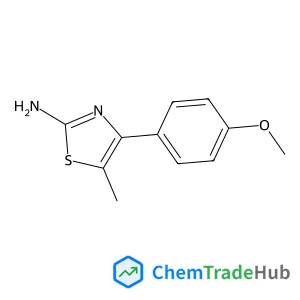
4-(4-Methoxyphenyl)-5-methyl-1,3-thiazol-2-amine
CAS Number:
105512-88-7
Molecular Formula:
C11H12N2OS
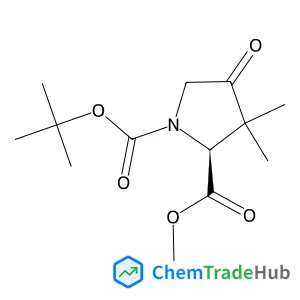
2-Methyl 1-(2-methyl-2-propanyl) (2S)-3,3-dimethyl-4-oxo-1,2-pyrrolidinedicarboxylate
CAS Number:
478698-30-5
Molecular Formula:
C13H21NO5
Recommended Suppliers






Disclaimer
This page provides academic journal information for reference and research purposes only. We are not affiliated with any journal publishers and do not handle publication submissions. For publication-related inquiries, please contact the respective journal publishers directly.
If you notice any inaccuracies in the information displayed, please contact us at support@chemtradehub.com. We will promptly review and address your concerns.