













A conformational analysis of transition metal η1-acyl complexes: steric interactions and stereoelectronic effects
Literature Information
Publication Date
DOI
10.1039/CS9881700147
Impact Factor
54.564
Authors
View Original
Abstract
The first page of this article is displayed as the abstract.
Related Literature
Bound states of the positron with nitrile species with a configuration interaction multi-component molecular orbital approach
Masanori Tachikawa, Yukiumi Kita, Robert J. Buenker
2010-12-10
Paper
DOI: 10.1039/C0CP01650K
Molecular dynamics simulations on [FePAH]+ π-complexes of astrophysical interest: anharmonic infrared spectroscopy
2011-01-18
Paper
DOI: 10.1039/C0CP00990C
2D silver nanocrystal ordering modulated by various substrates and revealed using oxygen plasma treatment
Emilie Klecha, Imad Arfaoui, Johannes Richardi, Dorothée Ingert, Marie-Paule Pileni
2010-12-17
Paper
DOI: 10.1039/C0CP01237H
Simple synthesis of Pd–Fe3O4 heterodimer nanocrystals and their application as a magnetically recyclable catalyst for Suzuki cross-coupling reactions
Youngjin Jang, Jooyoung Chung, Seyoung Kim, Samuel Woojoo Jun, Byung Hyo Kim, Dong Won Lee, B. Moon Kim, Taeghwan Hyeon
2011-01-04
Paper
DOI: 10.1039/C0CP01680B
The aqueous phase behavior of polyion–surfactant ion complex salts mixed with nonionic surfactants‡
John Janiak, Lennart Piculell, Gerd Olofsson, Karin Schillén
2010-10-11
Paper
DOI: 10.1039/C0CP01031F
Microenvironment-switchable singlet oxygen generation by axially-coordinated hydrophilic ruthenium phthalocyanine dendrimers
Uwe Hahn, Francesca Setaro, Xavier Ragàs, Angus Gray-Weale, Santi Nonell, Tomas Torres
2010-12-21
Paper
DOI: 10.1039/C0CP01015D
Intracule functional models. V. Recurrence relations for two-electron integrals in position and momentum space
Joshua W. Hollett, Peter M. W. Gill
2010-12-20
Paper
DOI: 10.1039/C0CP02154G
Accounting for electronic polarization in non-polarizable force fields
Igor Leontyev, Alexei Stuchebrukhov
2011-01-07
Perspective
DOI: 10.1039/C0CP01971B
Photoionization-induced large-amplitude pendular motion in phenol+–Kr
Mitsuhiko Miyazaki, Akihiro Takeda, Shun-ichi Ishiuchi, Makoto Sakai, Otto Dopfer, Masaaki Fujii
2010-12-10
Paper
DOI: 10.1039/C0CP01961E
You might also like
Compound Q&A
What are the main uses of 1H-Indazole-6-carbonitrile (CAS: 141290-59-7)?
1H-Indazole-6-carbonitrile finds applications in pharmaceuticals, where it serve...
141290-59-71H-Indazole-6-carbon...
Compound Q&A
How should waste containing Dioctyl (2E)-2-butenedioate (CAS: 2997-85-5) be handled?
Waste containing Dioctyl (2E)-2-butenedioate (CAS: 2997-85-5) should be collecte...
2997-85-5Dioctyl (2E)-2-buten...
Compound Q&A
What industries use Sodium [(1,2-benzoxazol-3-ylmethyl)sulfonyl]azanide (CAS: 68291-98-5)?
Sodium [(1,2-benzoxazol-3-ylmethyl)sulfonyl]azanide is primarily used in pharmac...
68291-98-5Sodium [(1,2-benzoxa...
Compound Q&A
Are there alternatives to Dimethyl 4-(4,4,5,5-tetramethyl-1,3,2-dioxaborolan-2-yl)-2,6-pyridinedicarboxylate (CAS: 741709-66-0) in synthesis?
Dimethyl 4-(4,4,5,5-tetramethyl-1,3,2-dioxaborolan-2-yl)-2,6-pyridinedicarboxyla...
741709-66-0Dimethyl 4-(4,4,5,5-...
Compound Q&A
How should waste containing 2-Fluoro-6-hydrazinopyridine (CAS: 80714-39-2) be handled?
Waste containing 2-Fluoro-6-hydrazinopyridine (CAS: 80714-39-2) should be manage...
80714-39-22-Fluoro-6-hydrazino...
Compound Q&A
What is 6-Formyl-2-pyridinecarboxylic acid (CAS: 499214-11-8)?
6-Formyl-2-pyridinecarboxylic acid is an organic compound with the molecular for...
499214-11-86-Formyl-2-pyridinec...
Compound Q&A
What is the market or research trend for 3-(3,4-dimethoxyphenyl)-2,5-dimethyl-N-(2-morpholin-4-ylethyl)pyrazolo[1,5-a]pyrimidin-7-amine (CAS: 900874-91-1)?
Research trends for this compound indicate a focus on its potential applications...
900874-91-13-(3,4-dimethoxyphen...
Compound Q&A
How is 9H-Tribenzo[b,d,f]azepine (CAS: 29875-73-8) typically synthesized?
9H-Tribenzo[b,d,f]azepine is typically synthesized via a multi-step process invo...
29875-73-89H-Tribenzo[b,d,f]az...
Compound Q&A
How is 1-Cyclopropyl-7-ethoxy-6-fluoro-8-methoxy-4-oxo-1,4-dihydro-3-quinolinecarboxylic acid (CAS: 1797982-51-4) typically synthesized?
1-Cyclopropyl-7-ethoxy-6-fluoro-8-methoxy-4-oxo-1,4-dihydro-3-quinolinecarboxyli...
1797982-51-41-Cyclopropyl-7-etho...
Compound Q&A
How should waste containing Methyl 3-oxo-1,2,3,4-tetrahydro-6-quinoxalinecarboxylate (CAS: 671820-52-3) be handled?
Waste containing Methyl 3-oxo-1,2,3,4-tetrahydro-6-quinoxalinecarboxylate (CAS: ...
671820-52-3Methyl 3-oxo-1,2,3,4...
Source Journal
Chemical Society Reviews

CiteScore:
80.8
Self-citation Rate:
1.2%
Articles per Year:
250
Chem Soc Rev publishes review articles covering important topics at the forefront of the chemical sciences. Reviews should be of the very highest quality and international impact. We particularly encourage international and multidisciplinary collaborations among our authors. Our scope covers the breadth of the chemical sciences, including interdisciplinary topics where the article has a basis in chemistry. Topics include: Analytical chemistry Biomaterials chemistry Bioorganic/medicinal chemistry Catalysis Chemical Biology Coordination Chemistry Crystal Engineering Energy Sustainable chemistry Green chemistry Inorganic chemistry Inorganic materials Main group chemistry Nanoscience Organic chemistry Organic materials Organometallics Physical chemistry Supramolecular chemistry Synthetic methodology Theoretical and computational chemistry
Recommended Compounds

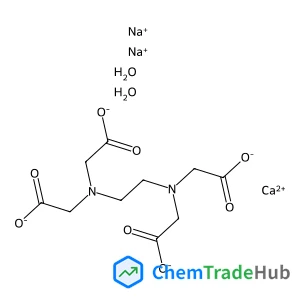
EthylenediaminetetraaceticacidcalciumDisodiumsalthydrate
CAS Number:
23411-34-9
Molecular Formula:
C10H16CaN2Na2O10


Recommended Suppliers





Disclaimer
This page provides academic journal information for reference and research purposes only. We are not affiliated with any journal publishers and do not handle publication submissions. For publication-related inquiries, please contact the respective journal publishers directly.
If you notice any inaccuracies in the information displayed, please contact us at support@chemtradehub.com. We will promptly review and address your concerns.