












Indexes
Literature Information
Publication Date
DOI
10.1039/CS9841300489
Impact Factor
54.564
Authors
View Original
Abstract
The first page of this article is displayed as the abstract.
Related Literature
Activity and stability of α-chymotrypsin in biocompatible ionic liquids: enzyme refolding by triethyl ammonium acetate
Pankaj Attri, Pannuru Venkatesu, Anil Kumar
2010-12-13
Paper
DOI: 10.1039/C0CP01291B
Diffusion in ternary aqueous systems containing human serum albumin and precipitants of different classes
Fabio Capuano, Luigi Paduano, Gerardino D'Errico, Gaetano Mangiapia, Roberto Sartorio
2010-12-22
Paper
DOI: 10.1039/C0CP00761G
Molecular spin conversion in solid deuterated methane
Piotr Stachowiak
2010-12-20
Paper
DOI: 10.1039/C0CP00943A
Electrochemical control of adsorption dynamics of surface layer proteins on gold
Christian Zafiu, Günter Trettenhahn, Dietmar Pum, Uwe Bernd Sleytr, Wolfgang Kautek
2010-12-22
Paper
DOI: 10.1039/C0CP01099E
Elastic deformations in hexagonal phases studied by small-angle X-ray diffraction and simulations
Šárka Perutková, Matej Daniel, Michael Rappolt, Georg Pabst, Gregor Dolinar, Veronika Kralj-Iglič, Aleš Iglič
2010-11-09
Paper
DOI: 10.1039/C0CP01187H
Charging of ionic liquid surfaces under X-ray irradiation: the measurement of absolute binding energies by XPS
Ignacio J. Villar-Garcia, Emily F. Smith, Alasdair W. Taylor, Fulian Qiu, Kevin R. J. Lovelock, Robert G. Jones, Peter Licence
2010-12-13
Paper
DOI: 10.1039/C0CP01587C
Direct electrochemisty and electrocatalysis of anthraquinone-monosulfonate/polyaniline hybrid film synthesized by a novel electrochemical doping-dedoping-redoping method on pre-activated spectroscopically pure graphite surface
Guoquan Zhang, Fenglin Yang
2011-01-07
Paper
DOI: 10.1039/C0CP00608D
Molecular organization of hydrophobic molecules and co-adsorbed water in SBA-15 ordered mesoporous silica material
Randy Mellaerts, Maarten B. J. Roeffaers, Kristof Houthoofd, Michiel Van Speybroeck, Gert De Cremer, Jasper A. G. Jammaer, Guy Van den Mooter, Patrick Augustijns, Johan Hofkens, Johan A. Martens
2010-12-10
Paper
DOI: 10.1039/C0CP01640C
Mechanistic differences between methanol and dimethyl ethercarbonylation in side pockets and large channels of mordenite
Mercedes Boronat, Cristina Martínez, Avelino Corma
2011-01-19
Paper
DOI: 10.1039/C0CP01996H
You might also like
Compound Q&A
What are the main uses of 1H-Indazole-6-carbonitrile (CAS: 141290-59-7)?
1H-Indazole-6-carbonitrile finds applications in pharmaceuticals, where it serve...
141290-59-71H-Indazole-6-carbon...
Compound Q&A
How should waste containing Dioctyl (2E)-2-butenedioate (CAS: 2997-85-5) be handled?
Waste containing Dioctyl (2E)-2-butenedioate (CAS: 2997-85-5) should be collecte...
2997-85-5Dioctyl (2E)-2-buten...
Compound Q&A
What industries use Sodium [(1,2-benzoxazol-3-ylmethyl)sulfonyl]azanide (CAS: 68291-98-5)?
Sodium [(1,2-benzoxazol-3-ylmethyl)sulfonyl]azanide is primarily used in pharmac...
68291-98-5Sodium [(1,2-benzoxa...
Compound Q&A
Are there alternatives to Dimethyl 4-(4,4,5,5-tetramethyl-1,3,2-dioxaborolan-2-yl)-2,6-pyridinedicarboxylate (CAS: 741709-66-0) in synthesis?
Dimethyl 4-(4,4,5,5-tetramethyl-1,3,2-dioxaborolan-2-yl)-2,6-pyridinedicarboxyla...
741709-66-0Dimethyl 4-(4,4,5,5-...
Compound Q&A
How should waste containing 2-Fluoro-6-hydrazinopyridine (CAS: 80714-39-2) be handled?
Waste containing 2-Fluoro-6-hydrazinopyridine (CAS: 80714-39-2) should be manage...
80714-39-22-Fluoro-6-hydrazino...
Compound Q&A
What is 6-Formyl-2-pyridinecarboxylic acid (CAS: 499214-11-8)?
6-Formyl-2-pyridinecarboxylic acid is an organic compound with the molecular for...
499214-11-86-Formyl-2-pyridinec...
Compound Q&A
What is the market or research trend for 3-(3,4-dimethoxyphenyl)-2,5-dimethyl-N-(2-morpholin-4-ylethyl)pyrazolo[1,5-a]pyrimidin-7-amine (CAS: 900874-91-1)?
Research trends for this compound indicate a focus on its potential applications...
900874-91-13-(3,4-dimethoxyphen...
Compound Q&A
How is 9H-Tribenzo[b,d,f]azepine (CAS: 29875-73-8) typically synthesized?
9H-Tribenzo[b,d,f]azepine is typically synthesized via a multi-step process invo...
29875-73-89H-Tribenzo[b,d,f]az...
Compound Q&A
How is 1-Cyclopropyl-7-ethoxy-6-fluoro-8-methoxy-4-oxo-1,4-dihydro-3-quinolinecarboxylic acid (CAS: 1797982-51-4) typically synthesized?
1-Cyclopropyl-7-ethoxy-6-fluoro-8-methoxy-4-oxo-1,4-dihydro-3-quinolinecarboxyli...
1797982-51-41-Cyclopropyl-7-etho...
Compound Q&A
How should waste containing Methyl 3-oxo-1,2,3,4-tetrahydro-6-quinoxalinecarboxylate (CAS: 671820-52-3) be handled?
Waste containing Methyl 3-oxo-1,2,3,4-tetrahydro-6-quinoxalinecarboxylate (CAS: ...
671820-52-3Methyl 3-oxo-1,2,3,4...
Source Journal
Chemical Society Reviews

CiteScore:
80.8
Self-citation Rate:
1.2%
Articles per Year:
250
Chem Soc Rev publishes review articles covering important topics at the forefront of the chemical sciences. Reviews should be of the very highest quality and international impact. We particularly encourage international and multidisciplinary collaborations among our authors. Our scope covers the breadth of the chemical sciences, including interdisciplinary topics where the article has a basis in chemistry. Topics include: Analytical chemistry Biomaterials chemistry Bioorganic/medicinal chemistry Catalysis Chemical Biology Coordination Chemistry Crystal Engineering Energy Sustainable chemistry Green chemistry Inorganic chemistry Inorganic materials Main group chemistry Nanoscience Organic chemistry Organic materials Organometallics Physical chemistry Supramolecular chemistry Synthetic methodology Theoretical and computational chemistry
Recommended Compounds
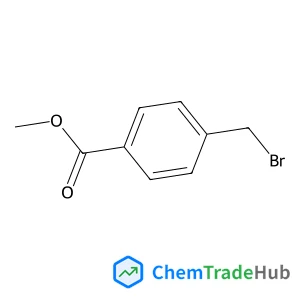
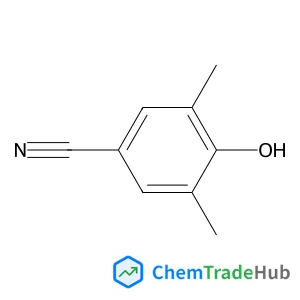
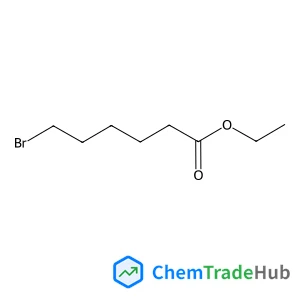
Recommended Suppliers




Disclaimer
This page provides academic journal information for reference and research purposes only. We are not affiliated with any journal publishers and do not handle publication submissions. For publication-related inquiries, please contact the respective journal publishers directly.
If you notice any inaccuracies in the information displayed, please contact us at support@chemtradehub.com. We will promptly review and address your concerns.