












Boosting supercapacitor and capacitive deionization performance of hierarchically porous carbon by polar surface and structural engineering
Literature Information
Publication Date
2019-12-14
DOI
10.1039/C9TA12170F
Impact Factor
12.732
Authors
View Original
Abstract
Heteroatom doped hierarchically porous carbon materials are considered as promising candidates for high performance capacitive deionization and supercapacitor applications. However, the development of carbons simultaneously having both a reasonable polar surface and a hierarchically porous structure via a flexible synthetic strategy is critical but still a great challenge. Herein, a facile and effective strategy is presented for the preparation of N and P dual-doped hierarchically porous carbon networks by one-pot carbonization of a rationally designed precursor that was built using a metal–organic gel with a zinc ion metallic cluster and nitrogen/phosphorus chelate ligands. Due to the abundant exposed polar surface groups and the highly developed interconnected macro-/meso-/microporous structure, the optimal sample delivers a high specific capacitance of 373 F g−1 at a current density of 1 A g−1 and retains 270 F g−1 at 100 A g−1 with a capacitive retention of 72.3%. Furthermore, the symmetric supercapacitors assembled in aqueous and PVA/KOH solid electrolytes exhibit excellent energy outputs of 38.5 and 7.5 W h kg−1, respectively. For capacitive deionization, the sample displays a superior salt adsorption capacity of 7.7, 10.3 and 18.1 mg g−1 in NaCl solution with an initial concentration of 250 mg L−1 at applied voltages of 1, 1.2 and 1.4 V, respectively. Additionally, kinetics studies and density functional theory simulations reveal that N/P dual-doping not only reliably introduces pseudocapacitance, but also greatly enhances the chemisorption of Na and Cl, resulting in a remarkable electrochemical performance. This work provides a new insight into the relationship between polar surface/structural engineering and the capacitive performance of the designed materials.
Related Literature
Alternative mechanisms for O2 release and O–O bond formation in the oxygen evolving complex of photosystem II
Per E. M. Siegbahn
2015-04-10
Paper
DOI: 10.1039/C5CP00138B
Functional carbon nanotubes for high-quality charge transfer and moisture regulation through membranes: structural and functional insights
Annarosa Gugliuzza, Valentino Pingitore, Domenico Miriello
2015-04-13
Paper
DOI: 10.1039/C5CP00750J
Tunable electronic properties in the van der Waals heterostructure of germanene/germanane
Run-wu Zhang, Chang-wen Zhang, Wei-xiao Ji, Feng Li, Miao-juan Ren, Ping Li, Min Yuan, Pei-ji Wang
2015-03-31
Paper
DOI: 10.1039/C5CP00875A
Coherent resonance of quantum plasmons in the graphene–gold cluster hybrid system
Chikang Li
2015-04-15
Paper
DOI: 10.1039/C4CP05049E
Gas-phase reaction of two unsaturated ketones with atomic Cl and O3: kinetics and products
Weigang Wang, Maofa Ge
2015-03-30
Paper
DOI: 10.1039/C4CP05461J
Genericity of confined chemical garden patterns with regard to changes in the reactants
Florence Haudin, V. Brasiliense, Julyan H. E. Cartwright, Fabian Brau, A. De Wit
2015-04-15
Paper
DOI: 10.1039/C5CP00068H
An experimental and theoretical study of the photoisomerization and thermal reversion on 5-arylmethylene-2-thioxoimidazolidin-4-one
A. J. Pepino, M. A. Burgos Paci, W. J. Peláez, G. A. Argüello
2015-04-08
Paper
DOI: 10.1039/C4CP04748F
In silico prediction of MOFs with high deliverable capacity or internal surface area
Yi Bao, Richard L. Martin, Maciej Haranczyk
2015-02-19
Paper
DOI: 10.1039/C5CP00002E
Temperature-induced molecular transport through polymer multilayers coated with PNIPAM microgels
S. T. Aleed, T. Paulraj, Yu. A. Vladimirov, C. Duschl, R. von Klitzing, D. Volodkin
2015-04-14
Paper
DOI: 10.1039/C5CP01213A
Potential-dependent structures investigated at the perchloric acid solution/iodine modified Au(111) interface by electrochemical frequency-modulation atomic force microscopy
Toru Utsunomiya, Shoko Tatsumi, Yasuyuki Yokota, Ken-ichi Fukui
2015-04-09
Paper
DOI: 10.1039/C5CP01156F
You might also like
Compound Q&A
What are the main uses of (5-Sulfamoyl-3-pyridinyl)boronic acid (CAS: 951233-61-7)?
(5-Sulfamoyl-3-pyridinyl)boronic acid is primarily used in chemical synthesis, p...
951233-61-7(5-Sulfamoyl-3-pyrid...
Compound Q&A
How is Benzyl 2-methyl-2-(methylsulfonyl)-4-pentenoate (CAS: 1942858-50-5) typically synthesized?
Benzyl 2-methyl-2-(methylsulfonyl)-4-pentenoate is typically synthesized via est...
1942858-50-5Benzyl 2-methyl-2-(m...
Compound Q&A
What precautions should be taken when handling 8-Fluoroquinolin-6-ol (CAS: 209353-22-0)?
When handling 8-Fluoroquinolin-6-ol (CAS: 209353-22-0), it is important to use p...
209353-22-08-Fluoroquinolin-6-o...
Compound Q&A
What are the physical and chemical properties of 1,3-Dibromo-5-(2-methyl-2-propanyl)benzene (CAS: 129316-09-2)?
1,3-Dibromo-5-(2-methyl-2-propanyl)benzene (CAS: 129316-09-2) is a crystalline c...
129316-09-21,3-Dibromo-5-(2-met...
Compound Q&A
What industries use Ethyl 7-chloro-4-oxo-1-(1,3-thiazol-2-yl)-1,4-dihydro-1,8-naphthyridine-3-carboxylate (CAS: 174726-87-5)?
Ethyl 7-chloro-4-oxo-1-(1,3-thiazol-2-yl)-1,4-dihydro-1,8-naphthyridine-3-carbox...
174726-87-5Ethyl 7-chloro-4-oxo...
Compound Q&A
What precautions should be taken when handling Delta-7-Avenasterol (CAS: 23290-26-8)?
When handling Delta-7-Avenasterol (CAS: 23290-26-8), it is important to wear app...
23290-26-8Delta-7-Avenasterol
Compound Q&A
What precautions should be taken when handling N-({(5R)-3-[3-Fluoro-4-(4-morpholinyl)phenyl]-2-oxo-1,3-oxazolidin-5-yl}methyl)acetamide (CAS: 872992-20-6)?
Proper handling involves the use of personal protective equipment such as gloves...
872992-20-6N-({(5R)-3-[3-Fluoro...
Compound Q&A
What precautions should be taken when handling 2-Methyl-2-proanyl 4-[(2-aminophenyl)amino]-1-piperidinecarboxylate (CAS: 79099-00-6)?
When handling 2-Methyl-2-proanyl 4-[(2-aminophenyl)amino]-1-piperidinecarboxylat...
79099-00-62-Methyl-2-propanyl ...
Compound Q&A
What is N-Methyl-4-chlorobenzylamine hydrochloride (CAS: 65542-24-7)?
N-Methyl-4-chlorobenzylamine hydrochloride (CAS: 65542-24-7) is a organic compou...
65542-24-7N-Methyl-4-chloroben...
Compound Q&A
Is [2-(Dodecyloxy)ethoxy]acetic acid (CAS: 27306-90-7) safe?
[2-(Dodecyloxy)ethoxy]acetic acid (CAS: 27306-90-7) is generally considered safe...
27306-90-7[2-(Dodecyloxy)ethox...
Source Journal
Journal of Materials Chemistry A

CiteScore:
19.5
Self-citation Rate:
4.7%
Articles per Year:
2211
Journal of Materials Chemistry A, B & C cover high quality studies across all fields of materials chemistry. The journals focus on those theoretical or experimental studies that report new understanding, applications, properties and synthesis of materials. The journals have a strong history of publishing quality reports of interest to interdisciplinary communities and providing an efficient and rigorous service through peer review and publication. The journals are led by an international team of Editors-in-Chief and Associate Editors who are all active researchers in their fields. Journal of Materials Chemistry A, B & C are separated by the intended application of the material studied. Broadly, applications in energy and sustainability are of interest to Journal of Materials Chemistry A, applications in biology and medicine are of interest to Journal of Materials Chemistry B, and applications in optical, magnetic and electronic devices are of interest to Journal of Materials Chemistry C. More than one Journal of Materials Chemistry journal may be suitable for certain fields and researchers are encouraged to submit their paper to the journal that they feel best fits for their particular article. Example topic areas within the scope of Journal of Materials Chemistry A are listed below. This list is neither exhaustive nor exclusive. Artificial photosynthesis Batteries Carbon dioxide conversion Catalysis Fuel cells Gas capture/separation/storage Green/sustainable materials Hydrogen generation Hydrogen storage Photocatalysis Photovoltaics Self-cleaning materials Self-healing materials Sensors Supercapacitors Thermoelectrics Water splitting Water treatment
Recommended Compounds
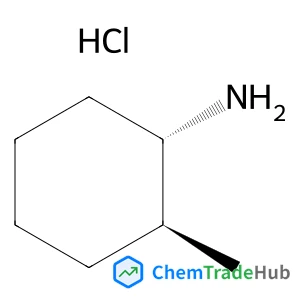
(1R,2R)-2-Methylcyclohexanamine hydrochloride (1:1)
CAS Number:
39558-31-1
Molecular Formula:
C7H16ClN
![2-Azaspiro[4.5]decane-3,8-dione structure](https://static.chemtradehub.com/structs/914/914780-96-4-e94b.webp "2-Azaspiro[4.5]decane-3,8-dione structure")
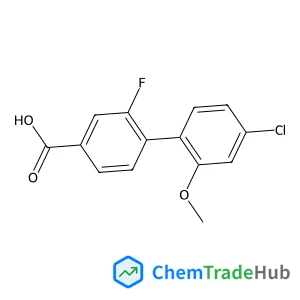
4-(4-Chloro-2-methoxyphenyl)-3-fluorobenzoic acid
CAS Number:
1261970-23-3
Molecular Formula:
C14H10ClFO3
Recommended Suppliers






Disclaimer
This page provides academic journal information for reference and research purposes only. We are not affiliated with any journal publishers and do not handle publication submissions. For publication-related inquiries, please contact the respective journal publishers directly.
If you notice any inaccuracies in the information displayed, please contact us at support@chemtradehub.com. We will promptly review and address your concerns.