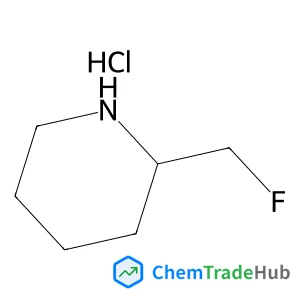
(2S)-2-(Fluoromethyl)piperidine hydrochloride (1:1)
CAS Number:
886216-73-5
Molecular Formula:
C6H13ClFN
S. T. Aleed, T. Paulraj, Yu. A. Vladimirov, C. Duschl, R. von Klitzing, D. Volodkin
Polyelectrolyte multilayers serve as effective reservoirs for bioactive molecules which are stored and released from the multilayers for cellular applications. However, control over the release without significantly affecting the multilayers and biomolecules is still a challenge. On the other hand, externally stimulated release would make the multilayers promising for the development of stimuli-sensitive planar carriers with release performance switched on demand. In this study soft composite films are designed by coating hyaluronic acid/poly-L-lysine (HA/PLL) multilayers with temperature responsive poly(N-isopropylacrylamide) (PNIPAM) microgels. Microgels are flattened and immersed into the multilayers to maximize the number of contacts with the surrounding polyelectrolytes (HA and PLL). The microgel coating serves as an efficient switchable barrier for the PLL transport into the multilayers. PLL diffusion into the film is significantly hindered at room temperature but is dramatically enhanced at 40 °C above the volume phase transition temperature (VPTT) of PNIPAM at 32 °C associated with microgel shrinkage. Scanning force microscopy micrographs show that the mechanism of volume phase transition on soft surfaces cannot be directly deduced from the processes taking place at solid substrates.
Shouqiang Wu, An Yong Li
DOI: 10.1039/D3CP05101C
Ekaterina A. Konopkina, Alexander V. Gopin, Anton S. Pozdeev, Maria G. Chernysheva, Paulina Kalle, Elizaveta A. Pavlova, Stepan N. Kalmykov, Vladimir G. Petrov, Nataliya E. Borisova, Alexander A. Guda, Petr I. Matveev
DOI: 10.1039/D3CP05081E
Yue Lou
DOI: 10.1039/D3CP04958B
Zhichao Liu, Tianle Zhou, Gui Jin, Jiangbin Su, Bin Tang
DOI: 10.1039/D3CP05095E
Siqi Wang, Mingmin Zhong, Haibo Liu, Meng Ju
DOI: 10.1039/D3CP03678B
Safieh Nazari, Fatemeh Mohammad Dezashibi, Nadia Babaei Bidmeshki
DOI: 10.1039/D3CP04558G
Abhishek Kalpattu, Tristan Dilbeck, Kenneth Hanson
DOI: 10.1039/D3CP90241B
Margarita Bužančić Milosavljević
DOI: 10.1039/D3CP05291E
Xiao-Juan Wang, Yan Long, Chuan-Wan Wei, Shu-Qin Gao
DOI: 10.1039/D3CP05403A
Sergei Prokvolit, Erqian Mao, Thomas G. Gray
DOI: 10.1039/D3CP05385G
Waste containing N-Methoxy-N-methyl-1,3-thiazole-5-carboxamide (CAS: 898825-89-3...
N-(4-Biphenylyl)dibenzo[b,d]furan-4-amine should be stored in a tightly sealed c...
The market for 3-Acetamido-5-amino-2,4,6-triiodobenzoic acid (CAS: 1713-07-1) is...
Benzyl 2-O-acetyl-3,4,6-tri-O-benzyl-beta-D-galactopyranoside (CAS: 61820-03-9) ...
2-Ethylpiperazine dihydrochloride (CAS: 438050-52-3) is regulated under the Glob...
1,1'-[1,3-Phenylenebis(methylene)]bis(3-methyl-1H-pyrrole-2,5-dione) (CAS: 11946...
Several alternatives can be used in the synthesis of 5-Fluoro-2-(1-pyrrolidinyl)...
Proper personal protective equipment (PPE) must be worn when handling this compo...
When handling 6-Bromoimidazo[1,2-a]pyridin-8-amine, it is important to wear appr...
Alternatives to (2S,4R)-4-(4-Nitrobenzyl)pyrrolidine-2-carboxylic acid hydrochlo...

Physical Chemistry Chemical Physics (PCCP) is an international journal co-owned by 19 physical chemistry and physics societies from around the world. This journal publishes original, cutting-edge research in physical chemistry, chemical physics and biophysical chemistry. To be suitable for publication in PCCP, articles must include significant innovation and/or insight into physical chemistry; this is the most important criterion that reviewers and Editors will judge against when evaluating submissions. The journal has a broad scope and welcomes contributions spanning experiment, theory, computation and data science. Topical coverage includes spectroscopy, dynamics, kinetics, statistical mechanics, thermodynamics, electrochemistry, catalysis, surface science, quantum mechanics, quantum computing and machine learning. Interdisciplinary research areas such as polymers and soft matter, materials, nanoscience, energy, surfaces/interfaces, and biophysical chemistry are welcomed if they demonstrate significant innovation and/or insight into physical chemistry. Joined experimental/theoretical studies are particularly appreciated when complementary and based on up-to-date approaches.