












Insights into coated NiCrAl open-cell foams for the catalytic partial oxidation of CH4
Literature Information
Publication Date
2019-07-08
DOI
10.1039/C9RE00178F
Impact Factor
4.239
Authors
Phuoc Hoang Ho, Wout de Nolf, Francesca Ospitali, Didier Beton, Lars Torkuhl, Giuseppe Fornasari, Angelo Vaccari, Patricia Benito
View Original
Abstract
High resistance alloys are the basis of structured catalysts that outperform pelletized materials in mass and/or heat transfer limited processes and allow movement from large- to small-scale and more efficient processes for energy and environmental applications. Herein, open-cell NiCrAl foams coated with catalysts are investigated as an alternative to the FeCrAl, tracking the change of both the foam and coating materials and their interaction during life-time (as-prepared, calcined and after catalytic tests). Bare open-cell foams are activated by electrodeposition of Rh/Mg/Al hydrotalcite type compounds, followed by calcination at 900 °C, and tested under harsh conditions in the catalytic partial oxidation of methane (CPO) for H2 production; the axial temperature profiles along the centerline of the catalytic bed were also evaluated. The combination of spectroscopic, microscopic and imaging diffraction techniques reveals insights into the structure of the materials from the macro- to nano-scale (e.g. nano XRD/XRF synchrotron tomography). The foam surface is rapidly and evenly coated by hydrotalcite-type compounds through electrodeposition; a pretreatment of the bare foam is, however, mandatory. Activated foams, after calcination, develop a scale made of Cr2O3, NiCr2O4, and α-Al2O3, which is stable under reaction conditions and does not alter the coating, either its structure (MgO and MgAl2O4) or composition. Although NiCrAl foams are not thermally treated to develop the protective Al2O3 scale, catalytic coatings are stable and performances are unaltered. Under reaction conditions, a decrease of the hot spots in the CPO of methane is measured in comparison to FeCrAl foams.
Related Literature
Probing the balance of attraction and repulsion in binary mixtures of dimethyl sulfoxide and n-alcohols
Andrew Ellis, Florian M. Zehentbauer
2012-11-30
Communication
DOI: 10.1039/C2CP42902K
The relevance of interfaces for oxide ion transport in yttria stabilized zirconia (YSZ) thin films
Matthias Gerstl, Gernot Friedbacher, Frank Kubel, Herbert Hutter, Jürgen Fleig
2012-11-20
Paper
DOI: 10.1039/C2CP42347B
Structure analysis of substrate catalyst complexes in mixtures with ultrafast two-dimensional infrared spectroscopy
Andreas T. Messmer, Katharina M. Lippert, Peter R. Schreiner
2012-11-22
Paper
DOI: 10.1039/C2CP42863F
Effective reinforcement of electrical conductivity and strength of carbon nanotube fibers by silver-paste-liquid infiltration processing
X. H. Zhong, R. Wang, Y. Y. Wen
2013-01-11
Paper
DOI: 10.1039/C3CP44085K
Clarifying the role of sodium in the silica oligomerization reaction
Anna Pavlova, Thuat T. Trinh, Rutger A. van Santen, Evert Jan Meijer
2012-11-16
Paper
DOI: 10.1039/C2CP42436C
New insight into the ZnO sulfidation reaction: mechanism and kinetics modeling of the ZnS outward growth
David Chiche, Javier Pérez-Pellitero, Loïc Favergeon, Anne-Sophie Gay, Michèle Pijolat
2012-12-13
Paper
DOI: 10.1039/C2CP42988H
Theoretical studies on the transport mechanism of 5-fluorouracil through cyclic peptide based nanotubes
Sofie Van Damme, Patrick Bultinck, Venkatesan Subramanian
2012-10-23
Paper
DOI: 10.1039/C2CP42038D
Ultrafast dynamics and single particle spectroscopy of Au–CdSe nanorods
Gabriel Sagarzazu, Kohki Inoue, Masaki Saruyama, Masanori Sakamoto, Toshiharu Teranishi, Sadahiro Masuo, Naoto Tamai
2012-12-07
Paper
DOI: 10.1039/C2CP43458J
Ruthenium sulphide thin layers as catalysts for the electrooxidation of water
Peter Bogdanoff, Carolin Zachäus, Stephan Brunken, Andreas Kratzig, Klaus Ellmer, Sebastian Fiechter
2012-11-29
Paper
DOI: 10.1039/C2CP42348K
You might also like
Compound Q&A
What is 3-Fluoro-2-methylbenzylamine (CAS: 771573-36-5)?
3-Fluoro-2-methylbenzylamine is an organic compound with the CAS number 771573-3...
771573-36-53-Fluoro-2-methylben...
Compound Q&A
Is Tert-butyl 2-(oxetan-3-ylidene)acetate (CAS: 1207175-03-8) safe?
Tert-butyl 2-(oxetan-3-ylidene)acetate is considered safe for its intended uses ...
1207175-03-8Tert-butyl 2-(oxetan...
Compound Q&A
What precautions should be taken when handling 4-Acetyl-2-fluorobenzonitrile (CAS: 214760-18-6)?
Proper personal protective equipment (PPE) such as gloves, goggles, and a lab co...
214760-18-64-Acetyl-2-fluoroben...
Compound Q&A
How is 2-Ethyl-4-methyl-1,3-thiazole (CAS: 15679-12-6) typically synthesized?
2-Ethyl-4-methyl-1,3-thiazole is commonly synthesized via the reaction of thiour...
15679-12-62-Ethyl-4-methyl-1,3...
Compound Q&A
How should 5',5''-([2,2'-Bithiophene]-5,5'-diyl)bis(([1,1':3',1''-terphenyl]-4,4''-dicarboxylic acid)) (CAS: 1227780-71-3) be stored?
This compound should be stored in a cool, dry place away from direct sunlight an...
1227780-71-35',5''''-([2,2'-Bith...
Compound Q&A
What regulatory guidelines apply to L-Lysine Acetate Salt (CAS: 52315-92-1)?
L-Lysine Acetate Salt (CAS: 52315-92-1) is subject to various regulatory guideli...
52315-92-1L-LYSINE ACETATE SAL...
Compound Q&A
Is 6-Fluoro-3-hydroxy-2-pyrazinecarboxamide (CAS: 259793-96-9) safe?
6-Fluoro-3-hydroxy-2-pyrazinecarboxamide (CAS: 259793-96-9) is generally conside...
259793-96-96-Fluoro-3-hydroxy-2...
Compound Q&A
What are the physical and chemical properties of 1,1'-Sulfonylbis(1H-imidazole) (CAS: 7189-69-7)?
1,1'-Sulfonylbis(1H-imidazole) is a crystalline solid with a molecular weight of...
7189-69-71,1'-Sulfonylbis(1H-...
Compound Q&A
What industries use 4-methyl-7-nitro-1H-indole-3-carbonitrile (CAS: 289483-82-5)?
4-Methyl-7-nitro-1H-indole-3-carbonitrile (CAS: 289483-82-5) is primarily used i...
289483-82-54-methyl-7-nitro-1H-...
Compound Q&A
How should waste containing 5-Bromo-3-indolyl-beta-galactoside (CAS: 97753-82-7) be handled?
Waste containing 5-Bromo-3-indolyl-beta-galactoside (CAS: 97753-82-7) should be ...
97753-82-75-Bromo-3-indolyl-be...
Source Journal
Reaction Chemistry & Engineering

CiteScore:
0
Self-citation Rate:
8.8%
Articles per Year:
284
Reaction Chemistry & Engineering is an interdisciplinary journal reporting cutting-edge research focused on enhancing the understanding and efficiency of reactions. Reaction engineering leverages the interface where fundamental molecular chemistry meets chemical engineering and technology. Challenges in chemistry can be overcome by the application of new technologies, while engineers may find improved solutions for process development from the latest developments in reaction chemistry. Reaction Chemistry & Engineering is a unique forum for researchers whose interests span the broad areas of chemical engineering and chemical sciences to come together in solving problems of importance to wider society. All papers should be written to be approachable by readers across the engineering and chemical sciences. Papers that consider multiple scales, from the laboratory up to and including plant scale, are particularly encouraged.
Recommended Compounds
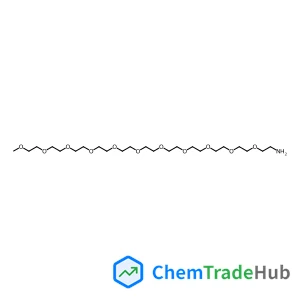
2,5,8,11,14,17,20,23,26,29,32-Undecaoxatetratriacontan-34-amine
CAS Number:
854601-60-8
Molecular Formula:
C23H49NO11
Recommended Suppliers




Disclaimer
This page provides academic journal information for reference and research purposes only. We are not affiliated with any journal publishers and do not handle publication submissions. For publication-related inquiries, please contact the respective journal publishers directly.
If you notice any inaccuracies in the information displayed, please contact us at support@chemtradehub.com. We will promptly review and address your concerns.