













Front cover
Literature Information
Publication Date
DOI
10.1039/C9QO90035G
Impact Factor
5.281
Authors
View Original
Abstract
A graphical abstract is available for this content
Related Literature
Ab initio study of chiral recognition in the propylene imine·hydrogen peroxide complex
Zheng Su, Yunjie Xu
2005-05-26
Paper
DOI: 10.1039/B504191K
Cation environments and spatial distribution in Na2O–B2O3 glasses: New results from solid state NMR
Jan Dirk Epping, Wenzel Strojek, Hellmut Eckert
2005-05-03
Paper
DOI: 10.1039/B502265G
Low temperature quantum rate coefficient of the H + CH+ reaction
2005-05-24
Paper
DOI: 10.1039/B503714J
Kinetics of electron–hole pair trapping via photoionization of biphenyl occluded in aluminium-rich ZSM-5 zeolites. Effects of extra-framework cations
Isabelle Gener, Alain Moissette, Claude Brémard
2004-05-10
Paper
DOI: 10.1039/B401816H
Time-resolved in situXAS study of the preparation of supported gold clusters
Eveline Bus, Roel Prins, Jeroen A. van Bokhoven
2007-05-04
Paper
DOI: 10.1039/B702747H
SIMS study of transition metal transport in single crystalline yttria stabilised zirconia
Christos Argirusis, Marcela A. Taylor, Martin Kilo, Günter Borchardt, François Jomard, Bernard Lesage, Odile Kaïtasov
2004-06-03
Paper
DOI: 10.1039/B315294D
Modeling molecular diffusion in channel networks via displacements between the channel segments
Sergey Vasenkov, Jörg Kärger
2004-04-06
Paper
DOI: 10.1039/B316174A
Collision-induced non-adiabatic transitions between the ion-pair states of molecular iodine: A challenge for experiment and theory
Timur V. Tscherbul, Alexei A. Buchachenko, Mikhail E. Akopyan, Sergey A. Poretsky, Anatoly M. Pravilov, Thomas A. Stephenson
2004-05-18
Invited Article
DOI: 10.1039/B402655A
Interactions of hydrated divalent metal cations with nucleic acid bases. How to relate the gas phase data to solution situation and binding selectivity in nucleic acids
Judit E. Šponer, Vladimír Sychrovský, Pavel Hobza
2004-04-29
Paper
DOI: 10.1039/B404306P
Indices for predicting the quality of leaving groups
Paul W. Ayers, James S. M. Anderson, Juan I. Rodriguez, Zobia Jawed
2005-04-05
Paper
DOI: 10.1039/B500996K
You might also like
Compound Q&A
How should waste containing (6-Bromo-2-naphthyl)oxy](dimethyl)(2-methyl-2-propanyl)silane be handled?
Waste containing (6-Bromo-2-naphthyl)oxy](dimethyl)(2-methyl-2-propanyl)silane (...
100751-65-3[(6-Bromo-2-naphthyl...
Compound Q&A
How is 7-Fluoro-4-isoquinolinecarboxylic acid (CAS: 1841081-40-0) typically synthesized?
7-Fluoro-4-isoquinolinecarboxylic acid can be synthesized via a multi-step proce...
1841081-40-07-Fluoro-4-isoquinol...
Compound Q&A
What are the physical and chemical properties of 2,3,5,6-Tetrabromothieno[3,2-b]thiophene (CAS: 124638-53-5)?
2,3,5,6-Tetrabromothieno[3,2-b]thiophene is a crystalline compound with a high m...
124638-53-52,3,5,6-Tetrabromoth...
Compound Q&A
Is 1-[4-(Benzylamino)-7,8-dihydro-5H-pyrano[4,3-d]pyrimidin-2-yl]-2-methyl-1H-indole-4-carboxamide (CAS: 1542705-92-9) safe?
1-[4-(Benzylamino)-7,8-dihydro-5H-pyrano[4,3-d]pyrimidin-2-yl]-2-methyl-1H-indol...
1542705-92-91-[4-(Benzylamino)-7...
Compound Q&A
What is the market or research trend for imidazo[5,1-d]-1,2,3,5-tetrazine-8-carboxylic acid, 3,4-dihydro-3-methyl-4-oxo- (CAS: 113942-30-6)?
The market for imidazo[5,1-d]-1,2,3,5-tetrazine-8-carboxylic acid, 3,4-dihydro-3...
113942-30-6Imidazo[5,1-d]-1,2,3...
Compound Q&A
What is 3-(Triisopropylsilyl)propiolaldehyde (CAS: 163271-80-5)?
3-(Triisopropylsilyl)propiolaldehyde is a synthetic organic compound with the CA...
163271-80-53-(Triisopropylsilyl...
Compound Q&A
What regulatory guidelines apply to 6-Nitro-2H-1,4-benzoxazin-3(4H)-one (CAS: 81721-87-1)?
6-Nitro-2H-1,4-benzoxazin-3(4H)-one (CAS: 81721-87-1) is subject to various regu...
81721-87-16-Nitro-2H-1,4-benzo...
Compound Q&A
How should waste containing (3-Fluorophenyl)(4-{[(2-methyl-2-propanyl)oxy]carbonyl}-1-piperazinyl)acetic acid (CAS: 885272-91-3) be handled?
Waste containing (3-Fluorophenyl)(4-{[(2-methyl-2-propanyl)oxy]carbonyl}-1-piper...
885272-91-3(3-Fluorophenyl)(4-{...
Compound Q&A
What are the physical and chemical properties of N,N'-4,4'-Biphenyldiyldiisonicotinamide (CAS: 55119-40-9)?
N,N'-4,4'-Biphenyldiyldiisonicotinamide is a white crystalline solid with a mole...
55119-40-9N,N'-4,4'-Biphenyldi...
Compound Q&A
What industries use 6-Bromo-8-fluoro-2-quinazolinol (CAS: 1036756-15-6)?
6-Bromo-8-fluoro-2-quinazolinol is primarily used in the pharmaceutical industry...
1036756-15-66-Bromo-8-fluoro-2-q...
Source Journal
Organic Chemistry Frontiers

CiteScore:
7.8
Self-citation Rate:
8.7%
Articles per Year:
724
Organic Chemistry Frontiers publishes high-quality research from across organic chemistry. Emphases are placed on studies that make significant contributions to the field of organic chemistry by reporting either new or significantly improved protocols or methodologies. Topics include, but are not limited to the following: Organic synthesis Development of synthetic methodologies Catalysis Natural products Functional organic materials Supramolecular and macromolecular chemistry Physical and computational organic chemistry
Recommended Compounds
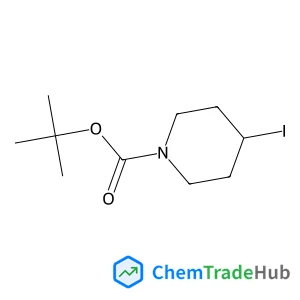
2-Methyl-2-propanyl 4-iodo-1-piperidinecarboxylate
CAS Number:
301673-14-3
Molecular Formula:
C10H18INO2
Recommended Suppliers






Disclaimer
This page provides academic journal information for reference and research purposes only. We are not affiliated with any journal publishers and do not handle publication submissions. For publication-related inquiries, please contact the respective journal publishers directly.
If you notice any inaccuracies in the information displayed, please contact us at support@chemtradehub.com. We will promptly review and address your concerns.