













PhI(OAc)2-mediated oxidative rearrangement of allylic amides: efficient synthesis of oxazoles and β-keto amides
Literature Information
Publication Date
2019-11-15
DOI
10.1039/C9QO01298B
Impact Factor
5.281
Authors
Kang Xu, Shuang Yang, Zhenhua Ding
View Original
Abstract
A series of 2,5-disubstituted oxazoles and β-keto amides were synthesized from allylic amides via PhI(OAc)2-mediated intramolecular cyclization and oxidation with the migration of an aryl group. These reactions were performed under mild conditions with good functional group tolerance and gave the corresponding products in good to excellent yields.
Related Literature
Probing factors affecting the gas phase stabilities of noncovalent complexes formed by peptides bound to the Grb2 SH2 domain protein
M. Isabel Catalina, Nico J. de Mol, Marcel J. E. Fischer, Albert J. R. Heck
2004-02-23
Paper
DOI: 10.1039/B315435A
SIMS study of transition metal transport in single crystalline yttria stabilised zirconia
Christos Argirusis, Marcela A. Taylor, Martin Kilo, Günter Borchardt, François Jomard, Bernard Lesage, Odile Kaïtasov
2004-06-03
Paper
DOI: 10.1039/B315294D
Pure rotational spectra of LuF and LuCl
Stephen A. Cooke, Christine Krumrey, Michael C. L. Gerry
2005-05-31
Paper
DOI: 10.1039/B502683K
Linear relationship between activation energies and reaction energies for coverage-dependent dissociation reactions on rhodium surfaces
Oliver R. Inderwildi, Dirk Lebiedz, Jürgen Warnatz
2005-06-01
Communication
DOI: 10.1039/B506773A
Analysis of the correlation of counterions to rod-like macroions by anomalous small-angle X-ray scattering
M. Patel, S. Rosenfeldt, M. Ballauff, N. Dingenouts, D. Pontoni, T. Narayanan
2004-04-19
Paper
DOI: 10.1039/B402155J
Mixing behaviour of carboxylic acids adsorbed on graphite
Anna Bickerstaffe, Loïc Messé, Stuart M. Clarke, Julia Parker, Ana Perdigon, Nuan Ping Cheah, Akira Inaba
2004-05-12
Paper
DOI: 10.1039/B403957B
Theoretical studies of the unimolecular and bimolecular tautomerization of cytosine
Zhibo Yang, M. T. Rodgers
2004-03-09
Paper
DOI: 10.1039/B315089E
Indices for predicting the quality of leaving groups
Paul W. Ayers, James S. M. Anderson, Juan I. Rodriguez, Zobia Jawed
2005-04-05
Paper
DOI: 10.1039/B500996K
You might also like
Compound Q&A
How should waste containing (6-Bromo-2-naphthyl)oxy](dimethyl)(2-methyl-2-propanyl)silane be handled?
Waste containing (6-Bromo-2-naphthyl)oxy](dimethyl)(2-methyl-2-propanyl)silane (...
100751-65-3[(6-Bromo-2-naphthyl...
Compound Q&A
How is 7-Fluoro-4-isoquinolinecarboxylic acid (CAS: 1841081-40-0) typically synthesized?
7-Fluoro-4-isoquinolinecarboxylic acid can be synthesized via a multi-step proce...
1841081-40-07-Fluoro-4-isoquinol...
Compound Q&A
What are the physical and chemical properties of 2,3,5,6-Tetrabromothieno[3,2-b]thiophene (CAS: 124638-53-5)?
2,3,5,6-Tetrabromothieno[3,2-b]thiophene is a crystalline compound with a high m...
124638-53-52,3,5,6-Tetrabromoth...
Compound Q&A
Is 1-[4-(Benzylamino)-7,8-dihydro-5H-pyrano[4,3-d]pyrimidin-2-yl]-2-methyl-1H-indole-4-carboxamide (CAS: 1542705-92-9) safe?
1-[4-(Benzylamino)-7,8-dihydro-5H-pyrano[4,3-d]pyrimidin-2-yl]-2-methyl-1H-indol...
1542705-92-91-[4-(Benzylamino)-7...
Compound Q&A
What is the market or research trend for imidazo[5,1-d]-1,2,3,5-tetrazine-8-carboxylic acid, 3,4-dihydro-3-methyl-4-oxo- (CAS: 113942-30-6)?
The market for imidazo[5,1-d]-1,2,3,5-tetrazine-8-carboxylic acid, 3,4-dihydro-3...
113942-30-6Imidazo[5,1-d]-1,2,3...
Compound Q&A
What is 3-(Triisopropylsilyl)propiolaldehyde (CAS: 163271-80-5)?
3-(Triisopropylsilyl)propiolaldehyde is a synthetic organic compound with the CA...
163271-80-53-(Triisopropylsilyl...
Compound Q&A
What regulatory guidelines apply to 6-Nitro-2H-1,4-benzoxazin-3(4H)-one (CAS: 81721-87-1)?
6-Nitro-2H-1,4-benzoxazin-3(4H)-one (CAS: 81721-87-1) is subject to various regu...
81721-87-16-Nitro-2H-1,4-benzo...
Compound Q&A
How should waste containing (3-Fluorophenyl)(4-{[(2-methyl-2-propanyl)oxy]carbonyl}-1-piperazinyl)acetic acid (CAS: 885272-91-3) be handled?
Waste containing (3-Fluorophenyl)(4-{[(2-methyl-2-propanyl)oxy]carbonyl}-1-piper...
885272-91-3(3-Fluorophenyl)(4-{...
Compound Q&A
What are the physical and chemical properties of N,N'-4,4'-Biphenyldiyldiisonicotinamide (CAS: 55119-40-9)?
N,N'-4,4'-Biphenyldiyldiisonicotinamide is a white crystalline solid with a mole...
55119-40-9N,N'-4,4'-Biphenyldi...
Compound Q&A
What industries use 6-Bromo-8-fluoro-2-quinazolinol (CAS: 1036756-15-6)?
6-Bromo-8-fluoro-2-quinazolinol is primarily used in the pharmaceutical industry...
1036756-15-66-Bromo-8-fluoro-2-q...
Source Journal
Organic Chemistry Frontiers

CiteScore:
7.8
Self-citation Rate:
8.7%
Articles per Year:
724
Organic Chemistry Frontiers publishes high-quality research from across organic chemistry. Emphases are placed on studies that make significant contributions to the field of organic chemistry by reporting either new or significantly improved protocols or methodologies. Topics include, but are not limited to the following: Organic synthesis Development of synthetic methodologies Catalysis Natural products Functional organic materials Supramolecular and macromolecular chemistry Physical and computational organic chemistry
Recommended Compounds
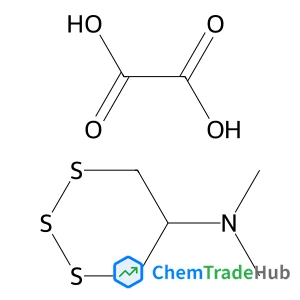
Oxalic acid compound with cyclohexylsulfamothioic O-acid (11)
CAS Number:
31895-22-4
Molecular Formula:
C7H13NO4S3
Recommended Suppliers






Disclaimer
This page provides academic journal information for reference and research purposes only. We are not affiliated with any journal publishers and do not handle publication submissions. For publication-related inquiries, please contact the respective journal publishers directly.
If you notice any inaccuracies in the information displayed, please contact us at support@chemtradehub.com. We will promptly review and address your concerns.