












Rhodium-catalyzed alkenyl C–H functionalization with amides
Literature Information
Publication Date
2019-05-10
DOI
10.1039/C9QO00489K
Impact Factor
5.281
Authors
Yao Huang, Wen-Jing Pan
View Original
Abstract
Rhodium-catalyzed pyridyl-directed alkenyl C–H bond functionalization with aroyl- or acryl-amides was carried out. The reaction gave arylated or alkenylated alkenes in moderate to excellent yields in most cases and tolerates functional groups involving RO, Cl, F, CF3, CN, COOMe, C(O)Me, and NO2.
Recommended Journals
Related Literature
A robust and high-throughput measurement platform for monomer reactivity ratios from surface-initiated polymerization
Derek L. Patton, Kirt A. Page, Emily A. Hoff, Michael J. Fasolka, Kathryn L. Beers
2012-02-23
Paper
DOI: 10.1039/C2PY20023F
The unexpected behaviour of epoxidised macromonomers derived from catalytic chain transfer during ring opening copolymerisation
Bas G. P. van Ravensteijn, Robbert Duchateau, Johan P. A. Heuts
2012-05-25
Paper
DOI: 10.1039/C2PY20195J
Highly sensitive detection of DNA-binding proteins based on a cationic conjugated polymervia a target-mediated fluorescence resonance energy transfer (TMFRET) strategy
Xingfen Liu, Lan Ouyang, Yanqin Huang, Xiaomiao Feng, Quli Fan, Wei Huang
2012-01-17
Paper
DOI: 10.1039/C2PY00499B
Synthetic and mechanistic inputs of photochemistry into the bis-acetylacetonatocobalt-mediated radical polymerization of n-butyl acrylate and vinyl acetate
Christophe Detrembleur, Yasmine Piette, Marie Hurtgen, Christine Jérôme, Jacques Lalevée, Antoine Debuigne
2011-11-28
Paper
DOI: 10.1039/C1PY00443C
Synthesis and polymerization of C-vinyl- and N-vinyl-1,2,3-triazoles
Samir Beghdadi, Daniele Addis, Hatem Ben Romdhane, Julien Bernard, Eric Drockenmuller
2011-10-28
Review Article
DOI: 10.1039/C1PY00446H
Polymeric vesicles mimicking glycocalyx (PV-Gx) for studying carbohydrate–protein interactions in solution
Lu Su, Yu Zhao, Guosong Chen, Ming Jiang
2012-04-13
Paper
DOI: 10.1039/C2PY20110K
A new story of cyclodextrin as a bulky pendent group causing uncommon behaviour to random copolymers in solution
Fuji Sakai, Guosong Chen, Ming Jiang
2012-01-31
Paper
DOI: 10.1039/C2PY00614F
Self-healable and recyclable triple-shape PPDO–PTMEG co-network constructed through thermoreversible Diels–Alder reaction
Jingjing Zhang, Ying Niu, Caili Huang, Liping Xiao, Zhongtao Chen, Keke Yang, Yuzhong Wang
2012-04-26
Communication
DOI: 10.1039/C2PY20028G
You might also like
Compound Q&A
Are there alternatives to 1-(4-Chlorophenyl)-N-hydroxymethanimine (CAS: 3848-36-0) in synthesis?
When considering alternatives to 1-(4-Chlorophenyl)-N-hydroxymethanimine (CAS: 3...
3848-36-01-(4-Chlorophenyl)-N...
Compound Q&A
How should (1R,9S,10S,12S,14E,16S,19R,20R,21S,22R)-3,9,21-Trihydroxy-5,10,12,14,16,20,22-heptamethyl-23,24-dioxatetracyclo[17.3.1.1~6,9~.0~2,7~]tetracosa-2,5,7,14-tetraen-4-one (CAS: 183202-73-5) be stored?
This compound should be stored in a cool, dry place away from direct sunlight. I...
183202-73-5(1R,9S,10S,12S,14E,1...
Compound Q&A
How is 3-(4-Bromophenyl)-5-(2-fluorophenyl)-1,2,4-oxadiazole (CAS: 419553-16-5) typically synthesized?
3-(4-Bromophenyl)-5-(2-fluorophenyl)-1,2,4-oxadiazole is synthesized through a m...
419553-16-53-(4-Bromophenyl)-5-...
Compound Q&A
How is 5-Chloro-2-(4-chlorophenyl)-4-methyl-6-[3-(1-piperidinyl)propoxy]pyrimidine (CAS: 1639220-19-1) typically synthesized?
5-Chloro-2-(4-chlorophenyl)-4-methyl-6-[3-(1-piperidinyl)propoxy]pyrimidine (CAS...
1639220-19-15-Chloro-2-(4-chloro...
Compound Q&A
What industries use 2-Chloro-4-(difluoromethoxy)pyridine (CAS: 1206978-15-5)?
2-Chloro-4-(difluoromethoxy)pyridine is used in the pharmaceutical industry for ...
1206978-15-52-Chloro-4-(difluoro...
Compound Q&A
What regulatory guidelines apply to 3-Chloro-6-methylpyridazine (CAS: 1121-79-5)?
3-Chloro-6-methylpyridazine (CAS: 1121-79-5) is classified under the Globally Ha...
1121-79-53-Chloro-6-methylpyr...
Compound Q&A
Are there alternatives to Methyl 4,5-dimethyl-2-nitrobenzoate in synthesis?
Several alternatives can be used in the synthesis of Methyl 4,5-dimethyl-2-nitro...
90922-74-0Methyl 4,5-dimethyl-...
Compound Q&A
Are there alternatives to (2E,2'E)-3,3'-(1,4-Phenylene)bisacrylaldehyde in synthesis?
Alternatives to (2E,2'E)-3,3'-(1,4-Phenylene)bisacrylaldehyde include other acry...
63405-68-5(2E,2'E)-3,3'-(1,4-P...
Compound Q&A
What is 3-Amino-5-chloropyridin-2-ol hydrochloride (CAS: 1261906-29-9)?
3-Amino-5-chloropyridin-2-ol hydrochloride is an organic compound with the CAS n...
1261906-29-93-Amino-5-chloropyri...
Compound Q&A
What precautions should be taken when handling 6,7-Difluoro-2,3-dihydro-4H-chromen-4-one (CAS: 1092349-93-3)?
When handling 6,7-Difluoro-2,3-dihydro-4H-chromen-4-one, it is essential to wear...
1092349-93-36,7-Difluoro-2,3-dih...
Source Journal
Organic Chemistry Frontiers

CiteScore:
7.8
Self-citation Rate:
8.7%
Articles per Year:
724
Organic Chemistry Frontiers publishes high-quality research from across organic chemistry. Emphases are placed on studies that make significant contributions to the field of organic chemistry by reporting either new or significantly improved protocols or methodologies. Topics include, but are not limited to the following: Organic synthesis Development of synthetic methodologies Catalysis Natural products Functional organic materials Supramolecular and macromolecular chemistry Physical and computational organic chemistry
Recommended Compounds
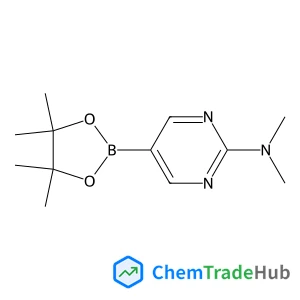
N,N-Dimethyl-5-(4,4,5,5-tetramethyl-1,3,2-dioxaborolan-2-yl)-2-pyrimidinamine
CAS Number:
1032759-30-0
Molecular Formula:
C12H20BN3O2
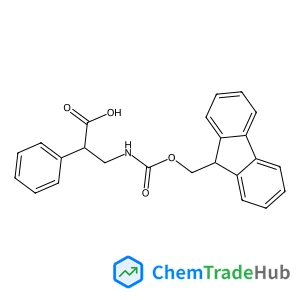
(S)-3-((((9H-Fluoren-9-yl)methoxy)carbonyl)amino)-2-phenylpropanoic acid
CAS Number:
1217663-60-9
Molecular Formula:
C24H21NO4
Recommended Suppliers




Disclaimer
This page provides academic journal information for reference and research purposes only. We are not affiliated with any journal publishers and do not handle publication submissions. For publication-related inquiries, please contact the respective journal publishers directly.
If you notice any inaccuracies in the information displayed, please contact us at support@chemtradehub.com. We will promptly review and address your concerns.