












Radical addition of ketones and cyanide to olefins via acid catalyzed formation of intermediate alkenyl peroxides
Literature Information
Publication Date
2019-04-18
DOI
10.1039/C9QO00447E
Impact Factor
5.281
Authors
Wen Shao, Marcel Lux, Martin Breugst, Martin Klussmann
View Original
Abstract
A Brønsted acid catalyzed method was developed for the synthesis of γ-cyanoketones from sulfonyl cyanides, olefins and ketones. The reaction is believed to proceed via intermediate formation of alkenyl peroxides by condensation of ketones with tert-butylhydroperoxide. These unstable compounds decompose by homolytic O–O bond cleavage, generating ketone-derived radicals which add to the olefins and generate the final products after reaction with the sulfonyl cyanide, thereby forming two new C–C bonds. A range of different ketones and olefins can be used, including steroidal ketones and simple alkyl olefins. The products can be further transformed to substituted lactones and piperidines, including a tetracyclic one. This reaction can thus be utilized to gain access to complex molecules from simple starting materials in only a few synthetic steps.
Related Literature
Functional galactomannan platform from convenient esterification in imidazolium-based ionic liquids
2011-12-23
Paper
DOI: 10.1039/C2PY00512C
Poly(dopamine acrylamide)-co-poly(propargyl acrylamide)-modified titanium surfaces for ‘click’ functionalization
Li Qun Xu, Hua Jiang, Koon-Gee Neoh, En-Tang Kang, Guo Dong Fu
2012-01-30
Paper
DOI: 10.1039/C2PY00552B
Metal-free click polymerization of propiolates and azides: facile synthesis of functional poly(aroxycarbonyltriazole)s
Hongkun Li, Jian Wang, Jing Zhi Sun, Rongrong Hu, Anjun Qin
2012-02-17
Paper
DOI: 10.1039/C2PY00586G
Supramolecular interaction facilitated small molecule films for organic field effect transistors
Arulraj Arulkashmir, Rajashree Y. Mahale, Satej S. Dharmapurikar, Manoj K. Jangid, Kothandam Krishnamoorthy
2012-04-30
Paper
DOI: 10.1039/C2PY20146A
One-step RAFT synthesis of well-defined amphiphilic star polymers and their self-assembly in aqueous solution
Christoph Herfurth, Paula Malo de Molina, Christoph Wieland, Sarah Rogers, Michael Gradzielski
2012-04-26
Paper
DOI: 10.1039/C2PY20126G
Cyclopenta[c]thiophene oligomers based solution processable D–A copolymers and their application as FET materials
Anjan Bedi, Satyaprasad P. Senanayak, Soumyajit Das, K. S. Narayan, Sanjio S. Zade
2012-04-27
Paper
DOI: 10.1039/C2PY20032E
Recent advances in (reactive) melt processing of cellulose acetate and related biodegradable bio-compositions
Robert Quintana, Olivier Persenaire, Leila Bonnaud, Philippe Dubois
2011-11-28
Minireview
DOI: 10.1039/C1PY00421B
A facile synthesis of a novel triptycene-containing A–B monomer: precursor to polymers of intrinsic microporosity
Bader S. Ghanem
2011-10-26
Communication
DOI: 10.1039/C1PY00423A
You might also like
Compound Q&A
Are there alternatives to 1-(4-Chlorophenyl)-N-hydroxymethanimine (CAS: 3848-36-0) in synthesis?
When considering alternatives to 1-(4-Chlorophenyl)-N-hydroxymethanimine (CAS: 3...
3848-36-01-(4-Chlorophenyl)-N...
Compound Q&A
How should (1R,9S,10S,12S,14E,16S,19R,20R,21S,22R)-3,9,21-Trihydroxy-5,10,12,14,16,20,22-heptamethyl-23,24-dioxatetracyclo[17.3.1.1~6,9~.0~2,7~]tetracosa-2,5,7,14-tetraen-4-one (CAS: 183202-73-5) be stored?
This compound should be stored in a cool, dry place away from direct sunlight. I...
183202-73-5(1R,9S,10S,12S,14E,1...
Compound Q&A
How is 3-(4-Bromophenyl)-5-(2-fluorophenyl)-1,2,4-oxadiazole (CAS: 419553-16-5) typically synthesized?
3-(4-Bromophenyl)-5-(2-fluorophenyl)-1,2,4-oxadiazole is synthesized through a m...
419553-16-53-(4-Bromophenyl)-5-...
Compound Q&A
How is 5-Chloro-2-(4-chlorophenyl)-4-methyl-6-[3-(1-piperidinyl)propoxy]pyrimidine (CAS: 1639220-19-1) typically synthesized?
5-Chloro-2-(4-chlorophenyl)-4-methyl-6-[3-(1-piperidinyl)propoxy]pyrimidine (CAS...
1639220-19-15-Chloro-2-(4-chloro...
Compound Q&A
What industries use 2-Chloro-4-(difluoromethoxy)pyridine (CAS: 1206978-15-5)?
2-Chloro-4-(difluoromethoxy)pyridine is used in the pharmaceutical industry for ...
1206978-15-52-Chloro-4-(difluoro...
Compound Q&A
What regulatory guidelines apply to 3-Chloro-6-methylpyridazine (CAS: 1121-79-5)?
3-Chloro-6-methylpyridazine (CAS: 1121-79-5) is classified under the Globally Ha...
1121-79-53-Chloro-6-methylpyr...
Compound Q&A
Are there alternatives to Methyl 4,5-dimethyl-2-nitrobenzoate in synthesis?
Several alternatives can be used in the synthesis of Methyl 4,5-dimethyl-2-nitro...
90922-74-0Methyl 4,5-dimethyl-...
Compound Q&A
Are there alternatives to (2E,2'E)-3,3'-(1,4-Phenylene)bisacrylaldehyde in synthesis?
Alternatives to (2E,2'E)-3,3'-(1,4-Phenylene)bisacrylaldehyde include other acry...
63405-68-5(2E,2'E)-3,3'-(1,4-P...
Compound Q&A
What is 3-Amino-5-chloropyridin-2-ol hydrochloride (CAS: 1261906-29-9)?
3-Amino-5-chloropyridin-2-ol hydrochloride is an organic compound with the CAS n...
1261906-29-93-Amino-5-chloropyri...
Compound Q&A
What precautions should be taken when handling 6,7-Difluoro-2,3-dihydro-4H-chromen-4-one (CAS: 1092349-93-3)?
When handling 6,7-Difluoro-2,3-dihydro-4H-chromen-4-one, it is essential to wear...
1092349-93-36,7-Difluoro-2,3-dih...
Source Journal
Organic Chemistry Frontiers

CiteScore:
7.8
Self-citation Rate:
8.7%
Articles per Year:
724
Organic Chemistry Frontiers publishes high-quality research from across organic chemistry. Emphases are placed on studies that make significant contributions to the field of organic chemistry by reporting either new or significantly improved protocols or methodologies. Topics include, but are not limited to the following: Organic synthesis Development of synthetic methodologies Catalysis Natural products Functional organic materials Supramolecular and macromolecular chemistry Physical and computational organic chemistry
Recommended Compounds
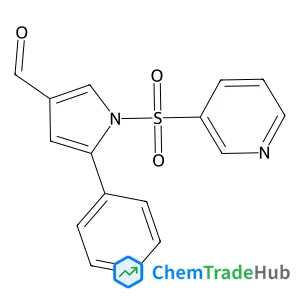
5-Phenyl-1-(pyridin-3-ylsulfonyl)-1H-pyrrole-3-carbaldehyde
CAS Number:
881676-90-0
Molecular Formula:
C16H12N2O3S
Recommended Suppliers




Disclaimer
This page provides academic journal information for reference and research purposes only. We are not affiliated with any journal publishers and do not handle publication submissions. For publication-related inquiries, please contact the respective journal publishers directly.
If you notice any inaccuracies in the information displayed, please contact us at support@chemtradehub.com. We will promptly review and address your concerns.