












Natural lignin nanoparticles: a promising nano-crosslinker for constructing fluorescent photoswitchable supramolecular hydrogels
Literature Information
Publication Date
2020-01-28
DOI
10.1039/C9PY01845J
Impact Factor
5.582
Authors
Xue Liu, Shumin Dong, Zhijun Chen, Chao He, Yonghao Zheng
View Original
Abstract
Photoresponsive supramolecular hydrogels using nanomaterials as crosslinkers with reversible sol–gel transition are attractive because their mechanical properties can be switched in a wide range by controlling light irradiation. Until now, most nano-crosslinkers for supramolecular hydrogels are limited to inorganic nanoparticles or synthetic micelles. In this work, we demonstrated the application of natural lignin nanoparticles as nano-crosslinkers to fabricate multifunctional photoresponsive supramolecular hydrogels. Photoswitchable and photoluminescent ternary supramolecular hydrogels were fabricated using polyacrylic acid (PAA), azobenzene guanidine (Azo-Gu) and α-cyclodextrin grafted cellulolytic enzyme lignin nanoparticles (α-CD@CEL-NPs). The aggregation-induced emission active fluorescence of α-CD@CEL-NPs makes the hydrogels strongly fluorescent under UV light excitation. Moreover, due to the photoresponsive host–guest interaction between Azo-Gu and α-CD@CEL-NPs, the ternary supramolecular hydrogels showed reversible sol–gel transition by controlling UV and blue light irradiation. This work may encourage the fabrication of more multifunctional supramolecular hydrogels with various functionalities in the future.
Related Literature
Explanation of the size dependent in-plane optical resonance of triangular silver nanoprisms
Andrea Knauer, J. Michael Koehler
2016-05-20
Paper
DOI: 10.1039/C6CP00953K
Ruthenium and ruthenium oxide nanofiber supports for enhanced activity of platinum electrocatalysts in the methanol oxidation reaction
Geon-Hyoung An, Eun-Hwan Lee
2016-05-03
Paper
DOI: 10.1039/C6CP01964A
Origin of non-linearity in phase solubility: solubilisation by cyclodextrin beyond stoichiometric complexation
Thomas W. J. Nicol, Seishi Shimizu
2016-05-20
Paper
DOI: 10.1039/C6CP01582D
Dispelling some myths about the CO2 solubility in ionic liquids
P. J. Carvalho, K. A. Kurnia, J. A. P. Coutinho
2016-05-04
Perspective
DOI: 10.1039/C6CP01896C
Fabrication of freestanding silk fibroin films containing Ag nanowires/NaYF4:Yb,Er nanocomposites with metal-enhanced fluorescence behavior
Bing Zhao, Ning Qi, Ke-Qin Zhang, Xiao Gong
2016-05-09
Paper
DOI: 10.1039/C6CP02024K
A computational study of the interaction of graphene structures with biomolecular units
Diego López Carballeira, Nicolás Ramos-Berdullas, Ignacio Pérez-Juste, José Luis Cagide Fajín, M. Natália D. S. Cordeiro, Marcos Mandado
2016-05-06
Paper
DOI: 10.1039/C6CP00545D
On the gas phase fragmentation of protonated uracil: a statistical perspective
Emilio Martínez-Núñez
2016-05-05
Paper
DOI: 10.1039/C6CP01657J
Electronic state-lifetime interference in resonant Auger spectra: a tool to disentangle overlapping core-excited states
Gildas Goldsztejn, Denis Céolin, Rajesh K. Kushawaha, Ralph Püttner
2016-05-06
Paper
DOI: 10.1039/C6CP01998F
Solvation structure around the Li+ ion in succinonitrile–lithium salt plastic crystalline electrolytes
Gang-Hua Deng, Chuanqi Ge, Yuhuan Tian, Guorong Wu, Xueming Yang, Junrong Zheng, Kaijun Yuan
2016-05-11
Paper
DOI: 10.1039/C6CP02878K
Electronic structures of intermolecular hydrogen bond contacts with solute in aqueous solution: glycine as a working prototype
Zijing Lin
2016-05-31
Paper
DOI: 10.1039/C5CP07968C
You might also like
Compound Q&A
Is 4-Benzyl-2,2-dimethylmorpholine (CAS: 84761-04-6) safe?
4-Benzyl-2,2-dimethylmorpholine is generally considered safe when handled under ...
84761-04-64-Benzyl-2,2-dimethy...
Compound Q&A
What is (5,6-Dimethoxy-3-pyridinyl)boronic acid (CAS: 1346526-61-1)?
(5,6-Dimethoxy-3-pyridinyl)boronic acid is a chemical compound with the molecula...
1346526-61-1(5,6-Dimethoxy-3-pyr...
Compound Q&A
How is 1,1,3,3-Tetramethyl-1,3-bis(2-methyl-2-propanyl)disiloxane (CAS: 67875-55-2) typically synthesized?
1,1,3,3-Tetramethyl-1,3-bis(2-methyl-2-propanyl)disiloxane is synthesized throug...
67875-55-21,1,3,3-Tetramethyl-...
Compound Q&A
What are the main uses of (2R,4S)-1-Boc-4-methylpyrrolidine-2-carboxylic acid (CAS: 1018818-04-6)?
(2R,4S)-1-Boc-4-methylpyrrolidine-2-carboxylic acid is primarily used as a build...
1018818-04-6(2R,4S)-1-Boc-4-meth...
Compound Q&A
What precautions should be taken when handling 2,3-Dichloroacrylonitrile (CAS: 22410-58-8)?
When handling 2,3-Dichloroacrylonitrile, it is crucial to wear appropriate perso...
22410-58-82,3-Dichloroacryloni...
Compound Q&A
How should (S)-1-(o-Tolyl)ethanamine hydrochloride (CAS: 1332832-16-2) be stored?
(S)-1-(o-Tolyl)ethanamine hydrochloride should be stored in a cool, dry place to...
1332832-16-2(S)-1-(o-Tolyl)ethan...
Compound Q&A
What are the physical and chemical properties of Benzyl [1-(hydroxyamino)-1-imino-2-methyl-2-propanyl]carbamate (CAS: 518047-98-8)?
Benzyl [1-(hydroxyamino)-1-imino-2-methyl-2-propanyl]carbamate (CAS: 518047-98-8...
518047-98-8Benzyl [1-(hydroxyam...
Compound Q&A
What industries use 2-Methyloxazole-5-carbaldehyde (CAS: 885273-42-7)?
2-Methyloxazole-5-carbaldehyde is used in the pharmaceutical industry for the sy...
885273-42-72-Methyloxazole-5-ca...
Compound Q&A
What is the market or research trend for 2-Methyl-2-propanyl 4-[(1S)-1-hydroxyethyl]-1-piperidinecarboxylate (CAS: 389889-82-1)?
The market for 2-Methyl-2-propanyl 4-[(1S)-1-hydroxyethyl]-1-piperidinecarboxyla...
389889-82-12-Methyl-2-propanyl ...
Compound Q&A
Is 1-Butyl-3-methylpyridinium bromide (CAS: 26576-85-2) safe?
1-Butyl-3-methylpyridinium bromide is generally considered safe for laboratory u...
26576-85-21-Butyl-3-methylpyri...
Source Journal
Polymer Chemistry

CiteScore:
8.6
Self-citation Rate:
7.3%
Articles per Year:
457
Polymer Chemistry welcomes submissions in all areas of polymer science that have a strong focus on macromolecular chemistry. Manuscripts may cover a broad range of fields, yet no direct application focus is required.
Recommended Compounds
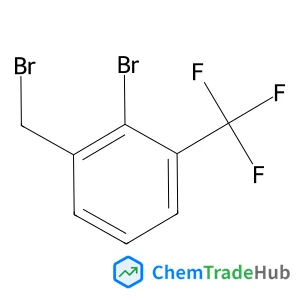
2-Bromo-1-(bromomethyl)-3-(trifluoromethyl)benzene
CAS Number:
1214372-35-6
Molecular Formula:
C8H5Br2F3
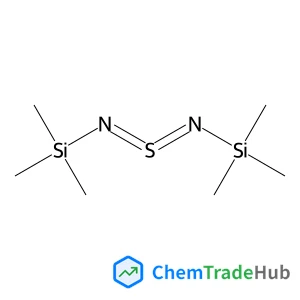
1,3-Bis(trimethylsilyl)-2lambda~4~-diazathia-1,2-diene
CAS Number:
18156-25-7
Molecular Formula:
C6H18N2SSi2
Recommended Suppliers








Disclaimer
This page provides academic journal information for reference and research purposes only. We are not affiliated with any journal publishers and do not handle publication submissions. For publication-related inquiries, please contact the respective journal publishers directly.
If you notice any inaccuracies in the information displayed, please contact us at support@chemtradehub.com. We will promptly review and address your concerns.