












Synthesis and stereochemistry of helical polyurethanes based on 2,2′-dihydroxy-1,1′-binaphthyl and diisocyanatobenzenes
Literature Information
Publication Date
2019-11-11
DOI
10.1039/C9PY01348B
Impact Factor
5.582
Authors
Heshuang Dai, Yukatsu Shichibu, Yoshitane Imai, Nobuyuki Hara, Katsuaki Konishi, Zhiyi Song
View Original
Abstract
Polyaddition between 2,2′-dihydroxy-1,1′-binaphthyl (BINOL) and 1,4-diisocyanatobenzene (14DIB) and that between BINOL and 1,3-diisocyanatobenzene (13DIB) were conducted leading to optically active, helical polyurethanes, poly(BINOL-alt-14DIB) and poly(BINOL-alt-13DIB), respectively. In BINOL-14DIB systems, cyclic dimers were formed along with helical, linear poly(BINOL-alt-14DIB) where the content of dimers was higher at a lower ee of BINOL and the yield of higher-molar-mass, linear polymers was higher at a higher ee of BINOL in feed. (R,R)-, (R,S)-, and (S,S)-Cyclic dimers were completely resolved and separated by chiral HPLC. The (R,S)-cyclic dimer was preferred over (R,R)- and (S,S)-cyclic dimers, while in the reaction using racemic BINOL, the (R,R)-cyclic dimer was preferred over the other isomers at 25–75% ee of (R)-BINOL in feed. Poly(BINOL-alt-14DIB) is proposed to be composed of sequences with rather contiguous (R)-BINOL units as the majority component with rather sporadically incorporated (S)-units as the minor component. Helical sense excess appears to be greater than expected from the ee of BINOL units in the chain, suggesting that (S)-BINOL units sporadically incorporated in a rather contiguous (R)-BINOL unit sequence become a part of the left-handed helical conformation controlled by the chiral influence of contiguous (R)-BINOL units. In addition, the chiral conformation of poly(BINOL-alt-14DIB) and BINOL-14DIB cyclic dimers appeared to be stabilized or enhanced in the solid state. The BINOL-13DIB systems produced linear dimers as major components of the dimer whose content was almost constant regardless of the ee of BINOL in feed. Poly(BINOL-alt-13DIB) is proposed to be composed of sequences with rather randomly distributed (R)- and (S)-BINOL units and may be characterized by sharp, left-handed turns based on BINOL chirality forming a longer-pitched, left-handed helix.
Related Literature
Three-dimensional ruthenium-doped TiO2 sea urchins for enhanced visible-light-responsive H2 production
Thuy-Duong Nguyen-Phan, Jordi Llorca, Shawn Sallis, Shyam Kattel, Wenqian Xu, Louis F. J. Piper, Dmitry E. Polyansky, Sanjaya D. Senanayake, Dario J. Stacchiola
2016-05-23
Paper
DOI: 10.1039/C6CP00472E
Dispelling some myths about the CO2 solubility in ionic liquids
P. J. Carvalho, K. A. Kurnia, J. A. P. Coutinho
2016-05-04
Perspective
DOI: 10.1039/C6CP01896C
First-principles study of thermal properties of borophene
Hongyi Sun, Qingfang Li, X. G. Wan
2016-05-03
Paper
DOI: 10.1039/C6CP02029A
Photoinduced charge-transfer dynamics simulations in noncovalently bonded molecular aggregates
Carlos R. Medrano, M. Belén Oviedo, Cristián G. Sánchez
2016-05-11
Paper
DOI: 10.1039/C6CP00231E
Low electron-polar optical phonon scattering as a fundamental aspect of carrier mobility in methylammonium lead halide CH3NH3PbI3 perovskites
A. Filippetti, A. Mattoni, C. Caddeo, M. I. Saba, P. Delugas
2016-05-09
Paper
DOI: 10.1039/C6CP01402J
Connectivity matters – ultrafast isomerization dynamics of bisazobenzene photoswitches
Chavdar Slavov, Chong Yang, Luca Schweighauser, Chokri Boumrifak, Andreas Dreuw, Hermann A. Wegner, Josef Wachtveitl
2016-03-09
Paper
DOI: 10.1039/C6CP00603E
Mechanisms and energetics for N-glycosidic bond cleavage of protonated adenine nucleosides: N3 protonation induces base rotation and enhances N-glycosidic bond stability
R. R. Wu, M. T. Rodgers
2016-05-20
Paper
DOI: 10.1039/C6CP01445C
Phase transitions in hydrophobe/phospholipid mixtures: hints at connections between pheromones and anaesthetic activity
Silvia Borsacchi, Marco Geppi, Sara Macchi, Emiliano Fratini, Moira Ambrosi
2016-05-06
Paper
DOI: 10.1039/C6CP00659K
Legitimate intermediates of oxygen evolution on iridium oxide revealed by in situ electrochemical evanescent wave spectroscopy
Hideshi Ooka, Yuanqing Wang, Akira Yamaguchi, Makoto Hatakeyama, Shinichiro Nakamura, Kazuhito Hashimoto, Ryuhei Nakamura
2016-05-12
Paper
DOI: 10.1039/C6CP02385A
You might also like
Compound Q&A
Is 4-Benzyl-2,2-dimethylmorpholine (CAS: 84761-04-6) safe?
4-Benzyl-2,2-dimethylmorpholine is generally considered safe when handled under ...
84761-04-64-Benzyl-2,2-dimethy...
Compound Q&A
What is (5,6-Dimethoxy-3-pyridinyl)boronic acid (CAS: 1346526-61-1)?
(5,6-Dimethoxy-3-pyridinyl)boronic acid is a chemical compound with the molecula...
1346526-61-1(5,6-Dimethoxy-3-pyr...
Compound Q&A
How is 1,1,3,3-Tetramethyl-1,3-bis(2-methyl-2-propanyl)disiloxane (CAS: 67875-55-2) typically synthesized?
1,1,3,3-Tetramethyl-1,3-bis(2-methyl-2-propanyl)disiloxane is synthesized throug...
67875-55-21,1,3,3-Tetramethyl-...
Compound Q&A
What are the main uses of (2R,4S)-1-Boc-4-methylpyrrolidine-2-carboxylic acid (CAS: 1018818-04-6)?
(2R,4S)-1-Boc-4-methylpyrrolidine-2-carboxylic acid is primarily used as a build...
1018818-04-6(2R,4S)-1-Boc-4-meth...
Compound Q&A
What precautions should be taken when handling 2,3-Dichloroacrylonitrile (CAS: 22410-58-8)?
When handling 2,3-Dichloroacrylonitrile, it is crucial to wear appropriate perso...
22410-58-82,3-Dichloroacryloni...
Compound Q&A
How should (S)-1-(o-Tolyl)ethanamine hydrochloride (CAS: 1332832-16-2) be stored?
(S)-1-(o-Tolyl)ethanamine hydrochloride should be stored in a cool, dry place to...
1332832-16-2(S)-1-(o-Tolyl)ethan...
Compound Q&A
What are the physical and chemical properties of Benzyl [1-(hydroxyamino)-1-imino-2-methyl-2-propanyl]carbamate (CAS: 518047-98-8)?
Benzyl [1-(hydroxyamino)-1-imino-2-methyl-2-propanyl]carbamate (CAS: 518047-98-8...
518047-98-8Benzyl [1-(hydroxyam...
Compound Q&A
What industries use 2-Methyloxazole-5-carbaldehyde (CAS: 885273-42-7)?
2-Methyloxazole-5-carbaldehyde is used in the pharmaceutical industry for the sy...
885273-42-72-Methyloxazole-5-ca...
Compound Q&A
What is the market or research trend for 2-Methyl-2-propanyl 4-[(1S)-1-hydroxyethyl]-1-piperidinecarboxylate (CAS: 389889-82-1)?
The market for 2-Methyl-2-propanyl 4-[(1S)-1-hydroxyethyl]-1-piperidinecarboxyla...
389889-82-12-Methyl-2-propanyl ...
Compound Q&A
Is 1-Butyl-3-methylpyridinium bromide (CAS: 26576-85-2) safe?
1-Butyl-3-methylpyridinium bromide is generally considered safe for laboratory u...
26576-85-21-Butyl-3-methylpyri...
Source Journal
Polymer Chemistry

CiteScore:
8.6
Self-citation Rate:
7.3%
Articles per Year:
457
Polymer Chemistry welcomes submissions in all areas of polymer science that have a strong focus on macromolecular chemistry. Manuscripts may cover a broad range of fields, yet no direct application focus is required.
Recommended Compounds
![3-({2-[(2R,4S)-4-Fluoro-2-methyl-1-pyrrolidinyl]-2-oxoethyl}amino)-3-methyl-1-(1-pyrrolidinyl)-1-butanone structure](https://static.chemtradehub.com/structs/118/1186426-66-3-b2e9.webp "3-({2-[(2R,4S)-4-Fluoro-2-methyl-1-pyrrolidinyl]-2-oxoethyl}amino)-3-methyl-1-(1-pyrrolidinyl)-1-butanone structure")
3-({2-[(2R,4S)-4-Fluoro-2-methyl-1-pyrrolidinyl]-2-oxoethyl}amino)-3-methyl-1-(1-pyrrolidinyl)-1-butanone
CAS Number:
1186426-66-3
Molecular Formula:
C16H28FN3O2
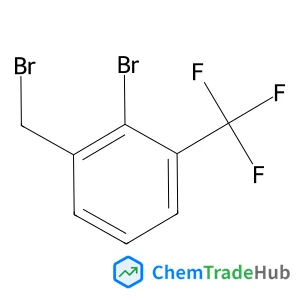
2-Bromo-1-(bromomethyl)-3-(trifluoromethyl)benzene
CAS Number:
1214372-35-6
Molecular Formula:
C8H5Br2F3
Recommended Suppliers





Disclaimer
This page provides academic journal information for reference and research purposes only. We are not affiliated with any journal publishers and do not handle publication submissions. For publication-related inquiries, please contact the respective journal publishers directly.
If you notice any inaccuracies in the information displayed, please contact us at support@chemtradehub.com. We will promptly review and address your concerns.