












[2 + 1 + 1] Assembly of spiro β-lactams by Rh(ii)-catalyzed reaction of diazocarbonyl compounds with azirines/isoxazoles
Literature Information
Publication Date
2019-06-21
DOI
10.1039/C9OB01301F
Impact Factor
3.876
Authors
Artem A. Golubev, Ilia A. Smetanin, Anastasiya V. Agafonova, Nikolai V. Rostovskii, Alexander F. Khlebnikov, Galina L. Starova, Mikhail S. Novikov
View Original
Abstract
A domino synthesis of dispiro-fused N-vinyl β-lactams from diazo-Meldrum's acid and 2H-azirines or 5-alkoxyisoxazoles via the “2-azabuta-1,3-diene formation/Staudinger ketene-imine cycloaddition” sequence is described. The Rh2(Piv)4-catalyzed formation of the 2-azabuta-1,3-diene intermediates in the first stage of the reaction sequence proceeds via addition of the rhodium carbenoid to the azirines/isoxazoles and provides the first example of the generation of iminium-type ylides from diazo-Meldrum's acid. This methodology was extended to monospiro-β-lactams, which were synthesized in two steps using acyclic α-diazocarbonyl compounds in the stage of the formation of 2-azabuta-1,3-dienes. The method allows for the rapid assemblage of the carbon part of the azetidin-2-one system from diazo compounds only and affords spiro- and dispiro-β-lactams in moderate yields. A bromine atom in the 2-bromoalkenyl moiety of the synthesized β-lactams can be easily substituted by hydrogen under catalytic hydrogenation conditions or by 2-pyridyl-substituent via the Stille cross-coupling reaction.
Related Literature
Endeavour to simplify the frustrated concept of protein-ammonium family ionic liquid interactions
Indrani Jha, Pannuru Venkatesu
2015-06-22
Perspective
DOI: 10.1039/C5CP01735A
Al atom on MoO3(010) surface: adsorption and penetration using density functional theory
Hong-Zhang Wu, Sateesh Bandaru, Da Wang, Jin Liu, Zhenling Wang, Li-Li Li
2016-02-10
Paper
DOI: 10.1039/C5CP07440A
Phase transition kinetics and surface binding states of methylammonium lead iodide perovskite
G. Rajendra Kumar, A. Dennyson Savariraj, S. N. Karthick, S. Selvam, B. Balamuralitharan, Hee-Je Kim, K. K. Viswanathan, M. Vijaykumar
2016-02-09
Paper
DOI: 10.1039/C5CP06232B
Structural transition upon hydrogenation of B20 at different charge states: from tubular to disk-like, and to cage-like
Bing Bai, Hui Bai
2016-01-18
Paper
DOI: 10.1039/C5CP07731A
Novel porphyrin-preparation, characterization, and applications in solar energy conversion
Jianfeng Lu, Hao Li, Shuangshuang Liu, Yu-Cheng Chang, Hui-Ping Wu, Eric Wei-Guang Diau, Mingkui Wang
2016-02-04
Paper
DOI: 10.1039/C5CP05658F
Local environments of boron heteroatoms in non-crystalline layered borosilicates
Mounesha N. Garaga, Ming-Feng Hsieh, Zalfa Nour, Michael Deschamps, Dominique Massiot, Bradley F. Chmelka, Sylvian Cadars
2015-07-15
Paper
DOI: 10.1039/C5CP03448E
Ultraviolet-light-driven doping modulation in chemical vapor deposition grown graphene
M. W. Iqbal, M. F. Khan, Jonghwa Eom
2015-07-08
Paper
DOI: 10.1039/C5CP02159F
Collisional excitation of CH(X2Π) by He: new ab initio potential energy surfaces and scattering calculations
Sarantos Marinakis, Indigo Lily Dean, Jacek Kłos, François Lique
2015-07-29
Paper
DOI: 10.1039/C5CP03696H
A general view on the reactivity of the oxygen-functionalized graphene basal plane
Ana S. Dobrota, Igor A. Pašti
2016-02-01
Paper
DOI: 10.1039/C5CP07612A
You might also like
Compound Q&A
What is 1-(2,4,6-Trifluorophenyl)ethanol (CAS: 1250113-83-7)?
1-(2,4,6-Trifluorophenyl)ethanol is an organic compound with the CAS number 1250...
1250113-83-71-(2,4,6-Trifluoroph...
Compound Q&A
Is 1-(2,4-Dimethoxybenzyl)-4-(hydroxymethyl)-2-pyrrolidinone (CAS: 919111-34-5) safe?
1-(2,4-Dimethoxybenzyl)-4-(hydroxymethyl)-2-pyrrolidinone (CAS: 919111-34-5) is ...
919111-34-51-(2,4-Dimethoxybenz...
Compound Q&A
What are the physical and chemical properties of (7S,15R)-6β,15-Diacetoxy-7α,20-epoxy-7-hydroxykaura-2,16-dien-1-one (CAS: 51419-51-3)?
(7S,15R)-6β,15-Diacetoxy-7α,20-epoxy-7-hydroxykaura-2,16-dien-1-one is a crystal...
51419-51-3(7S,15R)-6β,15-Diace...
Compound Q&A
What regulatory guidelines apply to rac-ethyl (1r,4r)-4-hydroxycyclohexane-1-carboxylate, trans (CAS: 3618-04-0)?
The compound rac-ethyl (1r,4r)-4-hydroxycyclohexane-1-carboxylate, trans (CAS: 3...
3618-04-0rac-ethyl (1r,4r)-4-...
Compound Q&A
What is the market or research trend for 2-(2,4-Difluorophenoxy)-3-nitropyridine (CAS: 175135-62-3)?
The market for 2-(2,4-Difluorophenoxy)-3-nitropyridine (CAS: 175135-62-3) is cur...
175135-62-32-(2,4-Difluoropheno...
Compound Q&A
What are the main uses of 6-Diazo-5-oxo-L-norleucine (CAS: 157-03-9)?
The main uses of 6-Diazo-5-oxo-L-norleucine (CAS: 157-03-9) include research in ...
157-03-96-Diazo-5-oxo-L-norl...
Compound Q&A
What precautions should be taken when handling 2-Aminoethyl-mono-amide-DOTA-tris(tBu ester) (CAS: 173308-19-5)?
When handling 2-Aminoethyl-mono-amide-DOTA-tris(tBu ester) (CAS: 173308-19-5), i...
173308-19-52-Aminoethyl-mono-am...
Compound Q&A
How is 5-Methylimidazo[1,2-a]pyridine-3-carbaldehyde (CAS: 178488-37-4) typically synthesized?
5-Methylimidazo[1,2-a]pyridine-3-carbaldehyde (CAS: 178488-37-4) can be synthesi...
178488-37-45-Methylimidazo[1,2-...
Compound Q&A
Are there alternatives to 2,4,6-Trihydroxyisophthalaldehyde (CAS: 4396-13-8) in synthesis?
There are alternative reagents that can be used in the synthesis of 2,4,6-Trihyd...
4396-13-82,4,6-Trihydroxyisop...
Compound Q&A
What is (2Z)-3-(5-Fluoro-1H-indol-3-yl)-2-sulfanylacrylic acid (CAS: 179461-52-0)?
(2Z)-3-(5-Fluoro-1H-indol-3-yl)-2-sulfanylacrylic acid is a chemical compound wi...
179461-52-0(2Z)-3-(5-Fluoro-1H-...
Source Journal
Organic & Biomolecular Chemistry

CiteScore:
3.4
Self-citation Rate:
10.3%
Articles per Year:
1041
Organic & Biomolecular Chemistry (OBC) publishes original and high impact research and reviews in organic chemistry. We welcome research that shows new or significantly improved protocols or methodologies in total synthesis, synthetic methodology or physical and theoretical organic chemistry as well as research that shows a significant advance in the organic chemistry or molecular design aspects of chemical biology, catalysis, supramolecular and macromolecular chemistry, theoretical chemistry, mechanism-oriented physical organic chemistry, medicinal chemistry or natural products. Articles published in the journal should report new work which makes a highly-significant impact in the field. Routine and incremental work is generally not suitable for publication in the journal. More details about key areas of our scope are below. In all cases authors should include in their article clear rationale for why their research has been carried out.
Recommended Compounds
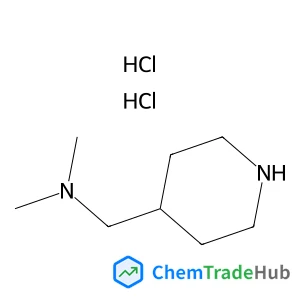
N,N-dimethyl(piperidin-4-yl)methanamine hydrochloride
CAS Number:
172281-72-0
Molecular Formula:
C8H20Cl2N2

Recommended Suppliers







Disclaimer
This page provides academic journal information for reference and research purposes only. We are not affiliated with any journal publishers and do not handle publication submissions. For publication-related inquiries, please contact the respective journal publishers directly.
If you notice any inaccuracies in the information displayed, please contact us at support@chemtradehub.com. We will promptly review and address your concerns.