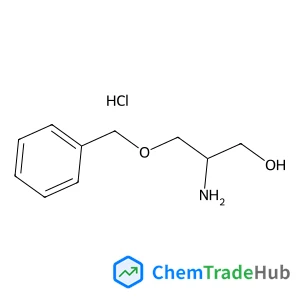
(R)-2-amino-3-(benzyloxy)propan-1-ol hydrochloride
CAS Number:
58577-95-0
Molecular Formula:
C10H16ClNO2
Manoj D. Patil, Rai-Shung Liu
This work reports a facile annulation of anthranils with aryloxyethynes or aryl propargyl ethers to construct useful benzofuro[2,3-b]quinoline and 6H-chromeno[3,4-b]quinoline frameworks, respectively; these heterocycles are not readily available from literature methods despite their biological significance. This high atom- and step-economy strategy is highlighted by a broad substrate scope. The reaction mechanism is proposed to proceed through sequential cyclizations among the oxyaryl group, gold carbene and benzaldehyde of the α-imino gold carbene intermediates.
P. R. Birkin, D. G. Offin, C. J. B. Vian, T. G. Leighton
DOI: 10.1039/C5CP02933C
Sylwia Całus, Lech Borowik, Andriy V. Kityk, Manfred Eich, Mark Busch, Patrick Huber
DOI: 10.1039/C5CP03039K
A. Jolt Oostra, Edsger C. P. Smits, Dago M. de Leeuw, Paul W. M. Blom
DOI: 10.1039/C5CP03156G
Ivan Kassal
DOI: 10.1039/C6CP00104A
Sujin Ham, Ji-Eun Lee, Suhwan Song, Xiaobin Peng, Takaaki Hori, Naoki Aratani, Atsuhiro Osuka, Eunji Sim, Dongho Kim
DOI: 10.1039/C5CP06859B
Emilian Tuca, Irina Paci
DOI: 10.1039/C5CP04479K
Young-Tae Kim, Young-Hoon Kim, Tae-Woo Lee
DOI: 10.1039/C5CP03436A
Bo Meng, Wen-zhi Xiao, Ling-ling Wang, Li Yue, Song Zhang, Hong-yun Zhang
DOI: 10.1039/C5CP03794H
Michael W. Jones, Thembanikosi G. Gaule, Michael J. McPherson, Jonathan R. Dilworth, Christiane R. Timmel
DOI: 10.1039/C5CP06096F
Phuong D. Dau, P. B. Armentrout, Maria C. Michelini, John K. Gibson
DOI: 10.1039/C6CP00494F
1-(2,4,6-Trifluorophenyl)ethanol is an organic compound with the CAS number 1250...
1-(2,4-Dimethoxybenzyl)-4-(hydroxymethyl)-2-pyrrolidinone (CAS: 919111-34-5) is ...
(7S,15R)-6β,15-Diacetoxy-7α,20-epoxy-7-hydroxykaura-2,16-dien-1-one is a crystal...
The compound rac-ethyl (1r,4r)-4-hydroxycyclohexane-1-carboxylate, trans (CAS: 3...
The market for 2-(2,4-Difluorophenoxy)-3-nitropyridine (CAS: 175135-62-3) is cur...
The main uses of 6-Diazo-5-oxo-L-norleucine (CAS: 157-03-9) include research in ...
When handling 2-Aminoethyl-mono-amide-DOTA-tris(tBu ester) (CAS: 173308-19-5), i...
5-Methylimidazo[1,2-a]pyridine-3-carbaldehyde (CAS: 178488-37-4) can be synthesi...
There are alternative reagents that can be used in the synthesis of 2,4,6-Trihyd...
(2Z)-3-(5-Fluoro-1H-indol-3-yl)-2-sulfanylacrylic acid is a chemical compound wi...

Organic & Biomolecular Chemistry (OBC) publishes original and high impact research and reviews in organic chemistry. We welcome research that shows new or significantly improved protocols or methodologies in total synthesis, synthetic methodology or physical and theoretical organic chemistry as well as research that shows a significant advance in the organic chemistry or molecular design aspects of chemical biology, catalysis, supramolecular and macromolecular chemistry, theoretical chemistry, mechanism-oriented physical organic chemistry, medicinal chemistry or natural products. Articles published in the journal should report new work which makes a highly-significant impact in the field. Routine and incremental work is generally not suitable for publication in the journal. More details about key areas of our scope are below. In all cases authors should include in their article clear rationale for why their research has been carried out.
![2-Methyl-2-propanyl 1,6-diazaspiro[3.4]octane-6-carboxylate structure](https://static.chemtradehub.com/structs/115/1158749-79-1-81ee.webp "2-Methyl-2-propanyl 1,6-diazaspiro[3.4]octane-6-carboxylate structure")
![2-(Methylsulfonyl)-2,4,5,6-tetrahydropyrrolo[3,4-c]pyrazole structure](https://static.chemtradehub.com/structs/122/1226781-80-1-09d5.webp "2-(Methylsulfonyl)-2,4,5,6-tetrahydropyrrolo[3,4-c]pyrazole structure")