












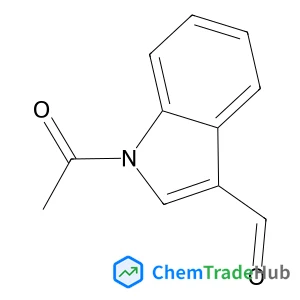
Photochemical C–H bond coupling for (hetero)aryl C(sp2)–C(sp3) bond construction
Literature Information
Publication Date
2019-04-20
DOI
10.1039/C9OB00244H
Impact Factor
3.876
Authors
Wujiong Xia
View Original
Abstract
Alkylated (hetero)arenes constitute one of the most fundamental skeletons in organic molecules, which prompts a growing number of research studies on the construction of (hetero)aryl C(sp2)–C(sp3) bonds especially using C–H bonds of feedstocks. With the flourishing resurgence of photoredox catalysis in organic synthesis, fruitful achievements have been witnessed in photochemical (hetero)aryl C(sp2)–C(sp3) bond formation through C–H bond coupling such as (hetero)arylation of C(sp3)–H bonds and alkylation of (hetero)aryl C(sp2)–H bonds. Photoinduced generation of alkyl radicals from various alkylating agents is the key point to the success of these reactions. This review will summarise advances in this area with emphasis on the reaction mechanisms.
Related Literature
Redistribution of valence and conduction band states depending on the method of modification of SiO2 structure
A. S. Konashuk, E. O. Filatova
2017-09-07
Paper
DOI: 10.1039/C7CP04914E
Electronic excitation induced hydrogen-bond adjustment and lattice control in organic–inorganic hybrid cubic perovskites: a fixed occupation molecular dynamics study
Mo-Ran Wang, Xiang-Yang Ren, Nian-Ke Chen, Hong-Bo Sun
2017-09-01
Paper
DOI: 10.1039/C7CP05034H
Increasing the lifetimes of charge separated states in porphyrin–fullerene polyads
Di Gao, Shawkat M. Aly, Paul-Ludovic Karsenti, Gessie Brisard, Pierre D. Harvey
2017-07-31
Paper
DOI: 10.1039/C7CP04193D
A first principles study of spinel ZnFe2O4 for electrode materials in lithium-ion batteries
Haoyue Guo, Yiman Zhang
2017-09-06
Paper
DOI: 10.1039/C7CP04590E
Self-assembled bundled TiO2 nanowire arrays encapsulated with indium tin oxide for broadband absorption in plasmonic photocatalysis
Xingce Fan, Zhengwei Luo, Xiangyu Hou, Xiaozhi Yang, Teng Qiu, Paul K. Chu
2017-09-14
Paper
DOI: 10.1039/C7CP04196A
Two coexisting liquid phases in switchable ionic liquids
Juan Yao, David B. Lao, Xiao Sui, Yufan Zhou, Satish K. Nune, Xiang Ma, Tyler P. Troy, Musa Ahmed, Zihua Zhu, David J. Heldebrant, Xiao-Ying Yu
2017-06-23
Communication
DOI: 10.1039/C7CP03754F
A new insight for ohmic contacts to MoS2: by tuning MoS2 affinity energies but not metal work-functions
Bei Deng, Xingqiang Shi
2017-09-05
Paper
DOI: 10.1039/C7CP05109C
Electrostatic interactions in concentrated colloidal dispersions
2017-07-03
Paper
DOI: 10.1039/C7CP02594G
Capture of Xe and Ar atoms by quantized vortices in 4He nanodroplets
2017-09-04
Paper
DOI: 10.1039/C7CP03307A
You might also like
Compound Q&A
What is 3-Fluoro-2-methylbenzylamine (CAS: 771573-36-5)?
3-Fluoro-2-methylbenzylamine is an organic compound with the CAS number 771573-3...
771573-36-53-Fluoro-2-methylben...
Compound Q&A
Is Tert-butyl 2-(oxetan-3-ylidene)acetate (CAS: 1207175-03-8) safe?
Tert-butyl 2-(oxetan-3-ylidene)acetate is considered safe for its intended uses ...
1207175-03-8Tert-butyl 2-(oxetan...
Compound Q&A
What precautions should be taken when handling 4-Acetyl-2-fluorobenzonitrile (CAS: 214760-18-6)?
Proper personal protective equipment (PPE) such as gloves, goggles, and a lab co...
214760-18-64-Acetyl-2-fluoroben...
Compound Q&A
How is 2-Ethyl-4-methyl-1,3-thiazole (CAS: 15679-12-6) typically synthesized?
2-Ethyl-4-methyl-1,3-thiazole is commonly synthesized via the reaction of thiour...
15679-12-62-Ethyl-4-methyl-1,3...
Compound Q&A
How should 5',5''-([2,2'-Bithiophene]-5,5'-diyl)bis(([1,1':3',1''-terphenyl]-4,4''-dicarboxylic acid)) (CAS: 1227780-71-3) be stored?
This compound should be stored in a cool, dry place away from direct sunlight an...
1227780-71-35',5''''-([2,2'-Bith...
Compound Q&A
What regulatory guidelines apply to L-Lysine Acetate Salt (CAS: 52315-92-1)?
L-Lysine Acetate Salt (CAS: 52315-92-1) is subject to various regulatory guideli...
52315-92-1L-LYSINE ACETATE SAL...
Compound Q&A
Is 6-Fluoro-3-hydroxy-2-pyrazinecarboxamide (CAS: 259793-96-9) safe?
6-Fluoro-3-hydroxy-2-pyrazinecarboxamide (CAS: 259793-96-9) is generally conside...
259793-96-96-Fluoro-3-hydroxy-2...
Compound Q&A
What are the physical and chemical properties of 1,1'-Sulfonylbis(1H-imidazole) (CAS: 7189-69-7)?
1,1'-Sulfonylbis(1H-imidazole) is a crystalline solid with a molecular weight of...
7189-69-71,1'-Sulfonylbis(1H-...
Compound Q&A
What industries use 4-methyl-7-nitro-1H-indole-3-carbonitrile (CAS: 289483-82-5)?
4-Methyl-7-nitro-1H-indole-3-carbonitrile (CAS: 289483-82-5) is primarily used i...
289483-82-54-methyl-7-nitro-1H-...
Compound Q&A
How should waste containing 5-Bromo-3-indolyl-beta-galactoside (CAS: 97753-82-7) be handled?
Waste containing 5-Bromo-3-indolyl-beta-galactoside (CAS: 97753-82-7) should be ...
97753-82-75-Bromo-3-indolyl-be...
Source Journal
Organic & Biomolecular Chemistry

CiteScore:
3.4
Self-citation Rate:
10.3%
Articles per Year:
1041
Organic & Biomolecular Chemistry (OBC) publishes original and high impact research and reviews in organic chemistry. We welcome research that shows new or significantly improved protocols or methodologies in total synthesis, synthetic methodology or physical and theoretical organic chemistry as well as research that shows a significant advance in the organic chemistry or molecular design aspects of chemical biology, catalysis, supramolecular and macromolecular chemistry, theoretical chemistry, mechanism-oriented physical organic chemistry, medicinal chemistry or natural products. Articles published in the journal should report new work which makes a highly-significant impact in the field. Routine and incremental work is generally not suitable for publication in the journal. More details about key areas of our scope are below. In all cases authors should include in their article clear rationale for why their research has been carried out.
Recommended Compounds
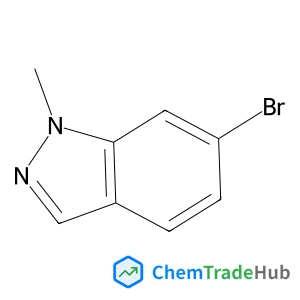
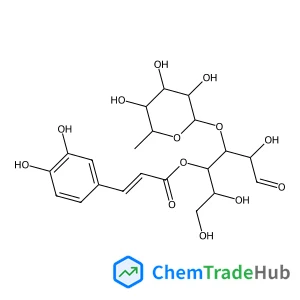
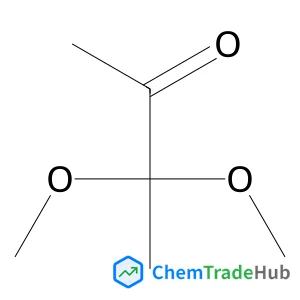
Recommended Suppliers






Disclaimer
This page provides academic journal information for reference and research purposes only. We are not affiliated with any journal publishers and do not handle publication submissions. For publication-related inquiries, please contact the respective journal publishers directly.
If you notice any inaccuracies in the information displayed, please contact us at support@chemtradehub.com. We will promptly review and address your concerns.