












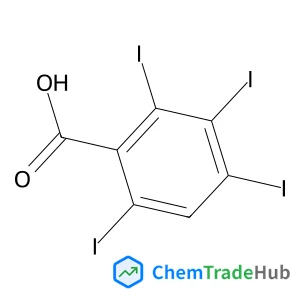
A long lasting sunscreen controversy of 4-aminobenzoic acid and 4-dimethylaminobenzaldehyde derivatives resolved by ultrafast spectroscopy combined with density functional theoretical study
Literature Information
Publication Date
2020-04-02
DOI
10.1039/C9CP07014A
Impact Factor
3.676
Authors
Chris Tsz-Leung Chan, Chensheng Ma, Ruth Chau-Ting Chan, Hui-Min Ou, Han-Xin Xie, Allen Ka-Wa Wong, Ming-Liang Wang, Wai-Ming Kwok
View Original
Abstract
4-Aminobenzoic acid (PABA) is one of the earliest patented and most commonly used sunscreen components. There is however a long-lasting controversy on its photo-protective efficacy owing to the lack of information on its protolytic equilibrium and photo-dynamics after absorption of ultraviolet radiation in physiologically relevant aqueous solution. The excitation dynamics in water also remains largely unknown for analogs of PABA such as 4-dimethylaminoacetophenone (DMAAP) and 4-dimethylaminobenzaldehyde (DMABA) which are recognized as prototypes for photo-induced twisted intramolecular charge transfer (TICT). Herein we report a combined application of femtosecond broadband time-resolved fluorescence and transient absorption coupled with density functional theoretical study for PABA, DMAAP, and DMABA under several solvent conditions with representative properties in terms of the pH, polarity and hydrogen bonding capacity. The results we gained demonstrate that, in a neutral aqueous solution, PABA taking the deprotonated anion form in the ground state undergoes rapid protonation after excitation, producing excited state species in the neutral form that may shift effectively by intersystem crossing (ISC) to the long-lasting triplet state capable of damaging nucleic acids. This provides evidence at the molecular level for the detrimental effect of PABA if used as a sunscreen ingredient. In contrast, our investigation on DMAAP and DMABA unveils an unusual solvent controlled deactivation dynamics rendered by the participation of the carbonyl oxygen associated nOπ* state featuring energy and structure strongly responsive to solvent properties. In particular, these molecules in water exhibit solute–solvent hydrogen bonding at the sites of the carbonyl oxygen and the amino nitrogen which is, respectively, weakened and strengthened after the excitation, leading to state reversal and formation of a nOπ* state with a peculiar non-planar structure. This quenches strongly the excitation, eliminates the TICT, suppresses the ISC and opens up the otherwise inaccessible internal conversion (IC) to account for ∼80% of the entire deactivation. The IC, observed to proceed at a rate of ∼2.5 ps, allows the effective recovery of the ground state, providing substantial protection against ultraviolet irradiation. Moreover, the revelation of highly solvent sensitive fluorescence emission from DMABA and DMAAP implies the potential application of these molecules as the functional element in the design of sensory materials for probing the polarity and hydrogen bonding character of the surrounding environment.
Related Literature
High-throughput computational discovery of 3218 ultralow thermal conductivity and dynamically stable materials by dual machine learning models
Joshua Ojih, Chen Shen, Alejandro Rodriguez, Hongbin Zhang, Kamal Choudhary, Ming Hu
2023-10-31
Paper
DOI: 10.1039/D3TA04874H
Defect engineering: the role of cationic vacancies in photocatalysis and electrocatalysis
Wenming Ding, Shengbo Yuan, Yang Yang, Xiaoman Li, Min Luo
2023-10-17
Review Article
DOI: 10.1039/D3TA04947G
Halogen-engineered metal–organic frameworks enable high-performance electrochemical glucose sensing
Le Wang, Yong-Shuang Li, Yu Cao
2023-12-16
Paper
DOI: 10.1039/D3NJ05053J
Deposition of Pd nanoparticles on 2D Ni–Fe-MOF ultrathin nanosheets for efficient N-alkylation of amines by alcohols under visible light
Yun Yuan, Jiaqi Wang, Hurunqing Liu, Zhaohui Li
2023-10-23
Paper
DOI: 10.1039/D3TA04617F
Enhancing Li+ transport efficiency in solid-state Li-ion batteries with a ceramic-array-based composite electrolyte
Shu-Ming Yeh, Chia-Chen Li
2023-10-16
Paper
DOI: 10.1039/D3TA05329F
Facile one-pot synthesis of a waste copper phthalocyanine-derived nanocomposite for efficiently removing dyes from wastewater
Munazza Munshi, Tanzila Khan, Madhuri Bhakare, Ankita Kadam, Surajit Some
2024-01-09
Paper
DOI: 10.1039/D3NJ05351B
Sulfonate compounds embraced from acid copper electroplating baths as innovative additives for alkaline Zn batteries
Katerina Bogomolov, Ekaterina Grishina
2023-10-18
Paper
DOI: 10.1039/D3TA04612E
You might also like
Compound Q&A
How should waste containing N-Methoxy-N-methyl-1,3-thiazole-5-carboxamide (CAS: 898825-89-3) be handled?
Waste containing N-Methoxy-N-methyl-1,3-thiazole-5-carboxamide (CAS: 898825-89-3...
898825-89-3N-Methoxy-N-methyl-1...
Compound Q&A
How should N-(4-Biphenylyl)dibenzo[b,d]furan-4-amine (CAS: 1318338-47-4) be stored?
N-(4-Biphenylyl)dibenzo[b,d]furan-4-amine should be stored in a tightly sealed c...
1318338-47-4N-(4-Biphenylyl)dibe...
Compound Q&A
What is the market or research trend for 3-Acetamido-5-amino-2,4,6-triiodobenzoic acid (CAS: 1713-07-1)?
The market for 3-Acetamido-5-amino-2,4,6-triiodobenzoic acid (CAS: 1713-07-1) is...
1713-07-13-Acetamido-5-amino-...
Compound Q&A
How should Benzyl 2-O-acetyl-3,4,6-tri-O-benzyl-beta-D-galactopyranoside (CAS: 61820-03-9) be stored?
Benzyl 2-O-acetyl-3,4,6-tri-O-benzyl-beta-D-galactopyranoside (CAS: 61820-03-9) ...
61820-03-9Benzyl 2-O-acetyl-3,...
Compound Q&A
What regulatory guidelines apply to 2-Ethylpiperazine dihydrochloride (CAS: 438050-52-3)?
2-Ethylpiperazine dihydrochloride (CAS: 438050-52-3) is regulated under the Glob...
438050-52-32-Ethylpiperazine di...
Compound Q&A
What regulatory guidelines apply to 1,1'-[1,3-Phenylenebis(methylene)]bis(3-methyl-1H-pyrrole-2,5-dione) (CAS: 119462-56-5)?
1,1'-[1,3-Phenylenebis(methylene)]bis(3-methyl-1H-pyrrole-2,5-dione) (CAS: 11946...
119462-56-51,1'-[1,3-Phenyleneb...
Compound Q&A
Are there alternatives to 5-Fluoro-2-(1-pyrrolidinyl)pyridine (CAS: 1287217-79-1) in synthesis?
Several alternatives can be used in the synthesis of 5-Fluoro-2-(1-pyrrolidinyl)...
1287217-79-15-Fluoro-2-(1-pyrrol...
Compound Q&A
What precautions should be taken when handling 1-((2R,3R,4R,5R)-5-((bis(4-methoxyphenyl)(phenyl)methoxy)methyl)-4-hydroxy-3-methoxytetrahydrofuran-2-yl)-5-methylpyrimidine-2,4(1H,3H)-dione (CAS: 153631-19-7)?
Proper personal protective equipment (PPE) must be worn when handling this compo...
153631-19-71-((2R,3R,4R,5R)-5-(...
Compound Q&A
What precautions should be taken when handling 6-Bromoimidazo[1,2-a]pyridin-8-amine (CAS: 676371-00-9)?
When handling 6-Bromoimidazo[1,2-a]pyridin-8-amine, it is important to wear appr...
676371-00-96-Bromoimidazo[1,2-a...
Compound Q&A
Are there alternatives to (2S,4R)-4-(4-Nitrobenzyl)pyrrolidine-2-carboxylic acid hydrochloride (CAS: 1049740-22-8) in synthesis?
Alternatives to (2S,4R)-4-(4-Nitrobenzyl)pyrrolidine-2-carboxylic acid hydrochlo...
1049740-22-8(2S,4R)-4-(4-Nitrobe...
Source Journal
Physical Chemistry Chemical Physics

CiteScore:
5.5
Self-citation Rate:
10.3%
Articles per Year:
3036
Physical Chemistry Chemical Physics (PCCP) is an international journal co-owned by 19 physical chemistry and physics societies from around the world. This journal publishes original, cutting-edge research in physical chemistry, chemical physics and biophysical chemistry. To be suitable for publication in PCCP, articles must include significant innovation and/or insight into physical chemistry; this is the most important criterion that reviewers and Editors will judge against when evaluating submissions. The journal has a broad scope and welcomes contributions spanning experiment, theory, computation and data science. Topical coverage includes spectroscopy, dynamics, kinetics, statistical mechanics, thermodynamics, electrochemistry, catalysis, surface science, quantum mechanics, quantum computing and machine learning. Interdisciplinary research areas such as polymers and soft matter, materials, nanoscience, energy, surfaces/interfaces, and biophysical chemistry are welcomed if they demonstrate significant innovation and/or insight into physical chemistry. Joined experimental/theoretical studies are particularly appreciated when complementary and based on up-to-date approaches.
Recommended Compounds
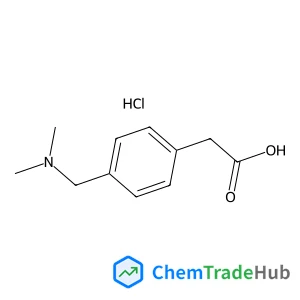
4-(Dimethylaminomethyl)phenylacetic acid hydrochloride
CAS Number:
99985-52-1
Molecular Formula:
C11H16ClNO2

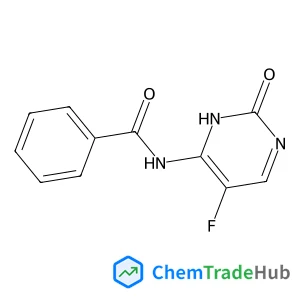
N-(5-Fluoro-2-oxo-2,3-dihydro-4-pyrimidinyl)benzamide
CAS Number:
10357-07-0
Molecular Formula:
C11H8FN3O2
Recommended Suppliers






Disclaimer
This page provides academic journal information for reference and research purposes only. We are not affiliated with any journal publishers and do not handle publication submissions. For publication-related inquiries, please contact the respective journal publishers directly.
If you notice any inaccuracies in the information displayed, please contact us at support@chemtradehub.com. We will promptly review and address your concerns.