![4-Chloro-3-(trifluoromethyl)-1H-pyrrolo[2,3-b]pyridine structure](https://static.chemtradehub.com/structs/869/869335-75-1-a9d0.webp "4-Chloro-3-(trifluoromethyl)-1H-pyrrolo[2,3-b]pyridine structure")
4-Chloro-3-(trifluoromethyl)-1H-pyrrolo[2,3-b]pyridine
CAS Number:
869335-75-1
Molecular Formula:
C8H4ClF3N2
Akane Kawafuchi, Shoichi Kutsumizu, Yuki Kawase, Issei Tokiwa, Taro Udagawa, Yohei Miwa
Selecting 1,2-bis(aryloyl)hydrazine as a model molecular framework, this article examines how the combined modification of two molecular moieties, i.e., variation of the molecular core motif (benzene B or naphthalene N as two aromatic rings) and use of bulky and flexible siloxane segments (disiloxane Si2, trisiloxane Si3, or its branched type iSi3) at the end of both chains, affects the phase behavior including the cubic (Cub) phases such as well-known achiral Ia3d or the so-called “Im3m” phase mostly recognized as a chiral one. It was found that the use of a naphthalene core as a larger core effectively provides the compound with improved thermal stability, and the clearing temperature in the N series is ca. 50 K higher than that of the B series. On the other hand, the introduction of siloxane segments at their terminals is effective for lowering the LC-phase temperature range by several tens of K. Focusing on the Cub phases, only the introduction of the disiloxane Si2 segment was useful for their formation, and we envisioned how much degree the anti-spindle shape of the average molecular shape is in the Ia3d phase. The use of the trisiloxane Si3/iSi3 segment primarily led to the formation of columnar (Col) phases. Consideration of the chemical composition revealed that the delicate balance between the three molecular moieties, siloxane terminal, alkyl spacer, and aromatic core part, is critical for the Cub phase formation, and it can be summarized as the threshold weight fraction of the alkyl spacer in the three moieties being 0.284 or larger, which derives an anti-spindle shape favorable for the formation of the Ia3d–Cub phase.

Foundations of Chemistry

Photochemical & Photobiological Sciences

Green Chemistry

Angewandte Chemie International Edition

Environmental Toxicology and Pharmacology

Mini-Reviews in Medicinal Chemistry

Current Pharmaceutical Biotechnology

Journal of Enzyme inhibition and Medicinal Chemistry

Nature Reviews Drug Discovery

Contact Lens & Anterior Eye
José I. Martínez, Alex Laikhtman, Hoi Ri Moon, Alla Zak, Julio A. Alonso
DOI: 10.1039/C8CP01437J
Lesheng Li, Yosuke Kanai
DOI: 10.1039/C7CP07247C
M. Pelucchi, C. Cavallotti, T. Faravelli, S. J. Klippenstein
DOI: 10.1039/C7CP07779C
P. Sela, S. Peukert, J. Herzler, M. Fikri, C. Schulz
DOI: 10.1039/C7CP06827A
Hans-Heinrich Limbach, Tal Pery, Niels Rothermel, Bruno Chaudret, Torsten Gutmann, Gerd Buntkowsky
DOI: 10.1039/C7CP07770J
Heather M. Aitken, Michelle L. Coote
DOI: 10.1039/C7CP07562F
Qintang Li, Jiao Wang, Nana Lei, Minhao Yan, Xiao Chen
DOI: 10.1039/C8CP00001H
I. Alcón
DOI: 10.1039/C7CP08076J
Charles K. Westbrook, Marco Mehl, William J. Pitz, Goutham Kukkadapu, Scott Wagnon, Kuiwen Zhang
DOI: 10.1039/C7CP07901J
Mohammad A. Halim, Christian Clavier, Xavier Dagany, Michel Kerleroux, Philippe Dugourd, Robert C. Dunbar, Rodolphe Antoine
DOI: 10.1039/C8CP00404H
This compound is mainly used as an intermediate in the synthesis of antipsychoti...
Waste containing 1-(D-Ribofuranosyl)-1,4-dihydro-3-pyridinecarboxamide (CAS: 191...
2-Methyl-2-propanyl 3-bromo-3-(hydroxymethyl)-1-azetidinecarboxylate (CAS: 20079...
N-(4-Chloro-2-pyridinyl)acetamide (CAS: 245056-66-0) is a chemical compound with...
5-Chloro-2-hydroxybenzoic acid, also known as 5-chlorosalicylic acid, is an arom...
When handling 1,1-Dichloro-1-fluoroethane (CAS: 1717-00-6), it is important to u...
Fmoc-(2S,3R)-3-phenylpyrrolidine-2-carboxylic acid is a white crystalline solid ...
4-Amino-5-bromo-2-pyridinecarboxylic acid is primarily used as a precursor in th...
Handling this compound should be done with personal protective equipment (PPE) i...
When handling 8-bromo-2,2-dimethyl-3,4-dihydro-2H-1,4-benzoxazin-3-one, use prop...

Physical Chemistry Chemical Physics (PCCP) is an international journal co-owned by 19 physical chemistry and physics societies from around the world. This journal publishes original, cutting-edge research in physical chemistry, chemical physics and biophysical chemistry. To be suitable for publication in PCCP, articles must include significant innovation and/or insight into physical chemistry; this is the most important criterion that reviewers and Editors will judge against when evaluating submissions. The journal has a broad scope and welcomes contributions spanning experiment, theory, computation and data science. Topical coverage includes spectroscopy, dynamics, kinetics, statistical mechanics, thermodynamics, electrochemistry, catalysis, surface science, quantum mechanics, quantum computing and machine learning. Interdisciplinary research areas such as polymers and soft matter, materials, nanoscience, energy, surfaces/interfaces, and biophysical chemistry are welcomed if they demonstrate significant innovation and/or insight into physical chemistry. Joined experimental/theoretical studies are particularly appreciated when complementary and based on up-to-date approaches.
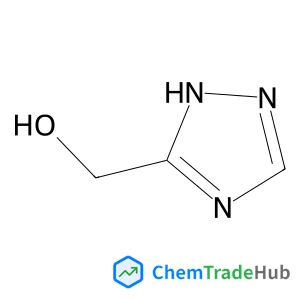
![Methyl 4-({[(2-methyl-2-propanyl)oxy]carbonyl}amino)bicyclo[2.2.2]octane-1-carboxylate structure](https://static.chemtradehub.com/structs/943/943845-74-7-b7e5.webp "Methyl 4-({[(2-methyl-2-propanyl)oxy]carbonyl}amino)bicyclo[2.2.2]octane-1-carboxylate structure")