











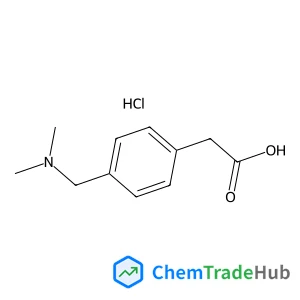
4-(Dimethylaminomethyl)phenylacetic acid hydrochloride
CAS Number:
99985-52-1
Molecular Formula:
C11H16ClNO2
Chao Lai, Yin Hu, Ruizhi Qiu
Plutonium monocarbide, which contains a considerable amount of vacancies in the carbon sublattice, has never been synthesized in a stoichiometric form. The intriguing substoichiometric behavior of plutonium monocarbide is investigated here using first-principles calculations combined with the special quasirandom structure. It is found that the NaCl-type substoichiometric plutonium monocarbide is stable for PuC0.741–0.923, which is in good agreement with the experiment. From the electronic structure calculations and chemical bond analyses, the stabilization of PuC1−x in this range is attributed to strengthened Pu–C bonds opposite the carbon vacancies.
Mincai Zhao, Junjie Fu, Daoping Cai, Chaoqi Zhang, Yinggan Zhang, Baisheng Sa, Qidi Chen, Hongbing Zhan
DOI: 10.1039/D3TA04930B
Wenming Ding, Shengbo Yuan, Yang Yang, Xiaoman Li, Min Luo
DOI: 10.1039/D3TA04947G
Gurjaspreet Singh, Mohit, Akshpreet Singh, Priyanka, Sumesh Khurana, Mithun, K. N. Singh, Jasamrit Nayyar, Brij Mohan
DOI: 10.1039/D3NJ05199D
Liang Zeng, Ming Zhang, Mengyuan Gao, Lingwei Xue, Haiqiao Wang, Zhi-Guo Zhang, Long Ye
DOI: 10.1039/D3TA04761J
Stefan Dötterl, Jonathan Gershenzon
DOI: 10.1039/D3NP00024A
Yixin Hong, Jianyu Han, Zhi Wang, Xiaofei Gu, Tianyi Huang, Yafeng Wu, Songqin Liu
DOI: 10.1039/D3TA04556K
Angela A. Salim, Mark S. Butler, Mark A. T. Blaskovich, Ian R. Henderson, Robert J. Capon
DOI: 10.1039/D3NP00019B
DOI: 10.1039/D3TA03720G
Jingya Wen, Xi Wang
DOI: 10.1039/D3NJ04656G
Waste containing N-Methoxy-N-methyl-1,3-thiazole-5-carboxamide (CAS: 898825-89-3...
N-(4-Biphenylyl)dibenzo[b,d]furan-4-amine should be stored in a tightly sealed c...
The market for 3-Acetamido-5-amino-2,4,6-triiodobenzoic acid (CAS: 1713-07-1) is...
Benzyl 2-O-acetyl-3,4,6-tri-O-benzyl-beta-D-galactopyranoside (CAS: 61820-03-9) ...
2-Ethylpiperazine dihydrochloride (CAS: 438050-52-3) is regulated under the Glob...
1,1'-[1,3-Phenylenebis(methylene)]bis(3-methyl-1H-pyrrole-2,5-dione) (CAS: 11946...
Several alternatives can be used in the synthesis of 5-Fluoro-2-(1-pyrrolidinyl)...
Proper personal protective equipment (PPE) must be worn when handling this compo...
When handling 6-Bromoimidazo[1,2-a]pyridin-8-amine, it is important to wear appr...
Alternatives to (2S,4R)-4-(4-Nitrobenzyl)pyrrolidine-2-carboxylic acid hydrochlo...

Physical Chemistry Chemical Physics (PCCP) is an international journal co-owned by 19 physical chemistry and physics societies from around the world. This journal publishes original, cutting-edge research in physical chemistry, chemical physics and biophysical chemistry. To be suitable for publication in PCCP, articles must include significant innovation and/or insight into physical chemistry; this is the most important criterion that reviewers and Editors will judge against when evaluating submissions. The journal has a broad scope and welcomes contributions spanning experiment, theory, computation and data science. Topical coverage includes spectroscopy, dynamics, kinetics, statistical mechanics, thermodynamics, electrochemistry, catalysis, surface science, quantum mechanics, quantum computing and machine learning. Interdisciplinary research areas such as polymers and soft matter, materials, nanoscience, energy, surfaces/interfaces, and biophysical chemistry are welcomed if they demonstrate significant innovation and/or insight into physical chemistry. Joined experimental/theoretical studies are particularly appreciated when complementary and based on up-to-date approaches.
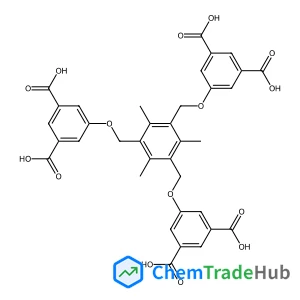
![2-Methyl-2-propanyl {3-[4-(4,4,5,5-tetramethyl-1,3,2-dioxaborolan-2-yl)phenyl]-3-oxetanyl}carbamate structure](https://static.chemtradehub.com/structs/127/1279090-25-3-1b84.webp "2-Methyl-2-propanyl {3-[4-(4,4,5,5-tetramethyl-1,3,2-dioxaborolan-2-yl)phenyl]-3-oxetanyl}carbamate structure")
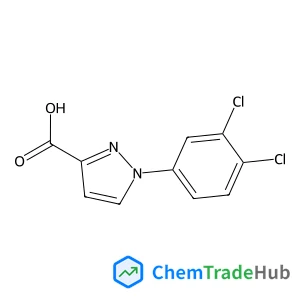
![4-Chloro-2-{[(2-chlorophenoxy)acetyl]amino}benzoic acid structure](https://static.chemtradehub.com/structs/351/351424-20-9-9467.webp "4-Chloro-2-{[(2-chlorophenoxy)acetyl]amino}benzoic acid structure")




