












Quantum kinetic energy and isotope fractionation in aqueous ionic solutions
Literature Information
Publication Date
2020-01-08
DOI
10.1039/C9CP06483D
Impact Factor
3.676
Authors
Lu Wang, Michele Ceriotti, Thomas E. Markland
View Original
Abstract
At room temperature, the quantum contribution to the kinetic energy of a water molecule exceeds the classical contribution by an order of magnitude. The quantum kinetic energy (QKE) of a water molecule is modulated by its local chemical environment and leads to uneven partitioning of isotopes between different phases in thermal equilibrium, which would not occur if the nuclei behaved classically. In this work, we use ab initio path integral simulations to show that QKEs of the water molecules and the equilibrium isotope fractionation ratios of the oxygen and hydrogen isotopes are sensitive probes of the hydrogen bonding structures in aqueous ionic solutions. In particular, we demonstrate how the QKE of water molecules in path integral simulations can be decomposed into translational, rotational and vibrational degrees of freedom, and use them to determine the impact of solvation on different molecular motions. By analyzing the QKEs and isotope fractionation ratios, we show how the addition of the Na+, Cl− and HPO42− ions perturbs the competition between quantum effects in liquid water and impacts their local solvation structures.
Related Literature
Novel immobilization method of enzymes using a hydrophilic polymer support
Juta Kobayashi, Yuichiro Mori, Shū Kobayashi
2006-08-30
Communication
DOI: 10.1039/B609335C
Molecules and crystals with both icosahedral and cubic symmetry‡
Jorge Echeverría, David Casanova, Miquel Llunell, Pere Alemany, Santiago Alvarez
2008-05-01
Feature Article
DOI: 10.1039/B719615F
Electrochemical parameters and techniques in drug development, with an emphasis on quinones and related compounds
Elizabeth Anne Hillard, Fabiane Caxico de Abreu, Danielle Cristhina Melo Ferreira, Gérard Jaouen, Marília Oliveira Fonseca Goulart, Christian Amatore
2008-04-10
Feature Article
DOI: 10.1039/B718116G
Gold nanocomposites with rigid fully conjugated heteroditopic ligands shell as nanobuilding blocks for coordination chemistry
Cédric R. Mayer, Eddy Dumas, Aude Michel, Francis Sécheresse
2006-09-21
Communication
DOI: 10.1039/B610631E
Hysteretic sorption of light gases by a porous metal–organic framework containing tris(para-carboxylated) triphenylphosphine oxide‡
Shaunt E. Oungoulian, Ji Woong Yoon, Young Kyu Hwang, Erica R. Wise, Jong-San Chang
2008-04-21
Communication
DOI: 10.1039/B802809E
A ratiometric and non-enzymatic luminescence assay for uric acid: differential quenching of lanthanide excited states by anti-oxidants
Robert A. Poole, Filip Kielar, Siobhan L. Richardson, Philip A. Stenson, David Parker
2006-09-18
Communication
DOI: 10.1039/B611259E
Solvents for ring-closing metathesis reactions
Claire S. Adjiman, Adam J. Clarke, Gregory Cooper, Paul C. Taylor
2008-04-28
Communication
DOI: 10.1039/B802921K
A two component thermoreversible hydrogel of riboflavin and melamine: Enhancement of photoluminescence in the gel form
Swarup Manna, Abhijit Saha, Arun K. Nandi
2006-08-23
Communication
DOI: 10.1039/B608234C
Synthesis, surface functionalization, and properties of freestanding silicon nanocrystals
Jonathan G. C. Veinot
2006-09-08
Feature Article
DOI: 10.1039/B607476F
You might also like
Compound Q&A
What are the main uses of 4-Nitrophenyl phosphate disodium salt hexahydrate (CAS: 333338-18-4)?
4-Nitrophenyl phosphate disodium salt hexahydrate is primarily used as a substra...
333338-18-44-Nitrophenyl phosph...
Compound Q&A
What are the main uses of 2-(Trifluoromethyl)-1,3-oxazole-4-carboxylic Acid (CAS: 1060816-01-4)?
2-(Trifluoromethyl)-1,3-oxazole-4-carboxylic Acid (CAS: 1060816-01-4) is widely ...
1060816-01-42-(Trifluoromethyl)-...
Compound Q&A
How should 2-Fluoro-4-biphenylcarboxylic acid (CAS: 137045-30-8) be stored?
2-Fluoro-4-biphenylcarboxylic acid should be stored in a cool, dry place at room...
137045-30-82-Fluoro-4-biphenylc...
Compound Q&A
What industries use Prednisolone-21-Carboxylic Acid (CAS: 61549-70-0)?
Prednisolone-21-Carboxylic Acid is primarily used in the pharmaceutical industry...
61549-70-0Prednisolone-21-Carb...
Compound Q&A
How should 4-(Hydrazinomethyl)-1,2,3-benzenetriol (CAS: 3614-72-0) be stored?
4-(Hydrazinomethyl)-1,2,3-benzenetriol (CAS: 3614-72-0) should be stored in a co...
3614-72-04-(Hydrazinomethyl)-...
Compound Q&A
What industries use 4-Amino-1-methyl-1H-pyrazole-5-carboxylic acid hydrochloride (CAS: 92534-70-8)?
4-Amino-1-methyl-1H-pyrazole-5-carboxylic acid hydrochloride (CAS: 92534-70-8) i...
92534-70-84-Amino-1-methyl-1H-...
Compound Q&A
What regulatory guidelines apply to dehydropachymic acid (CAS: 77012-31-8)?
Dehydropachymic acid (CAS: 77012-31-8) is regulated by various agencies. It fall...
77012-31-8Dehydropachymic acid
Compound Q&A
What is the market or research trend for 6-[(2,2-Dimethylpropanoyl)amino]nicotinic acid (CAS: 898561-66-5)?
The market and research trends for 6-[(2,2-Dimethylpropanoyl)amino]nicotinic aci...
898561-66-56-[(2,2-Dimethylprop...
Compound Q&A
How should 1,10-Phenanthroline-2,9-dicarbaldehyde (CAS: 57709-62-3) be stored?
1,10-Phenanthroline-2,9-dicarbaldehyde should be stored in a cool, dry place awa...
57709-62-31,10-Phenanthroline-...
Compound Q&A
How is 5-Carbamoyl-11-oxo-10,11-dihydro-5H-dibenzo[b,f]azepin-10-yl acetate (CAS: 113952-21-9) typically synthesized?
5-Carbamoyl-11-oxo-10,11-dihydro-5H-dibenzo[b,f]azepin-10-yl acetate can be synt...
113952-21-95-Carbamoyl-11-oxo-1...
Source Journal
Physical Chemistry Chemical Physics

CiteScore:
5.5
Self-citation Rate:
10.3%
Articles per Year:
3036
Physical Chemistry Chemical Physics (PCCP) is an international journal co-owned by 19 physical chemistry and physics societies from around the world. This journal publishes original, cutting-edge research in physical chemistry, chemical physics and biophysical chemistry. To be suitable for publication in PCCP, articles must include significant innovation and/or insight into physical chemistry; this is the most important criterion that reviewers and Editors will judge against when evaluating submissions. The journal has a broad scope and welcomes contributions spanning experiment, theory, computation and data science. Topical coverage includes spectroscopy, dynamics, kinetics, statistical mechanics, thermodynamics, electrochemistry, catalysis, surface science, quantum mechanics, quantum computing and machine learning. Interdisciplinary research areas such as polymers and soft matter, materials, nanoscience, energy, surfaces/interfaces, and biophysical chemistry are welcomed if they demonstrate significant innovation and/or insight into physical chemistry. Joined experimental/theoretical studies are particularly appreciated when complementary and based on up-to-date approaches.
Recommended Compounds

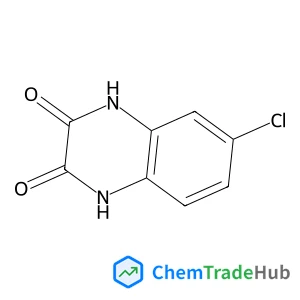
6-CHLORO-2,3-DIOXO-1,2,3,4-TETRAHYDROQUINOXALINE, 97
CAS Number:
169-14-2
Molecular Formula:
C8H5ClN2O2
Recommended Suppliers






Disclaimer
This page provides academic journal information for reference and research purposes only. We are not affiliated with any journal publishers and do not handle publication submissions. For publication-related inquiries, please contact the respective journal publishers directly.
If you notice any inaccuracies in the information displayed, please contact us at support@chemtradehub.com. We will promptly review and address your concerns.