












Synthesis, surface functionalization, and properties of freestanding silicon nanocrystals
Literature Information
Publication Date
2006-09-08
DOI
10.1039/B607476F
Impact Factor
6.222
Authors
Jonathan G. C. Veinot
View Original
Abstract
Freestanding silicon nanoparticles (FS-nc-Si) have intriguing chemical and optical properties. The present contribution outlines known synthetic methodologies and protocols for surface functionalization. Recent advancements in tailoring the photoluminescence properties of FS-nc-Si and future research directions will be briefly discussed.
Recommended Journals
Related Literature
Controlling the folding of conjugated polymers at the single molecule level via hydrogen bonding
Beiyue Shao, Xinju Zhu, Kyle N. Plunkett, David A. Vanden Bout
2017-01-06
Paper
DOI: 10.1039/C6PY01871H
A tumor-targeting dextran–apoprotein conjugate integrated with enediyne chromophore shows highly potent antitumor efficacy
Bin Li, Xiu-jun Liu, Liang Li, Sheng-hua Zhang, Yi Li, Dian-dong Li, Yong-su Zhen
2014-05-20
Paper
DOI: 10.1039/C4PY00532E
Vesicles of double hydrophilic pullulan and poly(acrylamide) block copolymers: a combination of synthetic- and bio-derived blocks
Jochen Willersinn, Anna Bogomolova, Marc Brunet Cabré, Bernhard V. K. J. Schmidt
2017-01-09
Paper
DOI: 10.1039/C6PY02212J
Factors affecting bottlebrush polymer synthesis by the transfer-to method using reversible addition–fragmentation chain transfer (RAFT) polymerization
Scott C. Radzinski, Jeffrey C. Foster, Sally E. Lewis, Eric V. French, John B. Matson
2017-02-06
Paper
DOI: 10.1039/C6PY01982J
The synthesis of microporous polymers using Tröger's base formation
Mariolino Carta, Richard Malpass-Evans, Matthew Croad, Yulia Rogan, Michael Lee, Ian Rose, Neil B. McKeown
2014-06-20
Paper
DOI: 10.1039/C4PY00609G
‘Click’-BINOL based chiral ionic polymers for highly enantioselective recognition of tryptophan anions
Guo Wei, Yuliang Jiang, Fei Li, Yiwu Quan, Yixiang Cheng, Chengjian Zhu
2014-06-02
Communication
DOI: 10.1039/C4PY00755G
Synthesis of highly branched polymers by reversible complexation-mediated copolymerization of vinyl and divinyl monomers
Hongjun Yang, Zhongrui Wang, Yulei Zheng, Wenyan Huang, Xiaoqiang Xue, Bibiao Jiang
2017-02-21
Paper
DOI: 10.1039/C7PY00174F
Dual-stimuli responsive liposomes using pH- and temperature-sensitive polymers for controlled transdermal delivery
Takumi Sugimoto, Mitsuhiro Fukushima, Ryoma Teranishi, Aki Kotaka, Chiharu Shinde, Takayuki Kumei, Yasushi Sumida, Yuki Munekata, Kei-ichi Maruyama, Eiji Yuba, Atsushi Harada, Kenji Kono
2017-02-03
Paper
DOI: 10.1039/C6PY01754A
Highly thermal conductive resins formed from wide-temperature-range eutectic mixtures of liquid crystalline epoxies bearing diglycidyl moieties at the side positions
Hyeonuk Yeo, Nam-Ho You, Se Gyu Jang, Seokhoon Ahn, Kwang-Un Jeong, Seung Hee Lee, Munju Goh
2017-04-05
Paper
DOI: 10.1039/C7PY00243B
Thermo-responsive gold/poly(vinyl alcohol)-b-poly(N-vinylcaprolactam) core–corona nanoparticles as a drug delivery system
Christophe Detrembleur, Marie Hurtgen, Antoine Debuigne, Marie-Claire De Pauw-Gillet, Stéphane Mornet, Etienne Duguet, Christine Jérôme
2014-05-09
Paper
DOI: 10.1039/C4PY00352G
You might also like
Compound Q&A
What are the main uses of 4-Nitrophenyl phosphate disodium salt hexahydrate (CAS: 333338-18-4)?
4-Nitrophenyl phosphate disodium salt hexahydrate is primarily used as a substra...
333338-18-44-Nitrophenyl phosph...
Compound Q&A
What are the main uses of 2-(Trifluoromethyl)-1,3-oxazole-4-carboxylic Acid (CAS: 1060816-01-4)?
2-(Trifluoromethyl)-1,3-oxazole-4-carboxylic Acid (CAS: 1060816-01-4) is widely ...
1060816-01-42-(Trifluoromethyl)-...
Compound Q&A
How should 2-Fluoro-4-biphenylcarboxylic acid (CAS: 137045-30-8) be stored?
2-Fluoro-4-biphenylcarboxylic acid should be stored in a cool, dry place at room...
137045-30-82-Fluoro-4-biphenylc...
Compound Q&A
What industries use Prednisolone-21-Carboxylic Acid (CAS: 61549-70-0)?
Prednisolone-21-Carboxylic Acid is primarily used in the pharmaceutical industry...
61549-70-0Prednisolone-21-Carb...
Compound Q&A
How should 4-(Hydrazinomethyl)-1,2,3-benzenetriol (CAS: 3614-72-0) be stored?
4-(Hydrazinomethyl)-1,2,3-benzenetriol (CAS: 3614-72-0) should be stored in a co...
3614-72-04-(Hydrazinomethyl)-...
Compound Q&A
What industries use 4-Amino-1-methyl-1H-pyrazole-5-carboxylic acid hydrochloride (CAS: 92534-70-8)?
4-Amino-1-methyl-1H-pyrazole-5-carboxylic acid hydrochloride (CAS: 92534-70-8) i...
92534-70-84-Amino-1-methyl-1H-...
Compound Q&A
What regulatory guidelines apply to dehydropachymic acid (CAS: 77012-31-8)?
Dehydropachymic acid (CAS: 77012-31-8) is regulated by various agencies. It fall...
77012-31-8Dehydropachymic acid
Compound Q&A
What is the market or research trend for 6-[(2,2-Dimethylpropanoyl)amino]nicotinic acid (CAS: 898561-66-5)?
The market and research trends for 6-[(2,2-Dimethylpropanoyl)amino]nicotinic aci...
898561-66-56-[(2,2-Dimethylprop...
Compound Q&A
How should 1,10-Phenanthroline-2,9-dicarbaldehyde (CAS: 57709-62-3) be stored?
1,10-Phenanthroline-2,9-dicarbaldehyde should be stored in a cool, dry place awa...
57709-62-31,10-Phenanthroline-...
Compound Q&A
How is 5-Carbamoyl-11-oxo-10,11-dihydro-5H-dibenzo[b,f]azepin-10-yl acetate (CAS: 113952-21-9) typically synthesized?
5-Carbamoyl-11-oxo-10,11-dihydro-5H-dibenzo[b,f]azepin-10-yl acetate can be synt...
113952-21-95-Carbamoyl-11-oxo-1...
Source Journal
Chemical Communications

CiteScore:
8.6
Self-citation Rate:
4.7%
Articles per Year:
2458
ChemComm publishes urgent research which is of outstanding significance and interest to experts in the field, while also appealing to the journal’s broad chemistry readership. Our communication format is ideally suited to short, urgent studies that are of such importance that they require accelerated publication. Our scope covers all topics in chemistry, and research at the interface of chemistry and other disciplines (such as materials science, nanoscience, physics, engineering and biology) where there is a significant novelty in the chemistry aspects. Major topic areas covered include: Analytical Chemistry Catalysis Chemical Biology and medicinal chemistry Computational Chemistry and Machine Learning Energy and sustainable chemistry Environmental Chemistry Green Chemistry Inorganic Chemistry Materials Chemistry Nanoscience Organic Chemistry Physical Chemistry Polymer Chemistry Supramolecular Chemistry
Recommended Compounds
![S-[2,3-Bis(palmitoyloxy)propyl]-N-[(9H-fluoren-9-ylmethoxy)(hydroxy)methylene]cysteine structure](https://static.chemtradehub.com/structs/210/210532-98-2-f6a7.webp "S-[2,3-Bis(palmitoyloxy)propyl]-N-[(9H-fluoren-9-ylmethoxy)(hydroxy)methylene]cysteine structure")
S-[2,3-Bis(palmitoyloxy)propyl]-N-[(9H-fluoren-9-ylmethoxy)(hydroxy)methylene]cysteine
CAS Number:
210532-98-2
Molecular Formula:
C53H83NO8S
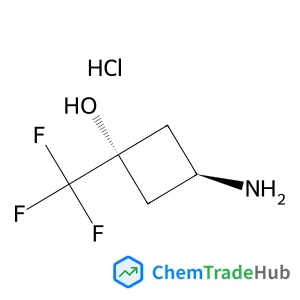
cis-3-Amino-1-(trifluoromethyl)cyclobutanol hydrochloride (1:1)
CAS Number:
1408075-16-0
Molecular Formula:
C5H9ClF3NO

1,3(2H,4H)-Isoquinolinedione, 7-amino-4,4-dimethyl-
CAS Number:
14576-22-8
Molecular Formula:
C11H12N2O2
Recommended Suppliers






Disclaimer
This page provides academic journal information for reference and research purposes only. We are not affiliated with any journal publishers and do not handle publication submissions. For publication-related inquiries, please contact the respective journal publishers directly.
If you notice any inaccuracies in the information displayed, please contact us at support@chemtradehub.com. We will promptly review and address your concerns.