












Peculiar hydrogen bonding behaviour of water molecules inside the aqueous nanochannels of lyotropic liquid crystals
Literature Information
Publication Date
2020-02-24
DOI
10.1039/C9CP06405B
Impact Factor
3.676
Authors
Konoya Das, Subrahmanyam Sappati
View Original
Abstract
In spite of the widespread utilizations of lyotropic liquid crystals (LLCs) in food technology, as nanoreactors and in biomedical fields, the exact nature of their aqueous nanochannels which are deemed to dictate these applications are not completely understood. In this context, elucidation of the hydrogen bonding properties of the water molecules inside the nanochannels will contribute towards obtaining a complete picture of the LLC materials. In this study, we use two molecules exhibiting an excited state intramolecular proton transfer (ESIPT), fisetin and 3-hydroxyflavone, to determine the hydrogen bond donating and accepting parameters of the LLC water molecules. The steady state results imply a heterogeneity in the hydrogen bond accepting and donating properties inside the LLC nanochannels. Upon photoexcitation of the normal form of the ESIPT molecules, we notice that despite a reported general alcohol like polarity of the LLC nanochannels, the hydrogen bonding behaviour of the water molecules is similar to that of moderately polar aprotic solvents such as acetonitrile. In contrast, on excitation of the anionic species we observe that the spectral pattern is similar to that in alcohols. Additionally, the effect of the LLC water molecules on the rate of the intramolecular hydrogen transfer process has been explored. The ESIPT rates of both the probes, which are ultrafast (<20 ps) in neat polar protic and aprotic solvents, get slowed down dramatically by almost 15 times inside the LLC phases. Such an extent of retardation in the ESIPT rate is extremely rare in the literature, which signals towards the unique behaviour of the water molecules inside the LLC nanochannels. The structural topology of the LLC phases also influences the ESIPT rate with the timescale of the process increasing from the cubic to the hexagonal phase.
Related Literature
Ferrocene/air double-mediated FeTiO3-photocatalyzed semi-heterogeneous annulation of quinoxalin-2(1H)-ones in EtOH/H2O
Wen-Tao Ouyang, Hong-Tao Ji, Jun Jiang, Chao Wu, Jia-Cheng Hou, Min-Hang Zhou, Yu-Han Lu, Li-Juan Ou, Wei-Min He
2023-11-07
Communication
DOI: 10.1039/D3CC04020H
Intra-cluster energy transfer editing in a dual-emitting system to tap into lifetime thermometry
Claudia Manuela Santos Calado, Diogo Alves Gálico, Muralee Murugesu
2023-10-31
Communication
DOI: 10.1039/D3CC03658H
Self-assembly of alkylated lysine-dendron oxytocin amphiphiles for enhanced stability and sustained pharmacological activity
Fengjuan Xie, Yingying Lin, Åsa Andersson, Liang Zhao, JingJing Wan
2023-10-26
Communication
DOI: 10.1039/D3CC03801G
Fabrication of porous polyimide as cathode for high performance lithium-ion battery
Xianyu Liu, Mingxun Xie, Yunxia Wei, Yongliang Guo, Zheng Liu
2023-10-24
Communication
DOI: 10.1039/D3CC04287A
Photochemical H2 activation by an Zn–Fe heterometallic: a mechanistic investigation
Marina Perez-Jimenez, Mark R. Crimmin
2023-12-14
Edge Article
DOI: 10.1039/D3SC05966A
Reply to the ‘Comment on “CO2 as oxidant: an unusual light-assisted catalyst free oxidation of aldehydes to acids under mild conditions”’ by S. R. Khan, S. Saini, K. Naresh, A. Kumari, V. Aniya, P. K. Khatri, A. Ray and S. L. Jain, Chem. Commun., 2022, 58, 2208
Shafiur Rehman Khan, K. Naresh, Alka Kumari, Vineet Aniya, Praveen K Khatri, Anjan Ray, Suman L Jain
2023-11-02
Comment
DOI: 10.1039/D3CC04389D
Aggregation-induced emission (AIE)-active metallacycles with near-infrared emission for photodynamic therapy
Qifei Shen, Kai Gao, Zhiqin Zhao, Anran Gao, Yanzi Xu, Heng Wang, Mingming Zhang, Dongfeng Dang
2023-11-02
Communication
DOI: 10.1039/D3CC04166B
Functions of metal–phenolic networks and polyphenol derivatives in photo(electro)catalysis
Xiao-Long Liu, Hai-Chao Wang, Tao Yang, Xin-Zheng Yue, Sha-Sha Yi
2023-10-30
Feature Article
DOI: 10.1039/D3CC04156E
Study on synergistic effects of 4f levels of erbium and black phosphorus/SnNb2O6 heterostructure catalysts by multiple spectroscopic analysis techniques
Minze Li, Jingzhen Wang, Qiuye Wang, Honglai Lu, Guofeng Wang, Honggang Fu
2024-01-05
Edge Article
DOI: 10.1039/D3SC05464K
You might also like
Compound Q&A
What are the main uses of (5-Sulfamoyl-3-pyridinyl)boronic acid (CAS: 951233-61-7)?
(5-Sulfamoyl-3-pyridinyl)boronic acid is primarily used in chemical synthesis, p...
951233-61-7(5-Sulfamoyl-3-pyrid...
Compound Q&A
How is Benzyl 2-methyl-2-(methylsulfonyl)-4-pentenoate (CAS: 1942858-50-5) typically synthesized?
Benzyl 2-methyl-2-(methylsulfonyl)-4-pentenoate is typically synthesized via est...
1942858-50-5Benzyl 2-methyl-2-(m...
Compound Q&A
What precautions should be taken when handling 8-Fluoroquinolin-6-ol (CAS: 209353-22-0)?
When handling 8-Fluoroquinolin-6-ol (CAS: 209353-22-0), it is important to use p...
209353-22-08-Fluoroquinolin-6-o...
Compound Q&A
What are the physical and chemical properties of 1,3-Dibromo-5-(2-methyl-2-propanyl)benzene (CAS: 129316-09-2)?
1,3-Dibromo-5-(2-methyl-2-propanyl)benzene (CAS: 129316-09-2) is a crystalline c...
129316-09-21,3-Dibromo-5-(2-met...
Compound Q&A
What industries use Ethyl 7-chloro-4-oxo-1-(1,3-thiazol-2-yl)-1,4-dihydro-1,8-naphthyridine-3-carboxylate (CAS: 174726-87-5)?
Ethyl 7-chloro-4-oxo-1-(1,3-thiazol-2-yl)-1,4-dihydro-1,8-naphthyridine-3-carbox...
174726-87-5Ethyl 7-chloro-4-oxo...
Compound Q&A
What precautions should be taken when handling Delta-7-Avenasterol (CAS: 23290-26-8)?
When handling Delta-7-Avenasterol (CAS: 23290-26-8), it is important to wear app...
23290-26-8Delta-7-Avenasterol
Compound Q&A
What precautions should be taken when handling N-({(5R)-3-[3-Fluoro-4-(4-morpholinyl)phenyl]-2-oxo-1,3-oxazolidin-5-yl}methyl)acetamide (CAS: 872992-20-6)?
Proper handling involves the use of personal protective equipment such as gloves...
872992-20-6N-({(5R)-3-[3-Fluoro...
Compound Q&A
What precautions should be taken when handling 2-Methyl-2-proanyl 4-[(2-aminophenyl)amino]-1-piperidinecarboxylate (CAS: 79099-00-6)?
When handling 2-Methyl-2-proanyl 4-[(2-aminophenyl)amino]-1-piperidinecarboxylat...
79099-00-62-Methyl-2-propanyl ...
Compound Q&A
What is N-Methyl-4-chlorobenzylamine hydrochloride (CAS: 65542-24-7)?
N-Methyl-4-chlorobenzylamine hydrochloride (CAS: 65542-24-7) is a organic compou...
65542-24-7N-Methyl-4-chloroben...
Compound Q&A
Is [2-(Dodecyloxy)ethoxy]acetic acid (CAS: 27306-90-7) safe?
[2-(Dodecyloxy)ethoxy]acetic acid (CAS: 27306-90-7) is generally considered safe...
27306-90-7[2-(Dodecyloxy)ethox...
Source Journal
Physical Chemistry Chemical Physics

CiteScore:
5.5
Self-citation Rate:
10.3%
Articles per Year:
3036
Physical Chemistry Chemical Physics (PCCP) is an international journal co-owned by 19 physical chemistry and physics societies from around the world. This journal publishes original, cutting-edge research in physical chemistry, chemical physics and biophysical chemistry. To be suitable for publication in PCCP, articles must include significant innovation and/or insight into physical chemistry; this is the most important criterion that reviewers and Editors will judge against when evaluating submissions. The journal has a broad scope and welcomes contributions spanning experiment, theory, computation and data science. Topical coverage includes spectroscopy, dynamics, kinetics, statistical mechanics, thermodynamics, electrochemistry, catalysis, surface science, quantum mechanics, quantum computing and machine learning. Interdisciplinary research areas such as polymers and soft matter, materials, nanoscience, energy, surfaces/interfaces, and biophysical chemistry are welcomed if they demonstrate significant innovation and/or insight into physical chemistry. Joined experimental/theoretical studies are particularly appreciated when complementary and based on up-to-date approaches.
Recommended Compounds
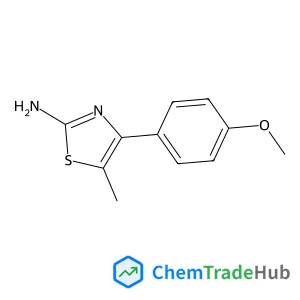
4-(4-Methoxyphenyl)-5-methyl-1,3-thiazol-2-amine
CAS Number:
105512-88-7
Molecular Formula:
C11H12N2OS
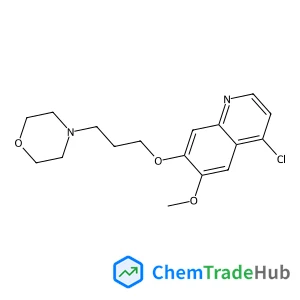
4-(3-((4-Chloro-6-methoxyquinolin-7-yl)oxy)propyl)morpholine
CAS Number:
205448-32-4
Molecular Formula:
C17H21ClN2O3
Recommended Suppliers






Disclaimer
This page provides academic journal information for reference and research purposes only. We are not affiliated with any journal publishers and do not handle publication submissions. For publication-related inquiries, please contact the respective journal publishers directly.
If you notice any inaccuracies in the information displayed, please contact us at support@chemtradehub.com. We will promptly review and address your concerns.