


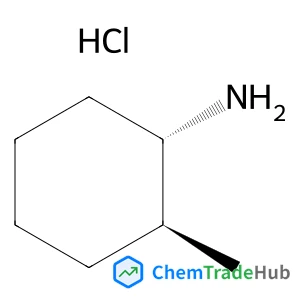
(1R,2R)-2-Methylcyclohexanamine hydrochloride (1:1)
CAS Number:
39558-31-1
Molecular Formula:
C7H16ClN
Michael Fenech, Sean Lim, Jeffrey Cheung, Neeraj Sharma
Lithium ion batteries typically lose capacity or energy storage density (i.e. capacity fading) over the course of extended cycling which can be problematic for applications and appears to be exaggerated when high current rates are used. However, in some cases fluctuations in capacity with cycle number and even increases in capacity with cycle number are noted with predominantly thin film based electrodes. Here we demonstrate the synthesis and in-depth characterisation of laser deposited MoO2 thin film anodes and its unconventional mechanism. A MoO2 electrode shows an initial capacity of 79 mA h g−1 which increases to capacities of 600 mA h g−1 at 15.8 A g−1 after 90 000 cycles. A maximum capacity of 1714 mA h g−1 was achieved in an electrode cycled at 1.5 A g−1 for over 3800 cycles, the highest recorded capacity in MoOx anodes to date. The most intriguing aspects of this work is the fact that capacity is shown to fluctuate and typically increase well above the theoretical capacity of MoO2. A combination of electrochemical cycling, X-ray diffraction, X-ray photoelectron spectroscopy, scanning electron microscopy, energy dispersive spectroscopy, focused ion beam milling and transmission electron microscopy at various states of cycling is used to illustrate a proposed mechanism. The mechanism illustrated is based on exfoliation of layers of MoO2 off the pulsed laser deposition (PLD) grown MoO2 electrodes during cycling that creates additional surface area and easier access for Li-ions to both adsorb to the surface and insert/react with the host material. Further features in the capacity evolution are rationalised by this mechanism and methods to control the capacity evolution are detailed. These results present a rational explanation for when an electrode undergoes a substantial increase in capacity over its extended cycling life.

Heteroatom Chemistry

Topics in Catalysis

Herald of the Russian Academy of Sciences

Bioorganic & Medicinal Chemistry Letters

Main Group Chemistry

Journal of Chemical Sciences

Journal of Asian Natural Products Research

Atomization and Sprays

Critical Reviews in Solid State and Materials Sciences

Chinese Journal of Chemistry
Feng Wang, Wataru Ueda
DOI: 10.1039/B817118A
Mamoru Fujitsuka, Sachiko Tojo, Teruo Shinmyozu, Tetsuro Majima
DOI: 10.1039/B810122A
KaKing Yan, Andrew V. Pawlikowski, Chris Ebert, Aaron D. Sadow
DOI: 10.1039/B818630H
Kyung-Chang Seo, Young-Geol Kwon, Dae-Hee Kim, In-Sook Jang, Jin-Won Cho, Sung-Kee Chung
DOI: 10.1039/B821058F
Jian-Yong Liu, Eugeny A. Ermilov, Beate Röder, Dennis K. P. Ng
DOI: 10.1039/B821630D
Richie E. Kohman, Steven C. Zimmerman
DOI: 10.1039/B818183G
Andrew Mills, Kate McDiarmid, Michael McFarlane, Pauline Grosshans
DOI: 10.1039/B900569B
Karolina Kasperkiewicz, Jan-Willem G. Bos, Andrew N. Fitch, Kosmas Prassides, Serena Margadonna
DOI: 10.1039/B815830D
Piotr Michal Diakowski, Heinz-Bernhard Kraatz
DOI: 10.1039/B819876D
(5-Sulfamoyl-3-pyridinyl)boronic acid is primarily used in chemical synthesis, p...
Benzyl 2-methyl-2-(methylsulfonyl)-4-pentenoate is typically synthesized via est...
When handling 8-Fluoroquinolin-6-ol (CAS: 209353-22-0), it is important to use p...
1,3-Dibromo-5-(2-methyl-2-propanyl)benzene (CAS: 129316-09-2) is a crystalline c...
Ethyl 7-chloro-4-oxo-1-(1,3-thiazol-2-yl)-1,4-dihydro-1,8-naphthyridine-3-carbox...
When handling Delta-7-Avenasterol (CAS: 23290-26-8), it is important to wear app...
Proper handling involves the use of personal protective equipment such as gloves...
When handling 2-Methyl-2-proanyl 4-[(2-aminophenyl)amino]-1-piperidinecarboxylat...
N-Methyl-4-chlorobenzylamine hydrochloride (CAS: 65542-24-7) is a organic compou...
[2-(Dodecyloxy)ethoxy]acetic acid (CAS: 27306-90-7) is generally considered safe...

Physical Chemistry Chemical Physics (PCCP) is an international journal co-owned by 19 physical chemistry and physics societies from around the world. This journal publishes original, cutting-edge research in physical chemistry, chemical physics and biophysical chemistry. To be suitable for publication in PCCP, articles must include significant innovation and/or insight into physical chemistry; this is the most important criterion that reviewers and Editors will judge against when evaluating submissions. The journal has a broad scope and welcomes contributions spanning experiment, theory, computation and data science. Topical coverage includes spectroscopy, dynamics, kinetics, statistical mechanics, thermodynamics, electrochemistry, catalysis, surface science, quantum mechanics, quantum computing and machine learning. Interdisciplinary research areas such as polymers and soft matter, materials, nanoscience, energy, surfaces/interfaces, and biophysical chemistry are welcomed if they demonstrate significant innovation and/or insight into physical chemistry. Joined experimental/theoretical studies are particularly appreciated when complementary and based on up-to-date approaches.

![4-Fluoro-2-(4-{[(3S,4R)-4-(2-hydroxy-2-propanyl)-3-pyrrolidinyl]amino}-6,7-dimethoxy-2-quinazolinyl)phenol hydrochloride (1:1) structure](https://static.chemtradehub.com/structs/143/1431697-96-9-619c.webp "4-Fluoro-2-(4-{[(3S,4R)-4-(2-hydroxy-2-propanyl)-3-pyrrolidinyl]amino}-6,7-dimethoxy-2-quinazolinyl)phenol hydrochloride (1:1) structure")





